


January 20, 2026, 5:07 pm | Read time: 8 minutes
Wanderlust but no desire for days of fatigue, sleep disturbances, and concentration problems? For many travelers, jet lag is one of the biggest downsides of long-distance travel. However, exotic landscapes, spectacular nature, and cultural diversity don’t have to come with a torturous time change. We present seven distant travel destinations that you can reach almost without jet lag.
In fact, there are surprisingly many long-distance destinations that can be explored almost without jet lag. The reason: Some faraway countries are in nearly the same time zone as Germany. Travelers heading to these destinations can often be active on the day of arrival–instead of first battling their internal clock. Especially after returning home, you can look forward to real relaxation, rather than being caught up by sleep problems and fatigue. TRAVELBOOK shows which distant destinations are particularly suitable for a long trip without jet lag.
South Africa

South Africa is geographically far from Germany–but surprisingly close in terms of time. During the German winter months, South Africa is only one hour ahead of Germany, and in summer, there is no difference at all, as the country does not observe seasonal time changes. This makes the journey, despite the long flight time of around twelve hours, much more pleasant than typical long-distance travel. For many travelers, South Africa begins in Cape Town–with views of Table Mountain, beaches on the Atlantic, wine regions, and an urban lifestyle. South Africa is especially appealing in summer, during the European winter months. Then, plenty of light, dry warmth, and temperatures between about 72 and 86 degrees Fahrenheit provide pure relaxation. But even in the other months, a visit is worthwhile: The South African spring and fall offer pleasant temperatures and perfect conditions for outdoor activities like hiking or road trips. Winter is ideal for whale watching.
Namibia
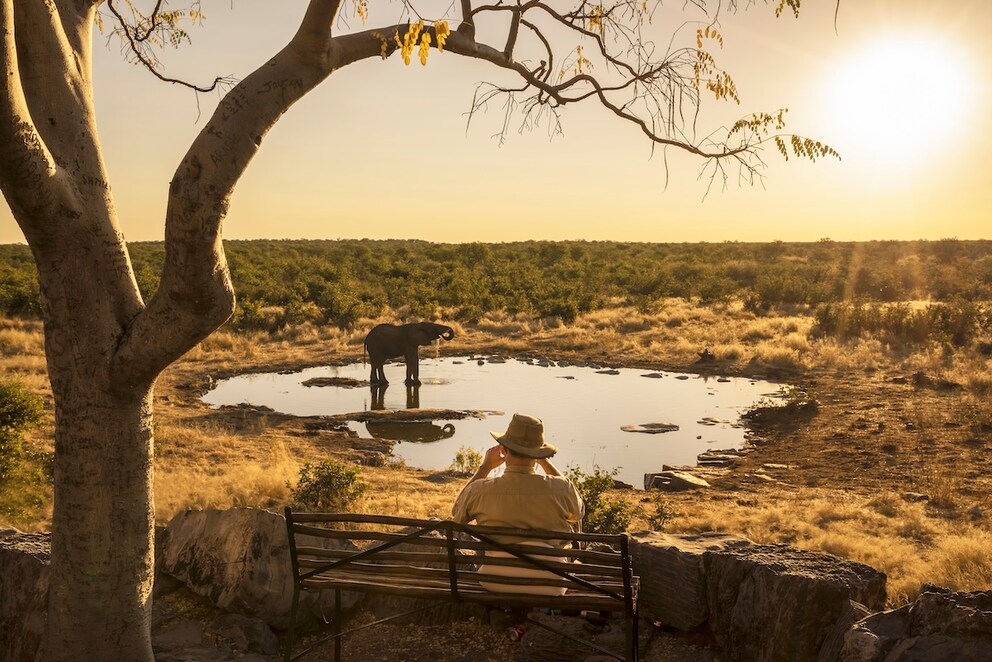
Namibia has a lot to offer: from endless horizons to extraordinary wildlife and vast landscapes. At the same time, travelers find their rhythm surprisingly balanced despite a flight of about ten hours. Like South Africa, Namibia is one hour ahead of us during the German winter–but there is no time difference in summer. The most popular travel time is between May and October, when it’s dry season. During the day, it’s usually pleasantly warm, and at night, it can cool down significantly. These months are particularly suitable for safaris, as animals gather at waterholes and visibility is clear. Whether it’s Etosha National Park, the red dunes of Sossusvlei, or the rugged Atlantic coast near Swakopmund–Namibia offers an intense long-distance travel experience without having to recover from jet lag for days.
Tanzania and Zanzibar
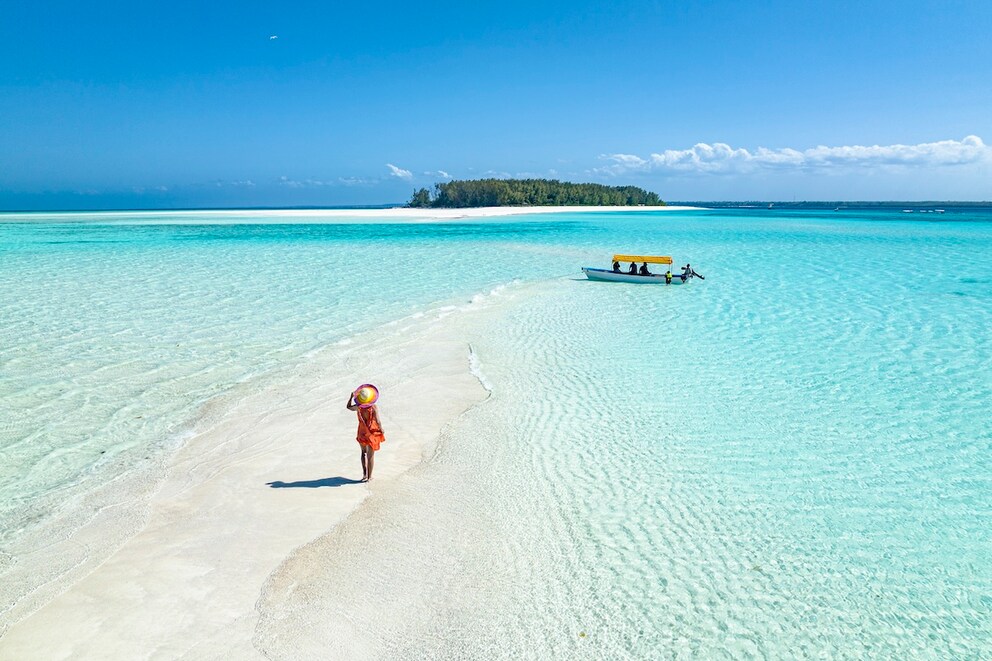
Tanzania and the nearby island of Zanzibar are considered true dream destinations. Despite the long distance, the good news is: They are only a few hours ahead of Germany in terms of time. In the winter months, the difference is two hours–in summer, it’s only one. Many travelers find this time difference manageable, allowing them to fully enjoy the trip–even with a flight time of about ten hours. The best travel time is between June and October, when it’s dry and sunny. Due to the high temperatures, the months around the European winter are also popular, especially for a beach vacation in Zanzibar. A major highlight of this trip is the combination of amazing wildlife observations during safaris and the stunning beaches with crystal-clear ocean water.
Madagascar

Madagascar is often far from the classic travel routes–and seems surprisingly far away at first glance. However, the time difference is manageable: In the German winter, Madagascar is two hours ahead, and in summer, only one. The flight usually takes about 15 hours–there are no direct flights from Germany, so you should expect at least one stopover. Nevertheless, many travelers report a surprisingly mild jet lag. The most pleasant travel time for Madagascar is the dry season from May to October. During this period, temperatures range between 77 and 86 degrees Fahrenheit, depending on the region. Madagascar is a world of its own: lemurs in rainforests, baobab alleys, highlands, coasts, and coral reefs. If you’re looking for a truly extraordinary long-distance trip without completely adjusting physically, you’ll find a fascinating destination here.
Also interesting: Which countries you should definitely avoid traveling to in 2026
Oman

Oman is slightly further from Germany in terms of time than the African destinations. With a time difference of three hours during the German winter, the adjustment is manageable–and in summer, it’s only two hours. The flight time is about six to seven hours, making Oman particularly attractive for travelers seeking a distinctly different cultural and landscape experience without being on the road for an extremely long time. The best travel time is from October to March, when temperatures range between 77 and 86 degrees Fahrenheit and there’s little rain. Desert landscapes, mountains, traditional markets, modern cities, and beaches create an intense long-distance travel experience–with manageable adjustment time for body and sleep rhythm.
Mauritius

Mauritius is located in the Indian Ocean and thus far from Germany, yet remains close in terms of time. During the German winter, the island is three hours ahead, and in summer, only two. The direct flight time from Germany is about eleven hours. Nevertheless, you are spared from an unpleasant jet lag here, and you can usually adapt to the new rhythm almost effortlessly. The island is visitable year-round. The dry season months between May and October are particularly popular, with temperatures between 68 and 82 degrees Fahrenheit and less humidity. Mauritius offers more than classic postcard beaches: hikes, waterfalls, lagoons, cultural diversity, and a relaxed atmosphere make for a paradisiacal travel destination.
Seychelles
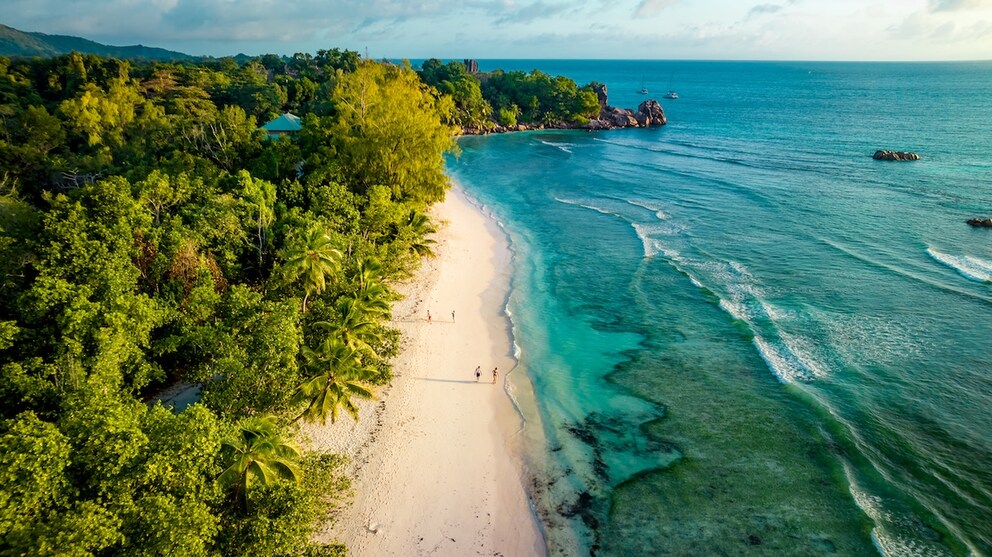
The Seychelles are a dream destination for many–and despite their distance, they have a relatively small time difference. During the German winter, they are three hours ahead, and in summer, it’s two. The climate is tropical year-round with stable temperatures–slight fluctuations mainly occur due to wind and rainy seasons. The best travel period is during the dry season from May to October with less rain, pleasant temperatures around 81 degrees Fahrenheit, and fresh wind–ideal for hiking. Only the sea can be rougher at this time, so for swimming and diving, it’s better to travel between November and April, even though you might encounter brief showers. The archipelago enchants its visitors with granite rocks, turquoise water, small bays, and diverse vegetation. The Seychelles are thus a classic example of a long-distance trip that is less physically demanding than one might expect given the distance.
What is Jet Lag–and When Do You Feel It?
Jet lag describes a disruption of the internal clock that occurs when the body’s sleep-wake cycle no longer aligns with the local time at the travel destination. The cause is the rapid crossing of multiple time zones, where the body doesn’t have time to gradually adjust. In medicine, this is referred to as a “desynchronization of the circadian rhythm.”
According to “Apotheken Umschau,” important body functions like sleep, hormone balance, body temperature, and digestion initially remain set to the time of the departure location. This can lead to typical complaints–such as sleep disturbances, severe fatigue, concentration problems, headaches, or digestive issues.
When does jet lag become noticeable? In fact, this varies individually. Initial complaints usually occur when at least three time zones are crossed. With time differences of up to two hours, the body generally copes well, but from about three hours, many travelers report first symptoms of jet lag. The direction of the flight also plays an important role: Flights to the east are often perceived as more burdensome, as the body has to shorten its day. Flights to the west are often easier to adjust to. As a rule of thumb: For each time zone crossed, the body needs about a day to fully adjust.