

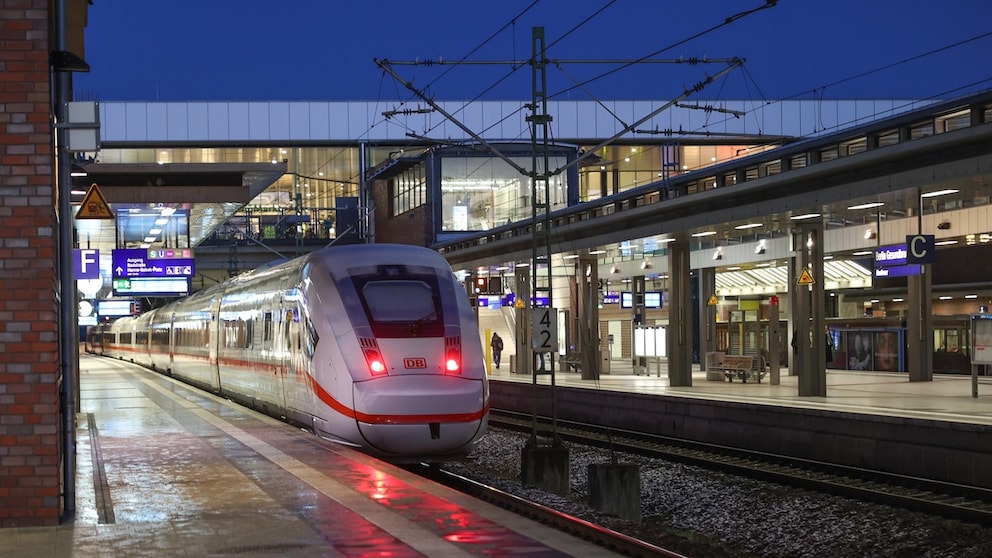
September 25, 2025, 2:11 pm | Read time: 5 minutes
The “European Railway Station Index” has been published for the sixth time. It highlights the best and worst train stations in Europe and explains the current state of European railways. Several German stations are included in the ranking of 50 stations. Some are at the top, others very, very far behind. An overview of the ranking.
There are numerous train stations in Europe. Good, bad–and many somewhere in between. Several companies have taken it upon themselves to assess them. As a result, new indexes regularly appear in the media, identifying the best and worst train stations in Europe. This time, the U.S. consumer protection organization “Consumer Choice Center” has released its latest “European Railway Station Index.” Not to be confused with the “European Train Station Index,” which TRAVELBOOK reported on in March 2024.
The two indexes–which have very similar names–sometimes yield different, sometimes similar results. They agree, for instance, that Zurich’s main station is the best in Europe and apparently remains so. The Swiss station is not at the top for the first time.
Berlin-Gesundbrunnen, a German station, once again landed in the unenviable last place in the ranking.
Overview
Methodology of the “European Railway Station Index 2025” by Consumer Choice Center
Now to this new index. It appears for the sixth time and considers the 50 busiest European train stations. The evaluation included ticket options, station services, accessibility, free Wi-Fi, national and local rail network coverage, and the availability of ride-sharing options. “This sixth edition builds on previous research and uses official reports, online data, station plans, real-time updates, and our own analysis,” the authors write. The report was created in August 2025.
Stations received points for each category, with a maximum of 118 points possible–though none of the 50 stations achieved this. As mentioned, Zurich’s main station is again in first place with 101 points. New to the top 10 and directly in second place is the station in the Polish city of Wroclaw. Third place is held, as in the previous year, by Bern station in Switzerland. Also noteworthy is fourth place: Berlin’s main station, which did not appear in the top 10 in 2024, landed here.
The best and worst train stations in Europe 2025 according to the “European Railway Station Index”
Europe’s 10 best train stations according to the “European Railway Station Index”
1. Zurich Hauptbahnhof, Zurich, Switzerland (101 points)
2. Wroclaw Glowny Station, Wroclaw, Poland (98.5 points)
3. Bern Station, Bern, Switzerland (94.5 points)
4. Berlin Hauptbahnhof, Germany (92 points)
5. London Paddington, London, UK (91.5 points)
6. Utrecht Centraal, Utrecht, Netherlands (91 points)
7. London Bridge, London, United Kingdom (90 points)
8. Vienna Hauptbahnhof, Vienna, Austria (89.5 points)
9. Gare Montparnasse, Paris, France (89.5 points)
10. Amsterdam Centraal, Netherlands (89 points)
Europe’s 10 worst train stations according to the “European Railway Station Index”
41. Torino Porta Nuova, Turin, Italy (59.5 points)
42. Firenze Santa Maria Novella, Florence, Italy (57.5 points)
43. Berlin Südkreuz, Berlin, Germany (57 points)
44. Stuttgart Hbf, Stuttgart, Germany (56 points)
45. Bologna Centrale, Bologna, Italy (55.5 points)
46. Bremen Hbf, Bremen, Germany (55 points)
47. Vienna Meidling, Vienna, Austria (54.5 points)
48. Dortmund Hbf, Dortmund, Germany (52 points)
49. Berlin Ostkreuz, Germany (51 points)
50. Berlin-Gesundbrunnen (47 points)

The 20 European cities with the highest quality of life

Why Is Hauptbahnhof Abbreviated as “Hbf” and Not “Hbh”?
What makes Zurich’s main station so good
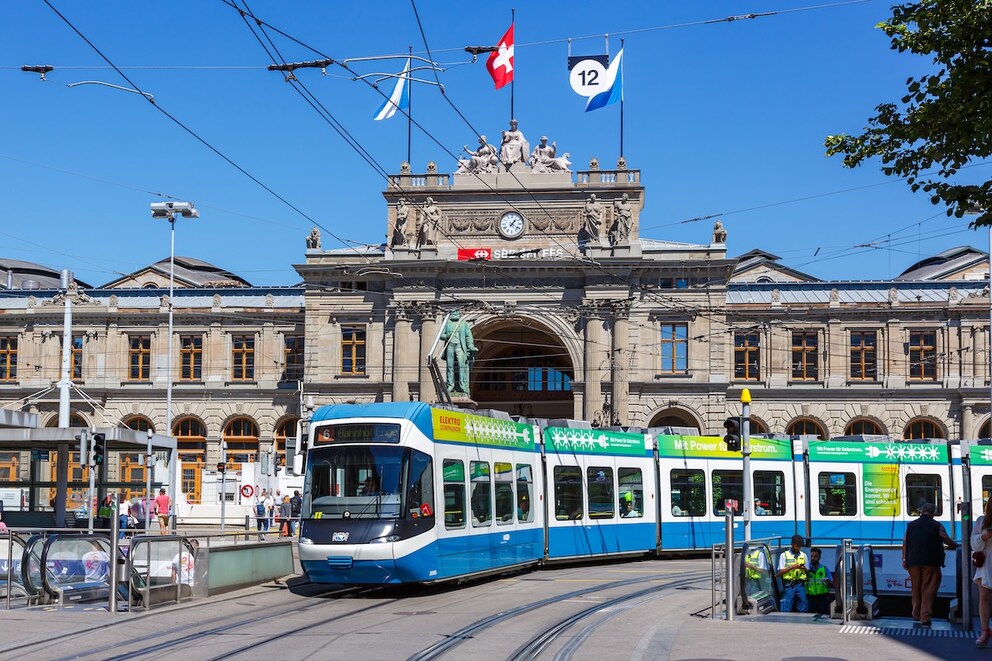
Zurich’s main station scores 101 points in the “European Railway Station Index 2025.” More than 100 million passengers used the Swiss station last year. Zurich’s high score is partly due to short waiting times and delays. Just over four percent of trains were delayed by more than five minutes. The average waiting time was 1.33 minutes–no other station in Europe performed better in terms of punctuality. The authors attribute this to the “advantages of intense competition and a well-maintained decentralized infrastructure” in Switzerland.
How poorly Germany ranks in the index
Germany, on the other hand, fares relatively poorly. The three worst train stations in Europe are located here. Berlin-Gesundbrunnen is even Europe’s worst station. With an average of 74 million passengers per year, it has only three shops and seven restaurants, which is very few compared to other stations. “Worse still: Passengers have to wait an average of 10.83 minutes on the platform, and 42 percent of all trains are delayed,” the authors write about Berlin-Gesundbrunnen station.
Following it in 49th and 48th places are Berlin Ostkreuz, which was last in the previous year, and Dortmund Hauptbahnhof. Also in the top 10 worst stations in Europe are Bremen Hauptbahnhof, Stuttgart Hauptbahnhof, and Berlin Südkreuz. However, it should be noted: 21 stations in the ranking of 50 are in Germany, so the country is overrepresented, and the chance of landing in the lower ranks is correspondingly high. The next most numerous are nine British, seven Italian, and six French stations.
But even aside from that, Germany’s railway landscape faces significant challenges, according to the report. There are various explanations for the current problems. For instance, the renovation of the rail network is significantly more expensive and time-consuming than originally planned. “Since 2022, only 62 percent of trains in Germany have arrived on time–compared to around 99 percent in Switzerland,” the authors write. German authorities have also redefined the concept of punctuality. In Germany, trains are only considered late if they are more than 6 minutes behind schedule–higher than the usual 5-minute threshold.