


September 4, 2026, 10:36 am | Read time: 5 minutes
The “European Railway Station Index” by the U.S. consumer protection organization “Consumer Choice Center” highlights the best and worst among the most-used train stations in Europe. Among the evaluated stations, numerous German ones are notably clustered at the lower ranks. The bottom spot is again taken by a German station, but this time it’s a different one than last year: Bremen Central Station ranks last.
Ranking of the Best and Worst European Train Stations
Good and bad train stations–the topic might sound familiar. Various companies assess the quality of train stations in Europe, including specifically in Germany. Some of these rankings have been covered by TRAVELBOOK.
This is about the “European Railway Station Index” by the U.S. Consumer Choice Center. This year marks its seventh edition. The research has shown several changes compared to the previous year, though not at the top.
Several Swiss stations once again impress with reliability and service. Zurich Central Station is in first place, as it was in 2025, although it was not as clear-cut this year. Another European station is close on the heels of the Swiss transport hub, with only half a point difference.
Bremen Central Station is the Worst Train Station in Europe
Let’s first look at ourselves. German stations fare conspicuously poorly in the evaluation. Last year, Berlin-Gesundbrunnen Station held the last place in the ranking. It has managed to climb a bit in recent months but still remains in the “Flop 10” among the 60 stations considered this time.
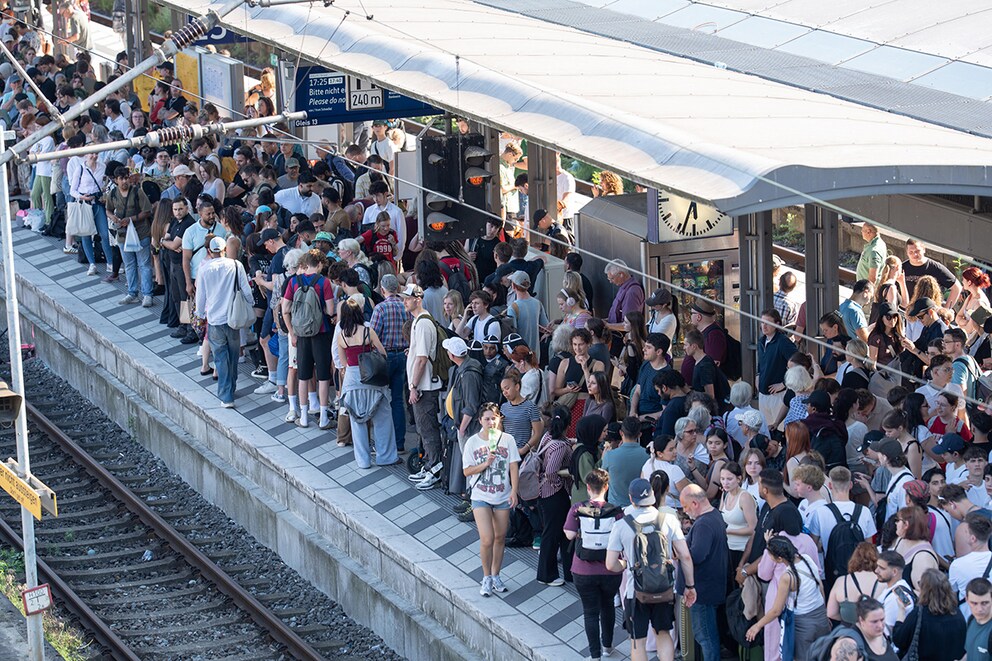
Bremen Central Station presented the worst picture in recent months. It was already among the worst stations in Europe in the 2025 index, then ranked 46th (out of 50 evaluated). This time, it only managed to score 47 points. Key reasons for the many deductions include limited amenities for travelers–explicitly referred to as “limited amenities” in the publication–and poor operational performance. According to the report, 62.9 percent of trains were delayed, with an average wait time of 20.7 minutes.
“Worst Station” According to Passengers
The ranking aligns with travelers’ experiences. A user reports on Google about an excessively high density of passengers and unregulated traffic. In summary, it is the “worst station” she has ever experienced. She would never want to depart from there again. Another user describes himself as not a big fan of Bremen, which could also be related to the situation at the central station. The building is pretty (see photo above), but the station is unkempt and foul-smelling. In the evening, it is even spooky and overcrowded with homeless people begging.
However, Bremen Central Station is not alone in the “Flop 10” of the list. There are notably many German stations among the worst-rated in Europe according to the European Railway Station Index, as you can see.
Europe’s 10 Worst Train Stations According to the European Railway Station Index
- 50. Munich Central Station, Munich, Germany (61 points)
- 51. Bologna Centrale, Bologna, Italy (60.5 points)
- 52. Roma Tiburtina, Rome, Italy (60 points)
- 53. Torino Porta Nuova, Turin, Italy (59.5 points)
- 54. Berlin Gesundbrunnen, Berlin, Germany (57 points), Essen Central Station, Essen, Germany (57 points)
- 56. Stuttgart Central Station, Stuttgart, Germany (56 points)
- 57. Munich East Station, Munich, Germany (52.5 points)
- 58. Dortmund Central Station, Dortmund, Germany (52 points)
- 59. Vienna Meidling, Vienna, Austria (51.5 points)
- 60. Bremen Central Station, Bremen, Germany (47 points)
It should be acknowledged that Germany is disproportionately represented in the ranking. Of the 60 stations examined, 15 are in Germany, making it more likely that several will end up in the lower ranks.
However, regardless of the placement of German stations, the country’s rail landscape faces significant problems, as the index’s authors emphasize. They cite the poor state of infrastructure, capacity bottlenecks, and extensive construction work on the rail network as major causes. Current figures from Deutsche Bahn also show how tense the situation is: In the first half of 2026, punctuality in passenger rail transport was 87.5 percent, and only 58.7 percent in long-distance travel.
However, caution is advised in international comparisons: The definition of “punctual” varies from country to country. In Germany, for example, a train is still considered punctual if it arrives less than six minutes after the schedule. Therefore, the punctuality values used in the ranking are not directly comparable.
Who Excels in Punctuality is Switzerland–Especially Zurich
Now to the European stations with the best ratings. Zurich Central Station, used by more than 100 million passengers annually, scores particularly well in punctuality: The average wait time is only 1.2 minutes, and only four percent of trains are delayed. Switzerland also fares well in the nationwide comparison: The Swiss railway’s punctuality rate was 94.1 percent in 2025 and the first half of 2026. The index’s authors attribute Zurich’s top position to its high reliability and well-developed infrastructure.


This is the worst train station in Germany

These New Train Connections in Europe Will Begin in 2026
The Best Train Stations in Europe 2026
- 1. Zurich Central Station, Zurich, Switzerland (101 points)
- 2. Gare du Nord, Paris, France (100.5 points)
- 3. Amsterdam Centraal, Amsterdam, Netherlands (98.5 points)
- 4. Wrocław Główny, Wrocław, Poland (96.5 points)
- 5. Bern Central Station, Bern, Switzerland (94.5 points)
- 6. Gare Montparnasse, Paris, France (94.5 points)
- 7. Gare Saint-Lazare, Paris, France (91.5 points)
- 8. London Bridge, London, United Kingdom (90 points)
- 9. Kraków Główny, Kraków, Poland (89.5 points)
- 9. London St Pancras International, London, United Kingdom (89.5 points)
Do Not Overrate the Results
The authors themselves point out that the results should be interpreted with caution. The study relies on data from various countries and sources, which are sometimes outdated, contradictory, or collected using different methods. The information on network coverage is also not entirely precise.
Thus, the index represents a quantitative assessment based on the data available at the time of the study and does not claim to be universally valid regarding individual travelers’ experiences with train stations.