

December 9, 2025, 6:06 am | Read time: 4 minutes
With delays, technical disruptions, and occasionally missing services, Deutsche Bahn often provides reasons for frustration. However justified criticism may be in various areas, a frequent comparison hardly reflects reality: that with the Shinkansen, the legendary punctual high-speed train in Japan. It is often cited as proof of what supposedly goes wrong here and what can evidently be done better abroad. Yet, this analogy overlooks crucial factors. TRAVELBOOK explains it in more detail.
Why the ICE and Shinkansen Cannot Be Compared
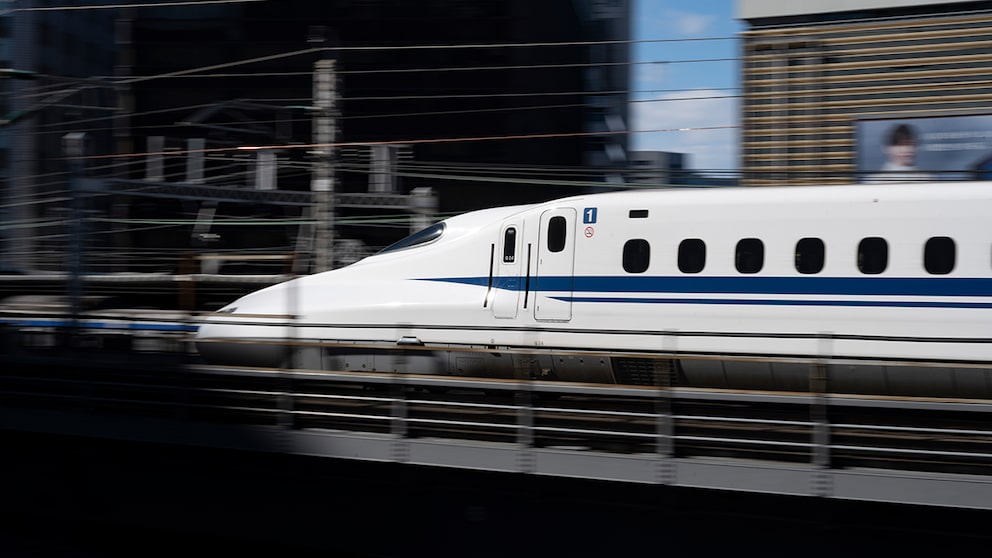
The Japanese Shinkansen is a true showcase of transportation. The high-speed trains travel at up to 320 km/h, are famously punctual, and have even been earthquake-proof for several years. Deutsche Bahn, which often “shines” with construction sites and other disruptions leading to delays and train cancellations, can hardly compete. But what critics may not realize is: It is literally unable to do so.
Own Rail Network vs. Shared Tracks of Older Design
“Shinkansen” refers not only to the trains themselves but also to the specially constructed rail network on which they operate. More information can be found on the website of the travel agency Japan Rail Pass. The Shinkansen network is free of level crossings and tight curves, and there is no mixed traffic with freight or regional trains. Disruptive factors that could impede smooth operations are absent.
The situation is quite different in the German rail network. Here, ICE, IC, regional trains, S-Bahn, and freight trains share the same tracks, inevitably leading to friction. The large speed differences between the various types of trains make maintaining a stable schedule difficult: A slow regional train can slow down an ICE just as a delayed connecting train can disrupt the entire system.
Additionally, the construction of the small-scale, historically developed routes in Germany imposes physical limits on speed. The German rail network is crisscrossed with tight curves, old route layouts, and structural compromises. In many places, speed reduction is therefore necessary. Even where modern new lines are built, they inevitably merge into the older existing network. Clearly, the limitations of a mixed traffic system then apply again.

How Deutsche Bahn’s Crisis Primarily Affects Employees
Why I Will Never Ride Flixtrain Again!
In Japan, Maintenance Work Takes Place at Night
Additionally, the nighttime freight traffic in Germany leaves little room for comprehensive maintenance work. These therefore also take place during the day, which is why in the everyday operations of Deutsche Bahn, “due to technical disruptions,” as it is officially stated, there can repeatedly be disruptions in long-distance travel.
In Japan, maintenance and necessary repairs on the rail network are carried out during the night hours. This is possible because the Shinkansen network is completely closed for several hours during this time. Then, the tracks are ground to the millimeter, the track position is checked and corrected, the overhead line is maintained, and the entire infrastructure is inspected, as explained in more detail in an article on the official Japanese government website.
Also interesting: Does DB want to carry out important renovations with 30-year-old technology?
The Shinkansen Itself Is Not Faster Than the ICE
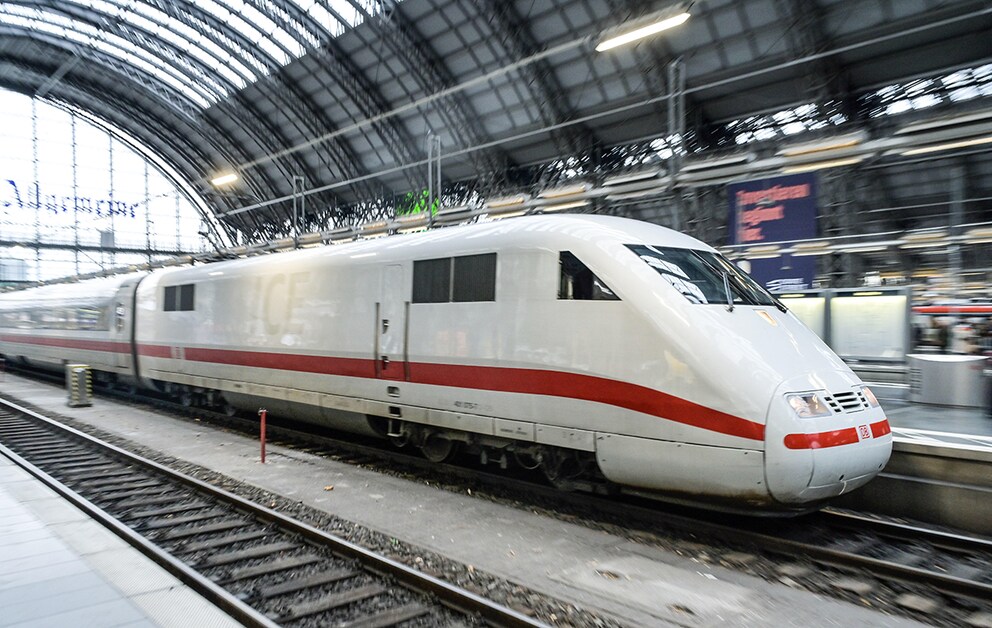
In summary, the reason the ICE of DB cannot keep up with the Shinkansen in terms of speed does not lie with the train itself. In fact, it is technically very advanced: Modern ICE generations (such as ICE 3 or ICE 4) can easily travel at 300 km/h and are comparable to Japanese trains in many respects. The limitation is not with the vehicle itself but with the framework in which it must operate.
But there is hardly anything that can be changed about that. Building a Shinkansen-like rail network in Germany would mean creating completely new routes, which would require enormous space (especially in densely populated areas). In addition, there would be gigantic costs, decades-long construction times, and politically extremely difficult decisions. For financial, legal, and societal reasons, Germany therefore relies on expanding the existing network. While pragmatic, this inevitably leads to a higher complexity and vulnerability of the system.