

April 23, 2026, 3:30 pm | Read time: 8 minutes
For more than 20 years, our author has traveled tirelessly around the world. No destination is too far, too exotic, or too adventurous. Solo travel offers him unique attractions that he enjoys time and again. Being on his own, he learns many important lessons abroad that can be valuable for a lifetime. Here, Robin Hartmann shares what his time on the road has taught him.
Anyone who has traveled alone can confirm it. The allure of the unknown becomes even stronger, and the adventure sensors are particularly sensitive. What awaits out there is not just another checkmark on the bucket list for those who know how to see with open eyes and an open heart. It’s a valuable lesson for life. I’ve had the privilege of learning from my travels all my life, and for 20 years, I’ve enjoyed doing it solo, just for myself. I think it’s not an exaggeration or overly sentimental to say that this fortune has made me a better, more complete person.
The first thing my travels and the desire for them taught me is five languages. Early on, I was fascinated by the ability to communicate on the go, as language is one of the keys to a country and the doors of the people who live there. My mother worked as an English teacher, so I learned this language almost incidentally. After high school, I was left with nine years of (rather poor) school French and a fairly easy choice. Either throw it all away or learn the language again from scratch, properly.
“The limits of my language are the limits of my world”
I applied as a children’s entertainer in French holiday villages and spoke French fluently after four stays. Just a few years later, I started learning Spanish at university, which was significantly easier for me from the start. To this day, I love the melody of this language and its powerful expressions (not referring to swear words). Again, it was a stay abroad in Mexico, lasting several months, that laid the actual foundation for my current knowledge. In later years, I had the privilege of living in Madrid for half a year and traveling through South America three times over four years for several months each time.
“The limits of my language are the limits of my world” – as the great philosopher Wittgenstein once said. For my part, I never wanted to accept that this factor would set a limit for me; instead, I wanted to lovingly and respectfully push against it, opening the hearts of people in other countries. Surely you have experienced how eyes light up when you say even a word in a foreign language. As if this seemingly simple and at least expected gesture were a great gift. For every country I travel to, I learn the basics for “Hello,” “My name is,” and especially “Thank you” in advance. This has already brought me very special experiences on my travels numerous times.
Also interesting: How I fell in love with traveling in Germany
Easier to Make Friends
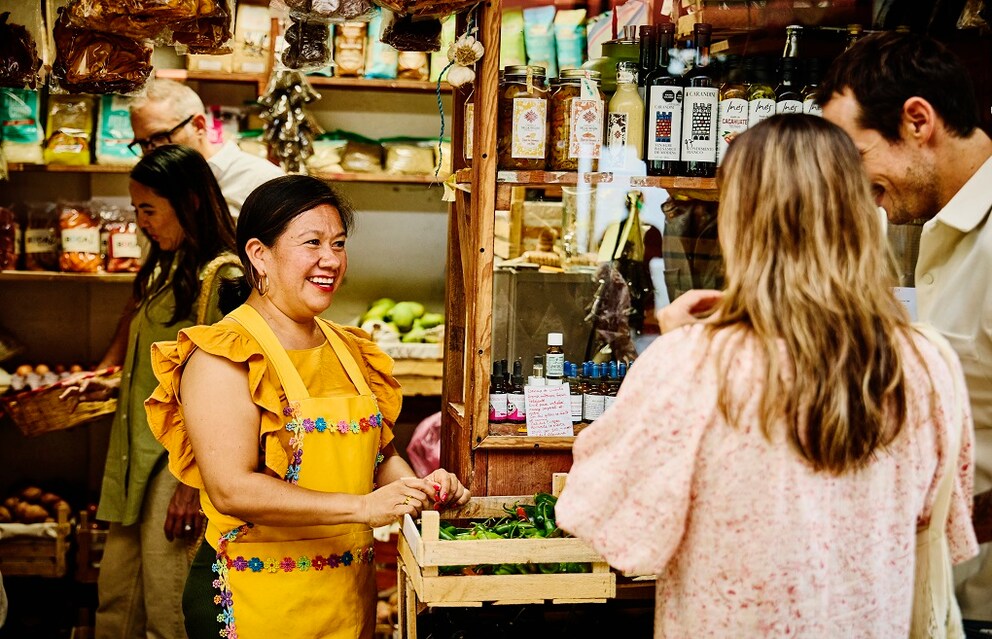
In Panama, a family invited me first to a picnic and then to stay at their home for several days. In Morocco, I was offered mint tea on the street. In Greece, a fisherman took me out to sea to load his daily catch. Often, my efforts on markets resulted in significantly lower prices than for other travelers. This difference in how I was perceived by strangers, whom I wanted to make friends with, was particularly strong in South and Central America. Those who only spoke English were sometimes quickly labeled as “Gringo.” A derogatory term, usually reserved for Americans and their unfortunately often arrogant worldview, even while traveling.
The second lesson, which goes hand in hand with learning languages but must stand on its own, is respect for other cultures. Travel teaches respect for the fact that people elsewhere are different, and that’s precisely what makes our big wide world fantastic. Those who listen and watch closely can learn a lot for their own lives. On a trip, you are a guest in another country, and you should behave accordingly. Curious, enjoying with all five senses, but always respectful. Those who can offer a gift like a few words of the language can only win. And will return home with unforgettable memories and even more thirst for the next adventure.
Time for the Essentials
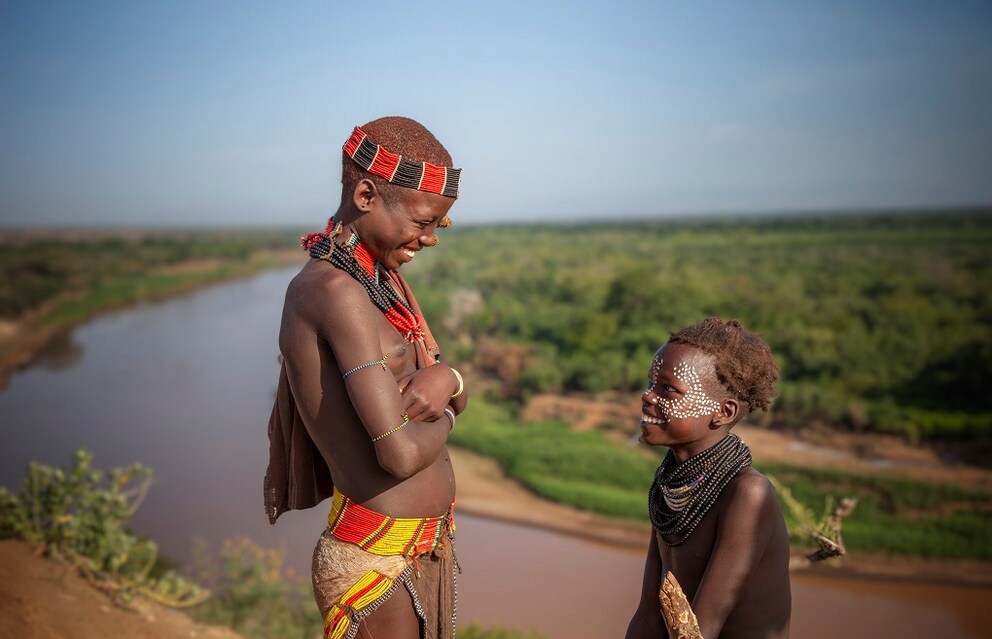
Humility is one of the most important lessons that life on the road can teach. In most travel countries, most people have much less than we do. At least if you use material possessions as a parameter for this calculation. Yet they are often so much happier and seem more carefree than we are. There are numerous books that deal with the question of how this can actually be. The answer, in my opinion, is simple. These people can still focus on the essentials, and material goods almost never and nowhere in the world have anything to do with it. It’s a misconception to think that possessions and wealth make people freer. On the contrary, these things can act like shackles on the mind and heart.
Those who have a lot must also do a lot to maintain this standard, instead of focusing on the essential things in life. For example, having time to spend with loved ones. In almost all travel countries, the institution of family still holds a higher value than it does for us. Unfortunately, many seem to have forgotten in their constant race in the hamster wheel that money doesn’t hug you when you’re sad. Those who possess less material goods often still know the true values that can enrich life. Listening to such people and learning their “tricks” can teach a lot for one’s own life.
Also interesting: How bizarre my time as an entertainer was

5 Work Models That Enable Permanent Travel

How Traveling Can Help with Everyday Problems
Culture Shock Becomes Comfort Zone
Curiosity may not necessarily be a lesson that travel teaches. Those who travel usually do so out of curiosity, but there can be much more behind it. An open eye and an open heart will not only bring us much knowledge. But also ensure that a rejecting, oppressive feeling of foreignness, known as culture shock, can transform into something wonderful. A hunger, namely, to understand another country and its people as completely as possible. To see more than just the supposed sights that every tourist guide sings about.
Those who travel alone are much more open to all these possible lessons. Even with two people, you are perceived from the outside as a closed unit. You often rely too much on the safety within the herd. Adventure begins exactly where your comfort zone ends. Where you dare to ask a stranger for advice or help. Where you do something brave that you wouldn’t have thought you could do before. Something that helps you grow, step by step, into a different, more confident person.
Plan Nothing
Planning a (solo) trip alone is an enormous effort. Anyone who isn’t at least a little tense, maybe even anxious beforehand, is truly already a seasoned pro. I can’t count how many times I’ve sat at home completely frazzled the day before a vacation alone, preferring to stay in the safety of my four walls. What could go wrong? Will I safely return home? What if this is all just a big crazy idea? Those who ultimately overcome these concerns will experience an overwhelming victory, namely over themselves and their fears. It’s also this feeling that always draws me back to the distance.
Lastly, perhaps a somewhat absurd-sounding but very sensible lesson. Plan as little as possible. Say goodbye to all plans and preconceived blueprints about a country and its people in advance. Be like an empty, open book when you arrive in a foreign place. A book that you and all your experiences will fill gradually. Those who expect nothing cannot be disappointed. And anyway, it would be an unparalleled foolishness to feel disappointment over a gift like a trip. Stop comparing the current trip with previous experiences. Immediately! No country is like another, and each is unique in its own magical way.
Also interesting: The perfect road trip through Israel
Instead, always view the world with curiosity like a puzzle you want to piece together. Each individual piece contributes to seeing a bigger picture, understanding the world a little better. In one of my numerous side jobs, I work as a lecturer at schools, where I regularly talk about my profession as a travel journalist. Someone always asks me which country is my favorite, where I liked it best. I always say that this question cannot be answered meaningfully for me. Because I feel like a child of this world, and my soul is certainly partly German, but also Latino, African, and Asian. Perhaps that’s another lesson for travel: to feel at home everywhere.