


April 28, 2026, 3:19 pm | Read time: 4 minutes
The asparagus season has begun this year, along with the rush for hollandaise sauce. But why is the sauce, which actually comes from France, named after a part of the Netherlands? And how do you make it perfectly? TRAVELBOOK has the answers and a few tricks.
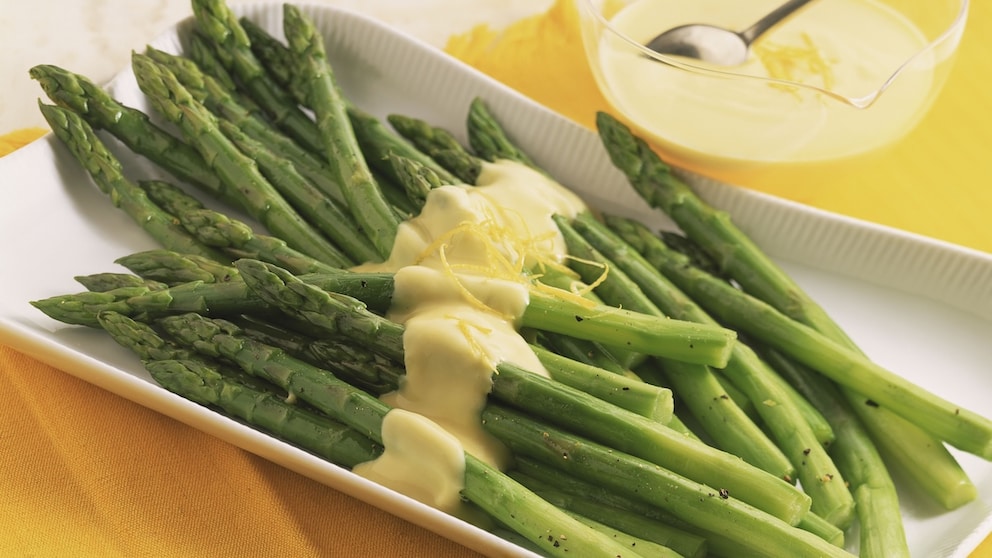
It is popular worldwide, but especially in Germany: asparagus. Of course, there are numerous variations, ranging from brown butter to a simple squeeze of lemon. Yet hollandaise sauce remains the classic on asparagus spears—a seasonal favorite. It also pairs excellently with green asparagus.
What exactly is in it, how to best prepare it, what to do if it curdles, and why it is called hollandaise sauce—TRAVELBOOK has the answers.
Overview
Why Is Hollandaise Sauce “Dutch”?
Anyone who enjoys this rich sauce may have wondered why it bears this name, especially since it originates from French cuisine. So where does the “Dutch” moniker come from? It is the excellent dairy products for which Holland has been known for centuries that lead us to an explanation, or more precisely, it is the butter, the main ingredient of hollandaise sauce.
Also interesting: 6 Things You Didn’t Know About Holland
The sauce is said to have originated in Normandy, specifically in the town of Isigny-sur-Mer, and was originally called Sauce Isigny. However, during World War I, when French butter became scarce, the Dutch version was used. Whether it was eventually named “Dutch” to preempt any disdain from French gourmets who preferred French butter—which would be typical of the French—or if the name is a kind of homage to the Netherlands, is questionable. If you consult the Duden about the origin of the word, it states “unclear.”
It is believed that the Huguenots brought the sauce, or at least an early form of the butter sauce, from France to the Netherlands in the 17th century. What is certain is that about 300 years later, it became a true cult favorite.

3 Tricks to Perfect Belgian Waffles

Home-made guinea fowl Tunisian-style
The Recipe for Hollandaise Sauce–Including Tips
For those who want to try making hollandaise sauce from scratch, here is the recipe and some tips:
Ingredients
- 200 – 220 g butter
- 3 egg yolks (M)
- about 50 ml white wine
- 1 tablespoon fresh lemon juice
- Salt and pepper
Preparation
1. Heat the butter in a pot, bring to a brief boil, and then let it simmer for about 20 minutes until the whey separates from the fat. Skim off the resulting foam and let the now clarified butter cool slightly.
2. Meanwhile, vigorously whisk the egg yolks with the white wine and possibly 1-2 tablespoons of water (all at room temperature) in a bowl over a hot water bath for about three to five minutes until a creamy consistency is achieved.
3. Slowly, very slowly, whisk the melted butter into the egg mixture drop by drop, and finally season with lemon, salt, and pepper.
Tips
- To ensure the fat and egg combine, the water bath or mixture should not be overheated or boiled, or the egg will curdle.
- Similar to making mayonnaise, the ingredients for hollandaise sauce should all be at about the same temperature to blend well. So let the butter cool slightly before incorporating it into the egg mixture.
- Always whisk the butter into the egg mixture drop by drop or in a thin stream.
- A perfect hollandaise sauce is creamy and does not clump, and despite its high fat content, it still tastes fresh due to the lemon.
- Serve the hollandaise sauce immediately and do not reheat it.
What Helps if the Sauce Curdles
- For a quick fix, carbonated mineral water is suitable: Shake a small bottle, keep it closed with your thumb, then spray a thin stream into the sauce and stir vigorously.
- Since the sauce usually curdles when it gets too hot while whisking, one or two coarsely crushed ice cubes can help. Stirred in quickly, they lower the temperature, allowing the egg yolk to bind again.
- Additionally, you can mix an egg yolk with a tablespoon of warm water and place the bowl in a hot water bath. Then, whisk the curdled hollandaise in drop by drop and then in a thin stream until it is smooth again.