

August 7, 2026, 3:11 pm | Read time: 6 minutes
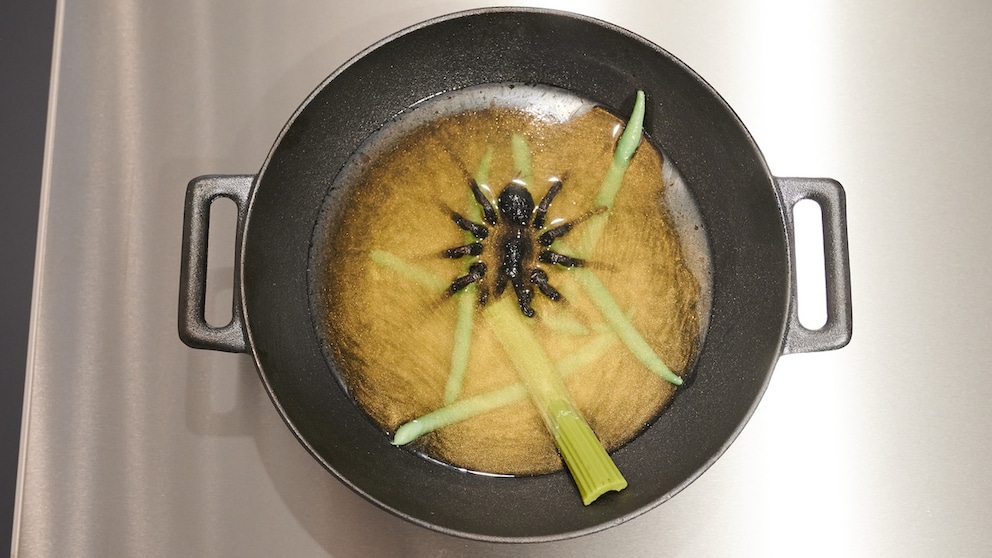
The Disgusting Food Museum in the heart of Berlin presents an exciting and educational exhibition of unusual foods from around the world. And although many of the “exhibits,” some of which can even be tasted on-site, seem truly bizarre at first glance, the museum does not rely on cheap shock value. Instead, it focuses on an educational mission with an honorable message. TRAVELBOOK author Robin Hartmann visited, was amazed, and sampled the offerings.
Tuesday afternoon in Berlin, near Checkpoint Charlie, local time 11:54 a.m. I stand curiously with a few others in front of the doors to perhaps Berlin’s most unusual exhibition, the Disgusting Food Museum. A friend had told me about it during a vacation, and I immediately thought: We have to see this. At the entrance, a sign reads: “Beyond the boundaries of good taste.” Below, in small print, a warning: “Some contents of the exhibition may cause physical and psychological discomfort.” A woman waiting with me says, a bit anxiously, “It can’t be that bad–I hope…”
The Disgusting Food Museum has been showcasing unusual “exhibits” from around the world since 2021. These are in the form of foods and drinks that, as the name suggests, may appear disgusting at first glance. However, as I quickly learn from museum director Alexandra Bernsteiner, the focus is not on cheap shock value or marketing with nausea: “We try to convey to our guests that in other countries, it’s completely normal to eat things that may seem disgusting to us at first glance.” Yes, the term “unusual” is actually more fitting. But the museum is originally a franchise from Malmö, Sweden, and the name is contractually required. In truth, it’s more about educating visitors about eating habits worldwide.
Seal Stuffed with Birds
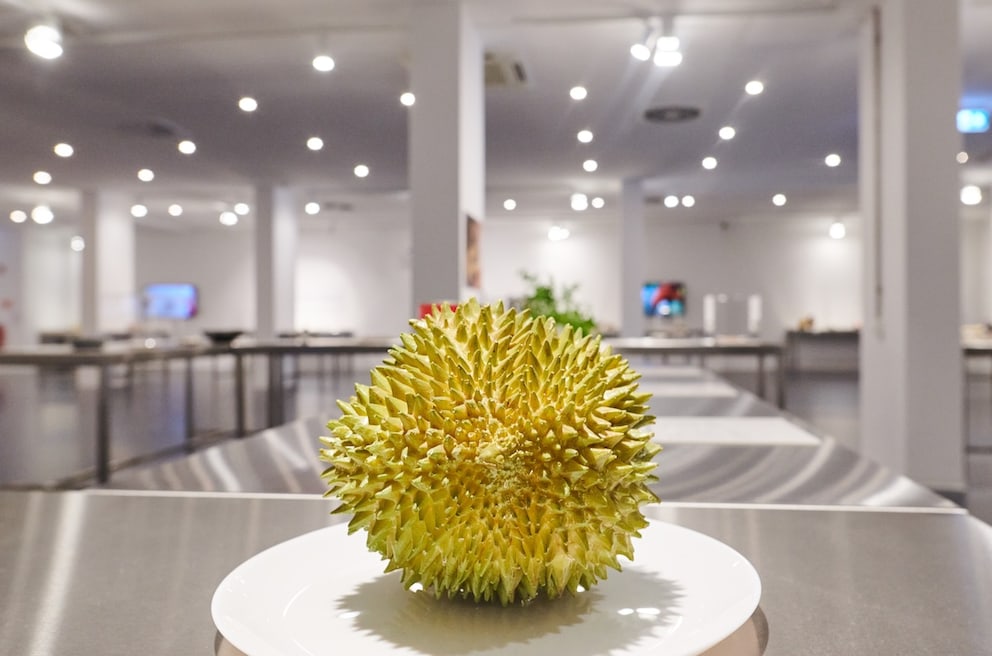
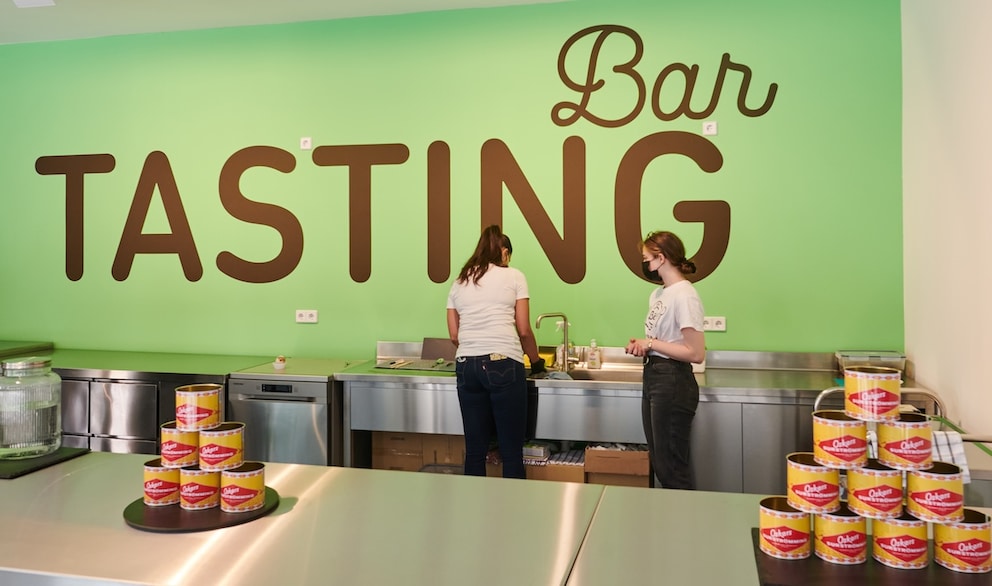
Visitors receive a vomit bag at the entrance, more as a gag, but you never know. A sign reads: Two days since the last bout of nausea. Since opening, 118 people have had to vomit here. An employee at the tasting counter, where you can sample some of the “exhibits,” tells me with a grin that a man recently had to vomit twice in a row. So, with a slightly queasy feeling, I enter the Disgusting Food Museum, which is relatively small with just one large hall. “It’s not really about disgusting food,” says Bernsteiner. “It’s about unfamiliar things that are not known here and may therefore be considered culturally questionable.”
The aim is to foster a new kind of understanding. First, with numerous display cases containing examples of unusual, some might say disgusting, foods. For example, Kiviat from Greenland. This is a freshly gutted seal stuffed with up to 500 small birds. The carcass is then buried until the birds are fermented. They are enjoyed by biting off the heads and sucking the juices from the bodies. In contrast, cheese “refined” with mites and fermented mare’s milk, “in organic quality,” as Bernsteiner notes, are also produced and available in Germany.
Also interesting: The bog bodies in the National Museum of Ireland
The Disgust-o-Meter
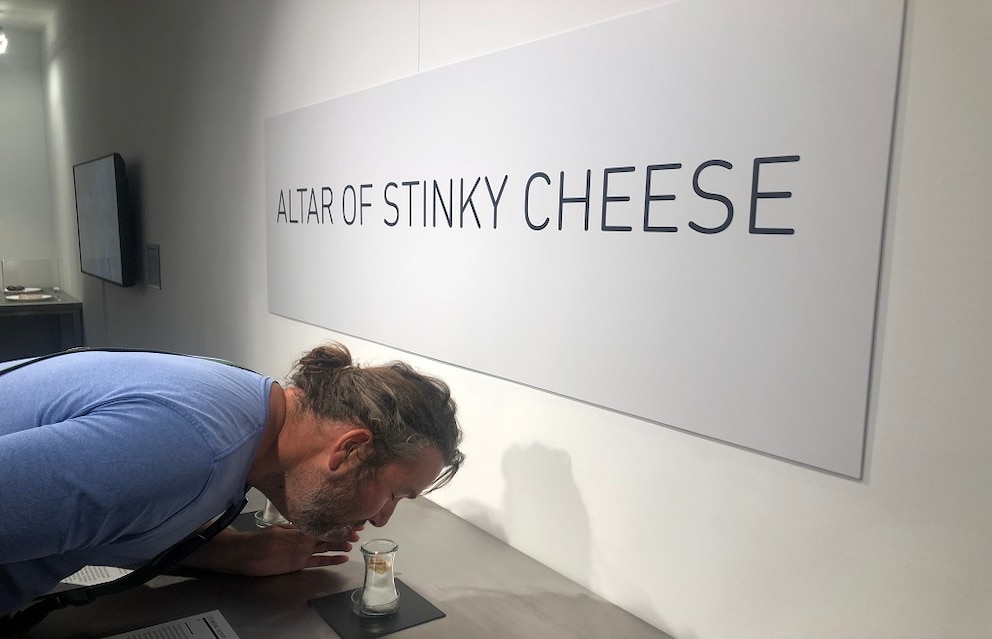
Many exhibits can also be smelled, such as the durian from Asia, also known as the “stink fruit.” My friend forbade me from buying it during a trip to Bali in 2025. Well, it smells a bit rotten, but I don’t quite understand why the fruit is banned in many public places in Asia. I’m equally unshocked by the “altar of stinky cheeses,” some of which I regularly have in my fridge–or on the balcony when my friend forbids storing them in the apartment. The Disgust-o-Meter is amusing: You can stick your face in and press a button to release a smell. A camera captures your reaction.
“I see, a pro,” Bernsteiner says, almost a little disappointed, as I don’t even flinch in my photos. Perhaps it’s because, as a frequent traveler, I’ve tried quite a few unusual dishes that others might call disgusting. For me, the exhibits don’t cause discomfort or shock, but rather childlike curiosity. The video installations on screens showing the horrors of factory farming are harder to bear. “We’ve had guests faint at the sight.” The decision to show the videos was made to encourage visitors to question the concept of the supposedly disgusting.
Also interesting: The quirky flour sack museum in Germany
“I Tried Obatzter for the First Time–and Was Surprised”

Why Cambodia Is Worth a Trip
Eggs Cooked in Urine
I continue to marvel at the exhibition, chuckling at the Chinese “Three-Penis Wine” (containing seal, deer, and dog phallus). Or cow urine, packaged in regular PET bottles like a soft drink. Bernsteiner’s favorite exhibit is the “Virgin Boy Eggs,” which is more than unusual even for me. Also from China, these are eggs cooked in the urine of young boys. “They’ve recently been recognized by UNESCO as a cultural heritage,” Bernsteiner says, shaking her head slightly. Taste is subjective, after all. Still, I’m glad they’re not available at the tasting counter.
Of course, I’m drawn there too. Somewhere between bravado and genuine curiosity, I want to try everything offered here. So I start with a whole range of fried insects. Less disgusting than it might sound, especially considering that several species have long been approved by the EU for consumption and food production. So in go the grasshopper and the June beetle, which honestly taste like nothing at all. The further I go, the more expectant the staff’s faces become. They seem to think there must be something to shock this oddball.
Also interesting: The unusual German asparagus museum
Last Inhibition
But it’s like a curse. Everything I’m warned about with a chuckle beforehand ends up not only tasting interesting but sometimes even good to me. Like the fermented tofu, which I can easily imagine as a spread. Even the stinky tofu isn’t bad on the tongue, though my stomach rebels for the only time, and immediately. I still don’t make it onto the vomit honor list; my nickname “Iron Stomach” isn’t for nothing. I’m genuinely disappointed by the Sardinian cheese, which Bernsteiner describes as the absolute last inhibition, and it doesn’t even tickle my palate. I promise to return soon with a cheese product I love, which many would surely find at least unusual.
I skip the various chili sauces, some of which have several hundred thousand Scoville units, from the start due to experience. Yes, I want to broaden my horizons and take my taste buds to new, strange places. But I really don’t need to prove anything to anyone. So I have a hearty laugh when a teenager, after tasting these sauces with tears in his eyes, is dragged out of the Disgusting Food Museum by his angry mother. If you want to visit, it’s open from Friday to Tuesday from noon to 6 p.m. Ticket prices are dynamic, with adult tickets ranging from 10 to 17 euros, and reduced tickets from seven to 12 euros.