


October 25, 2025, 5:29 am | Read time: 4 minutes
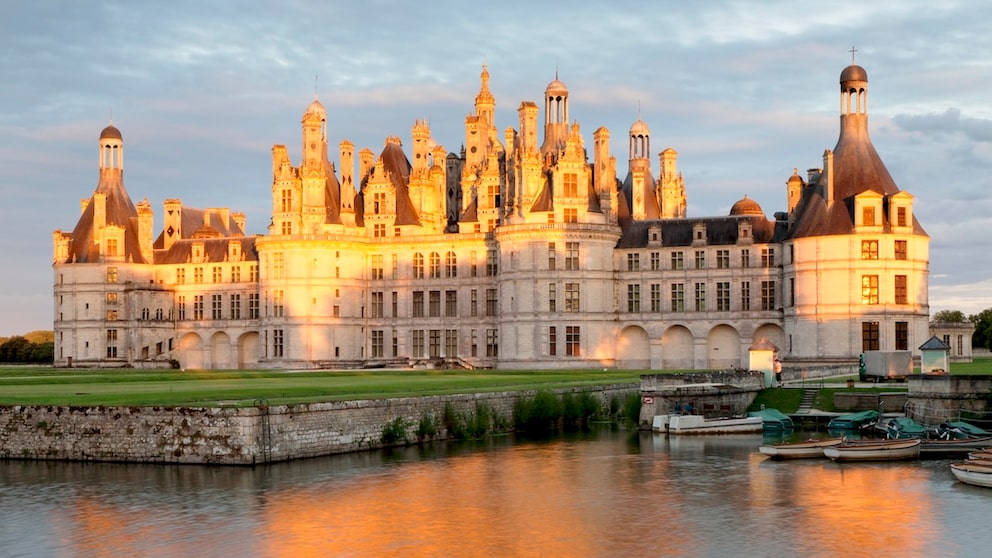
Seeing Chambord Castle for the first time feels like stepping into another era. The magnificent structure on the Loire, with its turrets and battlements, could easily serve as a movie set. And as you walk through the halls, you wouldn’t be surprised if a king suddenly appeared before you.
Chambord is the largest castle on the Loire. A massive structure with 440 rooms, 84 staircases, six large towers, and countless roofs, it employed 1,800 workers for a total of 25 years. Construction began in 1519 at the behest of King Francis I and was a challenge due to the swampy ground in the area. Francis chose the location because of the abundant wildlife. However, it was never intended as a permanent residence. The king only stayed for a few weeks at a time and took all the furniture with him afterward. What was important to him was that the building clearly demonstrated his power as king.
Where the Sun King Celebrated
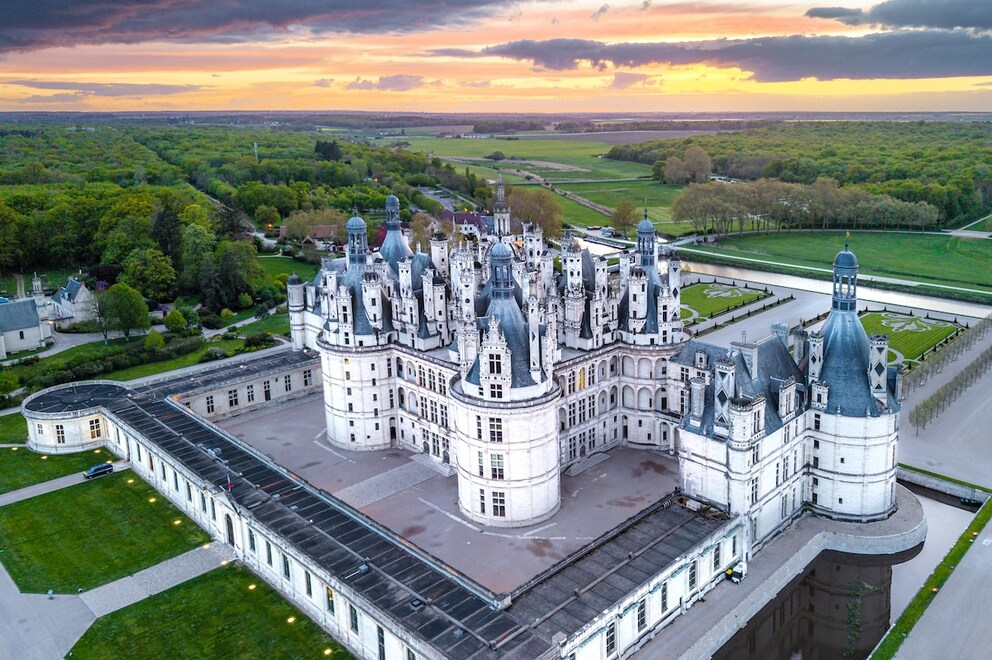
Many crowned heads and other celebrities stayed at Chambord Castle, located near the town of Blois, about two hours from Paris, and it was repeatedly remodeled. The Sun King Louis XIV hosted grand festivities here, and the Polish King Stanislaus Leszcynski lived in the castle during his exile from 1730 to 1733.
Over the years, the stone walls received wood paneling, the floors were laid with parquet, and spectacular stoves were installed. Unfortunately, much of the furnishings disappeared during the French Revolution.
French Architecture and Italian Renaissance
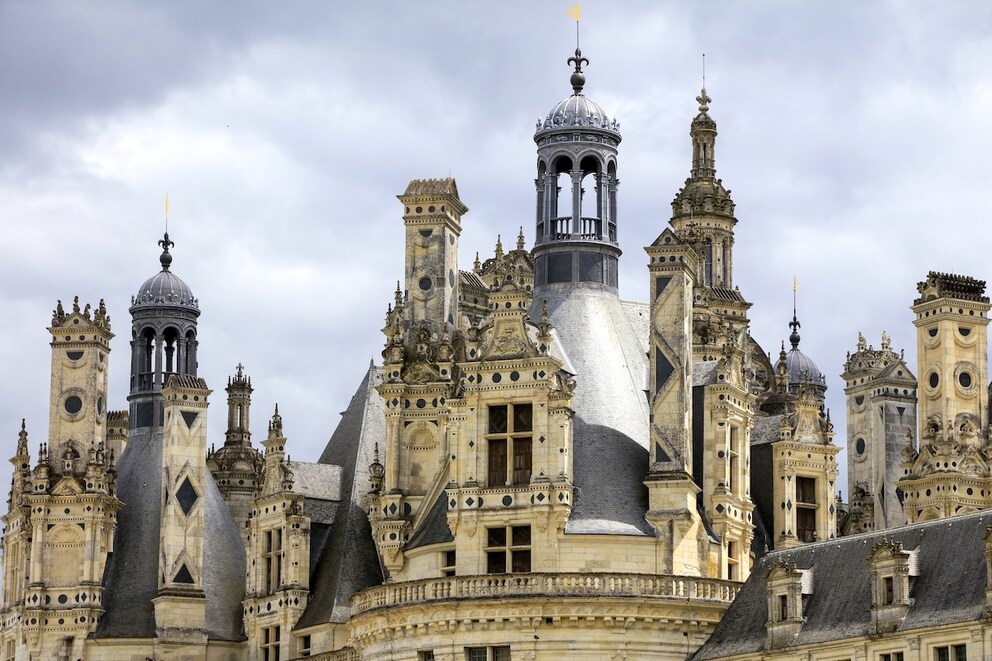
Today, Chambord is state-owned and part of the UNESCO World Heritage. Some renovations were reversed starting in 1930, and the castle was largely restored to its Renaissance state–a mix of medieval French architecture and Italian Renaissance. The square keep (Donjon) is surrounded by a low ring wall reminiscent of a fortress.
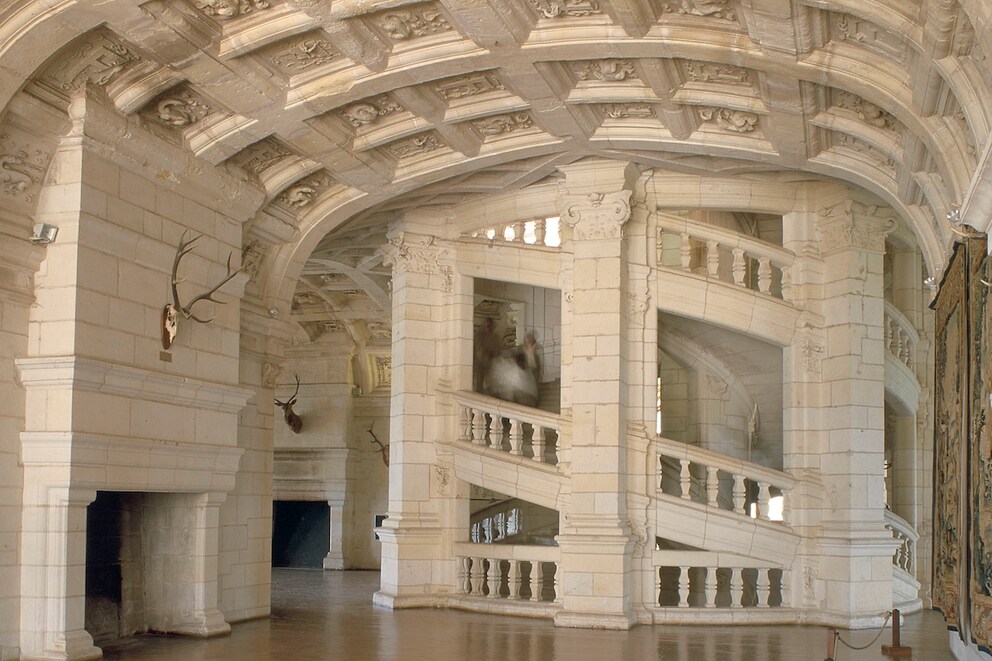
The centerpiece of the Donjon is the double-helix staircase, which is believed to have been inspired by Leonardo da Vinci. It consists of two intertwined spiral staircases, and if two visitors take different flights, they can see each other through the openings but never meet. It’s worth trying out, although most visitors think the same, so the staircase is often busy.
7 Castles on the Loire You Should See
Azay-le-Rideau: A Fairy-Tale Castle With a “Magic Mirror”
Visit to the Castle Halls
Visitors to the castle should take a look at the halls. On the first floor is the former residence of Francis I with the large council chamber. In the north wing of the building, you can visit the chambers of Louis XIV and even glimpse his magnificent bed. The queen’s suite in the north tower is furnished in the style of the 17th century. In the south wing of the cross hall, there was once a theater where the famous Molière performed his plays “Monsieur de Pourceaugnac” and “Le Bourgeois Gentilhomme.”
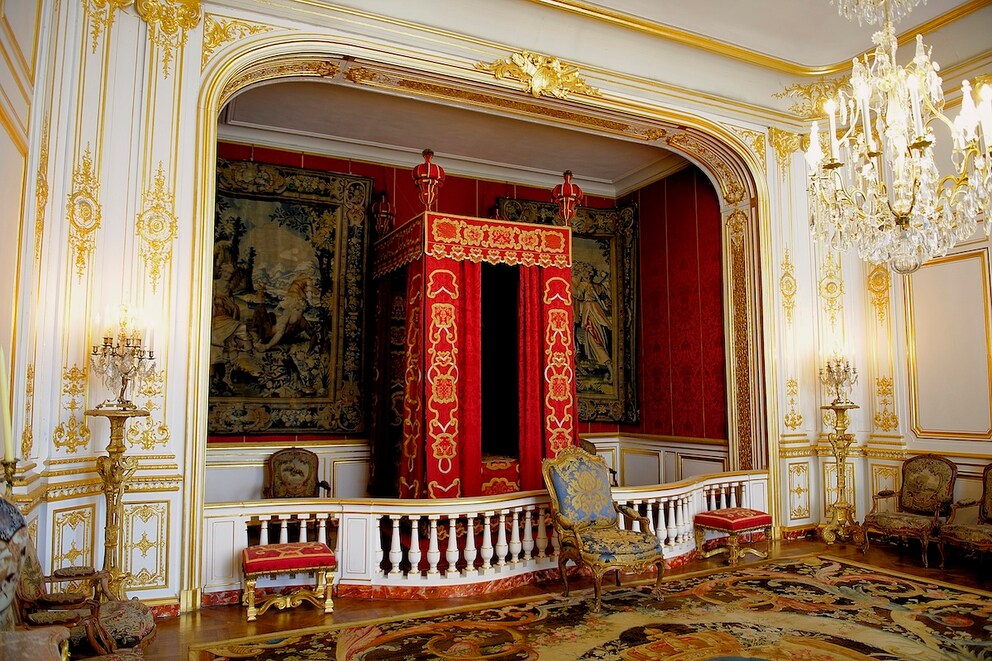
Some 18th-century suites are also on display–the walls are covered with tapestries or paneled, there is parquet flooring, and some wooden partitions divide the once large rooms.
In the west wing, there is a 17th-century chapel. The vaulted ceilings in the cross-shaped hall on the second floor are also spectacular–the coffered ceiling with arches and ornaments features salamanders and other motifs.
Panoramic Views from the Terraces
The terraces are a must-visit. From them, you have a spectacular view of the surroundings with the moats and landscape, as well as the many turrets, dormer windows, and chimneys of the castle.
Once you’ve had your fill of the views, you can visit the park (called the State Domain) that belongs to Chambord Castle. It covers 5,540 hectares and is surrounded by a 32-kilometer stone wall. Swamps, ponds, fields, and forests are part of it, and its inhabitants include deer, wild boars, mouflons, roe deer, bats, and 150 bird species. Around the castle, there are many activities–from boat and bike rentals to hiking.
Text contribution: Silke Böttcher