

March 31, 2026, 8:48 am | Read time: 5 minutes
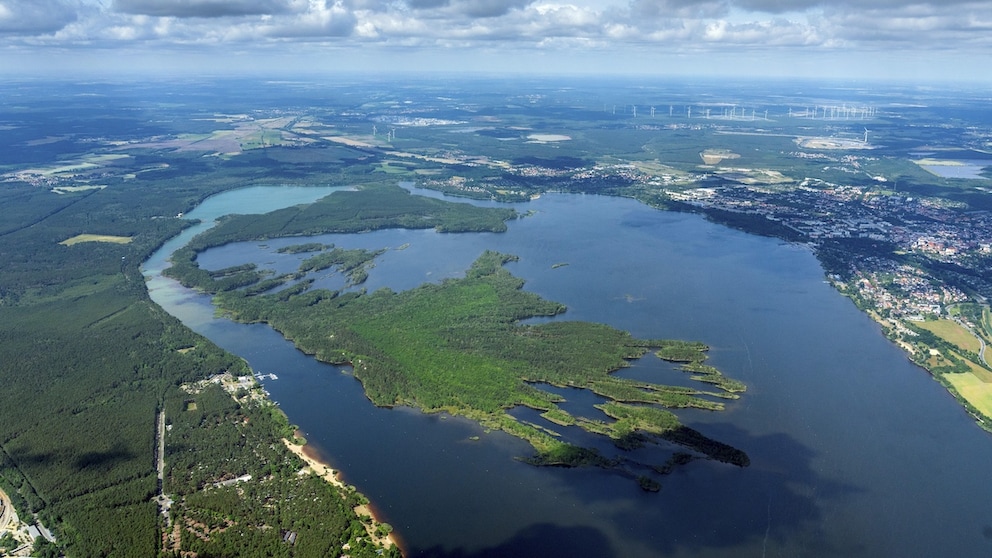
In the Lusatia region between Brandenburg and Saxony, a true mega-project has been underway for several decades: The Lusatian Lake District is transforming old lignite mining sites into Europe’s largest artificial chain of lakes. The region is sometimes even referred to as Neu-Seeland (a play on “See,” which is the German word for lake). This summer marks the next milestone.
Just 140 kilometers from the bustling metropolis of Berlin, a unique but little-known natural paradise stretches across the states of Brandenburg and Saxony. It’s intended to become such a paradise one day, as it has been in the process of creation and development for decades. We’re talking about a vast region called the Lusatian Lake District. It is nothing less than the largest artificial chain of lakes in Europe, growing here through an impressive renaturation project.
According to the official website of the Lusatian Lake District, it spans more than 14,800 hectares. It currently includes 25 lakes, each larger than 100 hectares. Ten of these are planned to be connected by canals for recreational boating, creating a navigable area of 7,000 hectares. Part of this is set to be implemented this summer. “On June 29, the lakes Senftenberger See, Geierswalder See, Partwitzer See, Sedlitzer See, and Großräschener See, formed from flooded mining pits, will merge into a unified network through navigable canals,” the Lusatian Lake District Tourism Association announced. Visitors will be able to navigate all the lakes without having to move their boats. A complete round on the water is about 50 kilometers long.
An astonishing transformation in a landscape shaped by mining for over 150 years. More than two billion tons of lignite were extracted here from depths of 60 meters or more, leaving massive craters in the landscape. These scars have been transformed into lakes since 1967.
Tourism Is Booming
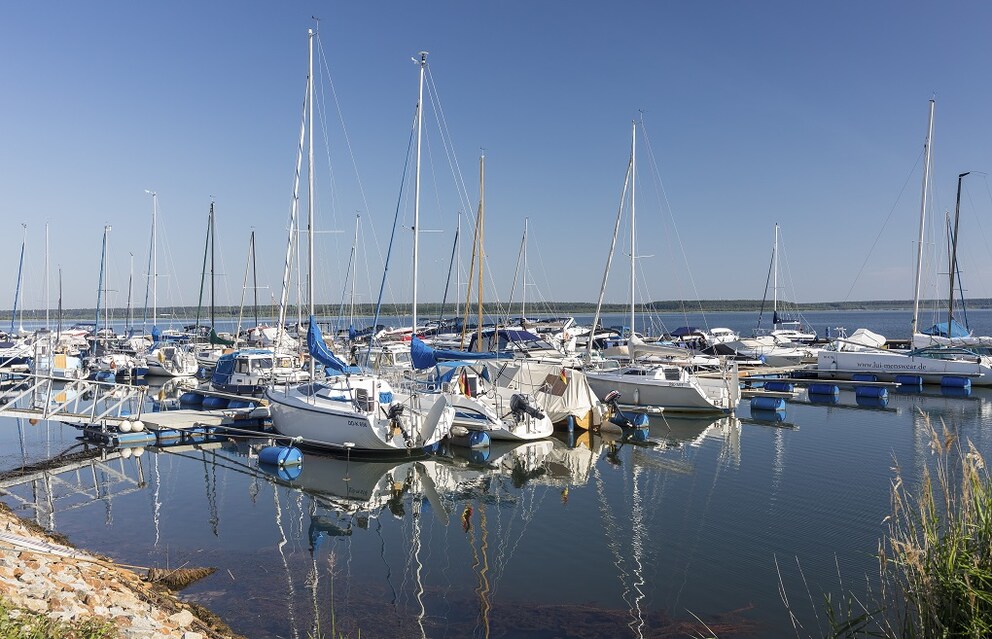
The story of the Lusatian Lake District, or Neu-Seeland, begins this year. Back then, Senftenberger See was the first in a chain to be flooded, forming what is now the largest artificial lake district in Europe. In many places, new harbors, marinas, campsites, and vacation homes emerged, bringing tourism to the region, which continues to boom. The Lusatian and Central German Mining Administration Company (LMBV) is responsible for this restoration and reuse. In addition to water sports, tourist offerings for cyclists are now well-developed, including the 191-kilometer-long Lake District Route.
Also interesting: Feldberger Lake District: The Unknown Natural Paradise
Besides the waters of New Zealand, industrial monuments like the old F60 mining site, now a visitor attraction, draw tourists. Sporting events, festivals, harbor celebrations, and regional festivities now attract visitors from near and far. These efforts are paying off. In 2024, the region recorded a 6.5 percent increase in overnight stays, totaling 931,057. And they aim to continue growing. Locals are confident that in five, or at most ten, years, they can rival the Spreewald in terms of tourism potential. Since 2003, the focus has been on ecotourism centered around the water.

The 6 Most Unusual Observation Towers in Germany
The Best Travel Tips for the Mecklenburg Lake District
Well Connected
The largest artificial lake district in Europe benefits from its excellent accessibility. By car, you can reach New Zealand via the A13 from Dresden, the A13 from Berlin, the A15 from Cottbus, and the A4 from Görlitz. Deutsche Bahn serves numerous stations within the 2,300-square-kilometer area, home to only 193,000 residents. And by plane, you can at least get close, either to Berlin or to Dresden, which is just 60 kilometers away. The waters include Senftenberger See, Geierswalder See, and Partwitzer See, to name a few. The former boasts a total of seven kilometers of beach.
Also interesting: Spotted Lake in Canada Attracts Space Researchers
Sailing, windsurfing, kite surfing, stand-up paddling, and foil surfing, canoes, kayaks, or pedal boats: New Zealand offers all this to its guests. At Halbendorfer See, there’s a course for water skiing and wakeboarding. Surf and sailing schools, as well as boat rentals, can be found at several of the waters. Senftenberger, Geierswalder, and Bärwalder See have marinas with berths. Since 2012, the Lusatian Lake District Tourism Association has been overseeing this unique region. Currently, more than 30 communities are members. The goal: to reach up to 1.5 million overnight stays per year in the long term.
“Demand Is Very High”
Katja Wersch, responsible for public relations at the Lusatian Lake District Tourism Association, says in a TRAVELBOOK interview: “Everything started with Senftenberger See, but even then, there were plans to connect the emerging waters. During the reunification period, the question arose again about the future of the old coal pits.” In collaboration with the LMBV, a federal company, it was decided to flood them and thereby restore and recultivate the vast areas. In addition to the 25 lakes over 100 hectares in size, New Zealand also has numerous smaller bodies of water not intended for tourism.
“Some of our larger lakes are also reserved for nature conservation.” A milestone is currently planned for the end of July 2026, connecting five of the large lakes via canals and thus opening them for tourist purposes. “Currently, we still need to clear deadwood from some waters, and the canals need to be properly marked for navigation.” A definitive endpoint is not planned for the major project, as it must continually adapt to circumstances. “There are still some active mining sites in the region that may later also become lakes.”
Currently, new accommodations or attractions are added to Neu-Seeland every year. For example, a new vacation resort is planned at Geierswalder See. Looking ahead to the 2030s, the goal is to connect up to ten of the waters via canals. The Spreewald is not seen as competition, “the overarching theme is water.” Tourists from there often visit the Lusatian Lake District and vice versa. And overall, locals are already very satisfied: “In summer, we could almost double-book our accommodations. Demand is very high.”