

November 2, 2026, 9:39 am | Read time: 6 minutes
The small town of Würchwitz in Saxony-Anhalt has just over 300 residents, but it boasts what is likely the most unusual museum in all of Germany. At the Mite Cheese Museum, visitors can learn all about the production of a unique cheese that is exclusively made there. The factory traces back to a 500-year-old tradition, and the special product now has fans worldwide and has even been to space. There’s also a statue that might turn some people’s stomachs at the sight of it.
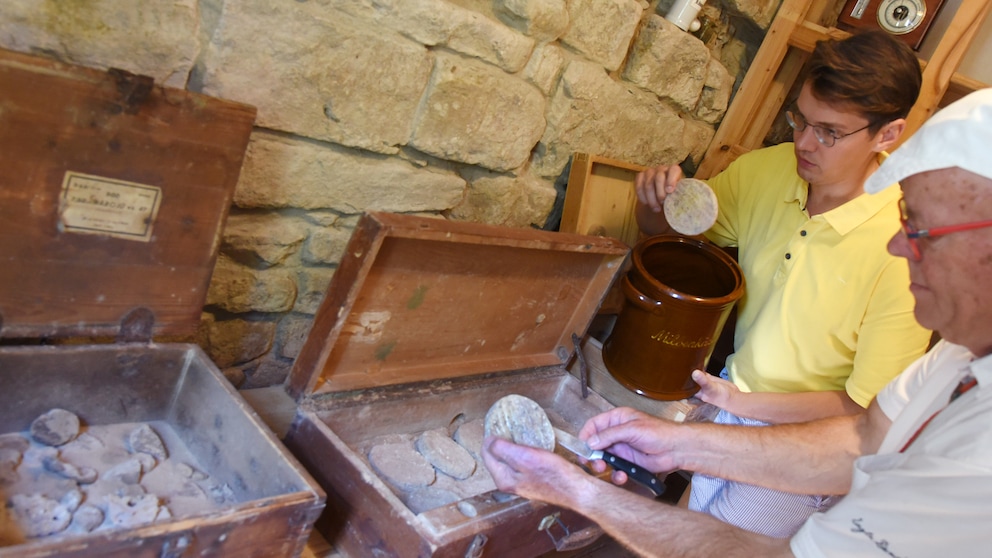
When retired biology and chemistry teacher Helmut Pöschel hosts guests in the small town of Würchwitz, they come for a very special product. They are in search of an exclusive and sometimes very expensive cheese that is quite divisive. People either love it or are repulsed by it, as it is produced with the help of cheese mites. Mites are microscopic arachnids that give the dairy product its unique flavor. Visitors to the Mite Cheese Museum and the Mite Cheese Factory can also observe Pöschel’s “millions of employees,” as he affectionately calls them, at work.
While you can’t see a mite with the naked eye, you can certainly notice the crawling movements on the unusual cheese caused by the millions of mites in Pöschel’s factory. These mites live in old wooden ammunition boxes at 59 degrees Fahrenheit and 100 percent humidity, conditions that the master monitors via smartphone. There are 250 million mites per box, which then “refine” the cheese. However, the process might not be to everyone’s taste. It is the excretions and defensive secretions of the mites that significantly shape the flavor, described as fruity and lemony. This comes from the fragrance and aroma compound neral, which is in the secretion and is a key component of lemon oil.
Even the Great-Grandmother Made Mite Cheese
Pöschel’s cheese, unique in Germany and now only produced in Würchwitz, is the remnant of a tradition over 500 years old that was once vibrant in the Burgenland district around the city of Altenburg. As you can read on the official site of the Mite Cheese Museum, this custom came to an abrupt end under the regime of the former East Germany. A food law banned the production and sale of mite-infested products. Only a few people continued to make the unusual cheese for personal use. One of them was Pöschel’s mother, from whom he took over the last mite cheese strain after the fall of the ban following reunification.
Also interesting: The quirky German Asparagus Museum
In a phone interview with TRAVELBOOK, the amiable Pöschel recalls with a laugh: “Even my great-grandmother made mite cheese; it was a craft for the old women in our family.” He first produced the cheese in 1970 during a cultural competition among villages in the region. He narrowly avoided arrest at times, as the cheese was officially banned. “Right after reunification, we applied in Brussels to resume the factory.”
A Visit to the Disgusting Food Museum in Berlin–Here’s How It Went

I Tried “Marmite” for the First Time–and Was Surprised
Cheese in Space
Since then, he has been producing the cheese in Würchwitz, which gourmets from all over Germany now appreciate. It has been featured on the TV show “Grill den Henssler,” and a hotel in Weimar also offers it to its guests. Not only that, but Pöschel’s mite cheese has even been to space. In 2003, it was sent to the International Space Station as part of a promotional campaign. On April 1, 2006, Pöschel opened his Mite Cheese Museum in Würchwitz, where visitors can view exhibits about the production of this unique German product. The brave ones also venture into the factory, where Pöschel’s countless mites crawl over his cheese. Anyone who buys or orders a package is guaranteed to find 50,000 mites inside.
Also interesting: Germany has the world’s largest flour sack museum
Pöschel and his business partner, theologian Christian Schmelzer, produce only 1,000 pieces per year. Consequently, Würchwitz mite cheese is quite expensive. Depending on the maturity, 100 grams cost between nine and 100 euros. However, it is only available here. It is the only operation in Germany still allowed to produce the cheese. The health department monitors the conditions up to twice a year. Additionally, they regularly send samples to food laboratories, a practice in place since 1996. Like the Mite Cheese Museum, the factory has been open since 2006. “When the mites are in top form, it smells like ammonia here, like in a horse stable.”
Huge Crowds
Despite the crowds, it can sometimes be overwhelming: “Some days, buses with 80 people would come. Our Mite Cheese Museum and factory are simply too small for that. We don’t have the facilities for such crowds.” They can easily accommodate groups of up to 25 people. However, since they produce so little cheese, there are only tasting samples for them. “Guests from Sicily once came and wanted to buy the entire production, but that’s unfortunately not feasible.” Visitors also come from Russia, Japan, and the U.S., where mite cheese is still banned. “They have to smuggle it in; Trump is afraid of my mites.”
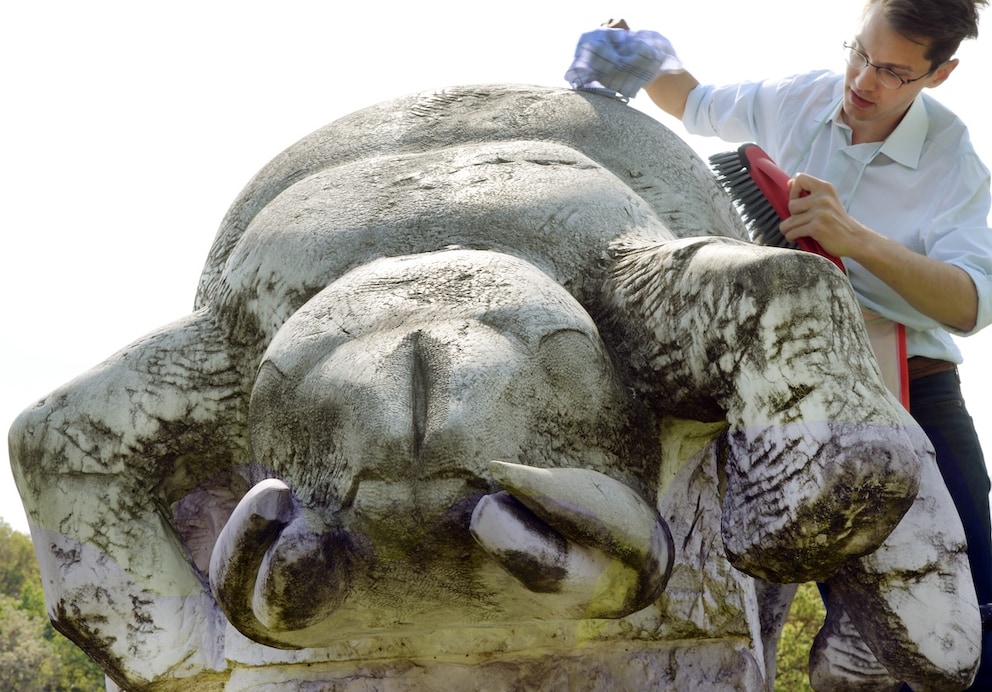
In 2001, Pöschel erected what might be Germany’s most unusual monument in Würchwitz in honor of the cheese mite. As reported in the “Mitteldeutsche Zeitung,” he and sculptor Christian Späte traveled to Italy. There, they purchased a ten-ton block of the finest white Carrara marble. Späte then created a more than seven-ton sculpture of an oversized mite. The somewhat gross twist: At its rear is a hole, and inside it is a very intense cheese. Späte described it to the newspaper as “probably the world’s only scent monument.”
Also interesting: In this German cave, researchers made a sensational discovery
If you want to try Würchwitz mite cheese for yourself, you can do so by request through the official website. The Mite Cheese Museum and the factory do not have fixed opening hours. Alternatively, there is an online shop. However, the three different mite cheeses are currently listed as “unavailable.” According to the website, you should definitely eat the mites if you dare to try the cheese. The website states: “The fruity bouquet of mite cheese is neither due to the special method of production nor is it contained in the cheese itself. It is created solely by cutting and chewing the delicacy.”