

November 3, 2026, 9:44 am | Read time: 7 minutes
The Széchenyi Thermal Bath in Budapest is the largest of its kind in all of Europe. Its history dates back to the 19th century, making it the first spa in the Hungarian capital. During a recent visit, TRAVELBOOK author Robin Hartmann immersed himself in the warm, mineral-rich water for a few hours. He marveled at the grandeur of the massive complex and the various oddities that a visit there entails today.
Surely you know the feeling: You visit a new, exciting city, walk yourself ragged in a few days trying to see as much as possible, and in the end, you just want one thing: relaxation. That’s how I felt when I recently visited the magnificent and monumental Budapest with my girlfriend. Fortunately, there’s a true bathing culture here, with several thermal baths vying for the countless visitors to the capital. In 2011, I had already visited the legendary Gellért Bath, but this time we decided to visit a true record holder. The massive Széchenyi Thermal Bath is nothing less than the largest spa of its kind in all of Europe. The visit was interesting for many reasons, but also quite quirky at times.
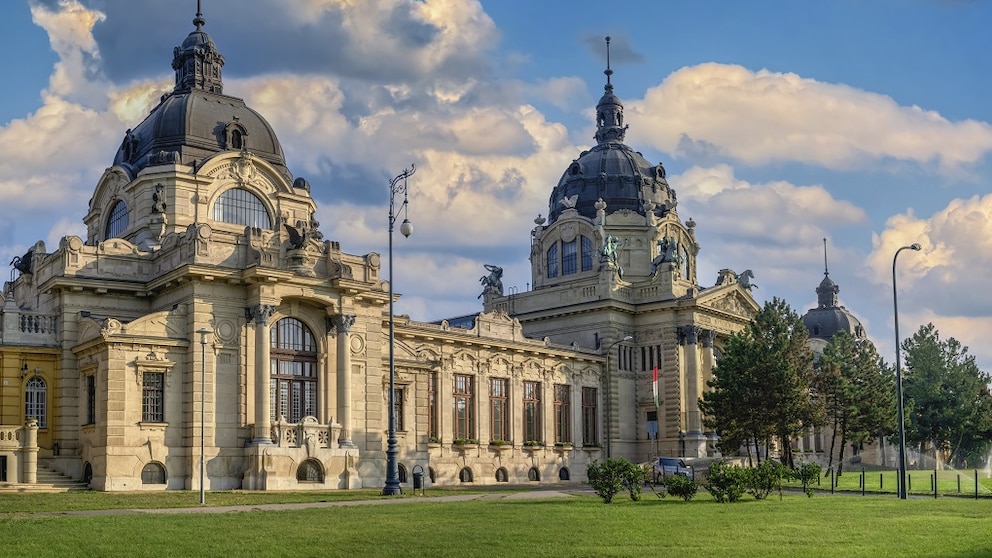
The Széchenyi Thermal Bath is nestled in Városliget Park, also euphemistically called the City Forest. With more than 6,200 square meters of space, it is a truly impressive complex, built between 1909 and 1913 by architect Győző Czigler in the neobaroque style. From afar, its large domes are visible, and if you didn’t know better, you might easily mistake the place for a church or temple. Our hotel was nearby, so we strolled through the City Forest to the spa, eagerly anticipating a few hours of delightful relaxation in the water, which can reach up to 40 degrees Celsius. A total of 21 pools awaited us, along with saunas and steam baths, promising a fantastic time. But in the end, everything turned out quite differently than expected.
Hefty Prices
First, there was confusion, as the Széchenyi Thermal Bath has three entrances due to its size. We luckily found the right one that led us to the ticket counter. Admission to the spa is 13,200 forints (about 35 euros) per person, which is anything but cheap, and prices are even higher on weekends and during peak season. You can find all prices and other information on the spa’s official website. I thought back with frustration to the times when a whole day at the Gellért cost me just about 10 euros. During a summer vacation in 2026 in Hungary, I had already noticed that prices for almost everything in the country had absolutely skyrocketed.
Well, grit your teeth and dive into the warm bathing fun. At least, that’s what I thought, but before we even entered the actual Széchenyi Thermal Bath, another problem arose. We didn’t have flip-flops, which are mandatory for safety reasons. It makes sense, of course–but we had to pay an additional 11.50 euros per person for rubber sandals available on-site. Unfortunately, these came straight from hell and made squeaking noises with every step, comparable in intensity to a dentist’s drill. Fortunately, in the spa, it’s never far from one pool to another.
Also interesting: The best tips for a vacation at Lake Balaton in Hungary
Bathing in a Magnificent Setting
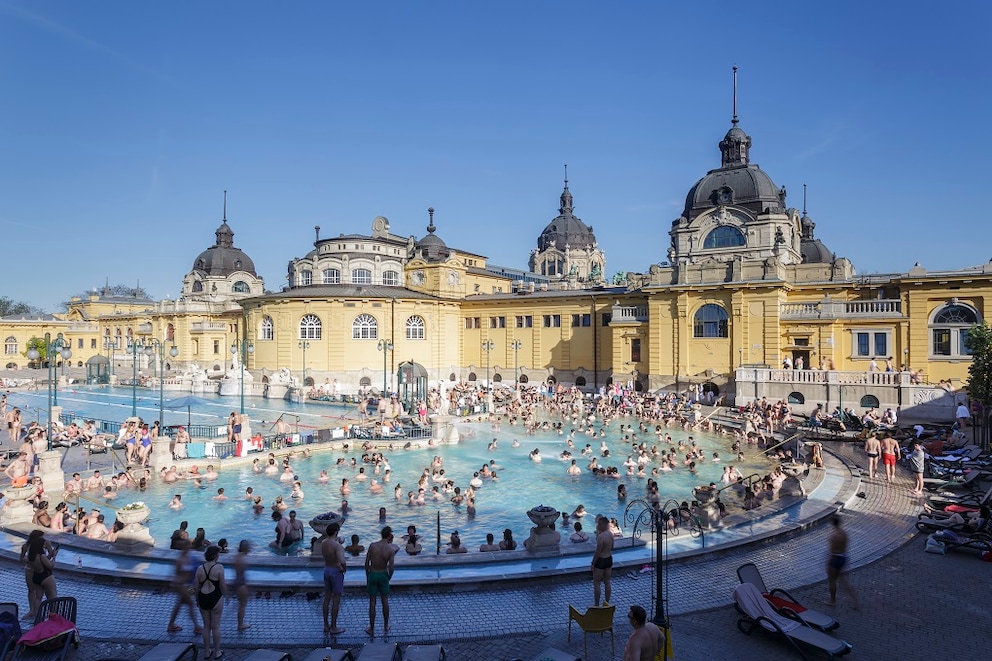
The history of the Széchenyi Thermal Bath begins, according to the site “Budapest Baths,” in 1879, when mining engineer Vilmos Zsigmondy discovered an artesian well at a depth of more than 900 meters. At that time, there were already several thermal baths in the metropolis, but the city fathers decided to build a true landmark of bathing culture. On July 16, 1913, the largest thermal spa of its kind in the city and all of Europe opened its doors. In the first year alone, 200,000 visitors came. Today, when you enter the facility, you can easily feel that this number of guests is now reached in a single day. In other words, the spa is absolutely packed, and from the walls, some adorned with artistic frescoes and mosaics, a booming babble of languages echoes.
Signs posted everywhere asking guests for quiet seem to interest no one in the slightest, so we quickly flee from the interior to the truly opulent outdoor area. Here, there are two pools with water up to 38 degrees Celsius for relaxation, as well as a classic swimming pool for athletes. Anyone who wants to use it must wear a swim cap. We, however, sink into the wading pool like contented hippos and, slightly dazed by the warmth, watch a spectacular sunset. From the outside, you can also better see the full splendor of the building. It feels like bathing right in front of the backdrop of the Palace of Versailles.
Also interesting: The mysterious Lake Hévíz in Hungary
What Makes Lake Hévíz in Hungary So Mysterious

Experience Budapest Like a Local
Scramble for Spots
Where today visitors of both genders bathe together as a matter of course, there was actually strict segregation until 1981. As early as 1927, the Széchenyi Thermal Bath had to be significantly expanded due to its popularity. In 1938, another spring was discovered at a depth of 1,256 meters, from which 6,600 cubic meters of 77-degree water have been gushing daily ever since. The success of Europe’s largest thermal spa also led to a general boom in Budapest. Hotels, cafes, and more green spaces sprang up around Városliget Park. In addition to relaxation, the Széchenyi Thermal Bath also became a center for medical treatments. Even today, balneotherapy, massages, mud packs, and electrotherapy are offered here.
We squeaked our way with our flip-flops to the next outdoor pool, the “Adventure Pool.” This is impressively unadventurous but has a whirlpool area in the middle, which seems to be perpetually occupied by all the inhabitants of Europe. Against all odds, when we finally snag a spot, other guests try to take it from us every second. For example, five young women try to squeeze onto a single half-free spot at once. A man the size of a gorilla sits right on my lap, even though he must have seen me. In short, we can’t really relax here. Maybe we’ll find a bit of peace in the indoor area of the Széchenyi Thermal Bath.
Also interesting: The Parliament in Budapest – Hungary’s monumental government palace
Horror Movie Setting
But unfortunately, no, because upon closer inspection, the sacred halls are in a truly deplorable state. There’s extensive mold, plaster peeling from the ceiling, and the tiles of entire pools have turned black due to the high mineral content in the water. It’s hard to believe the last renovation was in 2009. To us, it seems more like the bath has been in a constant and ever-accelerating state of decay since its opening. Honestly, some areas could serve as absolutely believable settings in any horror movie. For a hefty surcharge, you can book a visit to the beer spa that is part of the complex, but we pass on that. For those interested: You get a 45-minute bath in a wooden tub and as much beer as you want/can drink during that time.
Instead, we choose to move forward to one of the many saunas in the Széchenyi Thermal Bath. I would have liked to visit the Dante Thermal Bath just for fun. But you actually have to enter it clothed. Different countries, different customs. And so, only the Phoenix Sauna is truly textile-free. We make ourselves comfortable at a pleasant 90 degrees and chuckle at a young couple. They want to sweat in full bathing attire but turn back visibly shocked when an employee points out that this is the nudist area. It’s a relaxed end to our nearly three-hour visit. And indeed, this time frame is enough for us to get to know the spa and its offerings sufficiently.
The water in the Széchenyi Thermal Bath is known and loved by guests from all over the world for its diverse healing effects. Calcium, magnesium, and sulfate relieve muscle and joint pain, and the warmth also promotes blood circulation. Minerals like sulfur and bicarbonate can also help alleviate skin conditions such as eczema and psoriasis. Overall, I can only recommend that every visitor to Budapest take a dip in the largest thermal spa of its kind.