

August 11, 2026, 9:06 am | Read time: 5 minutes
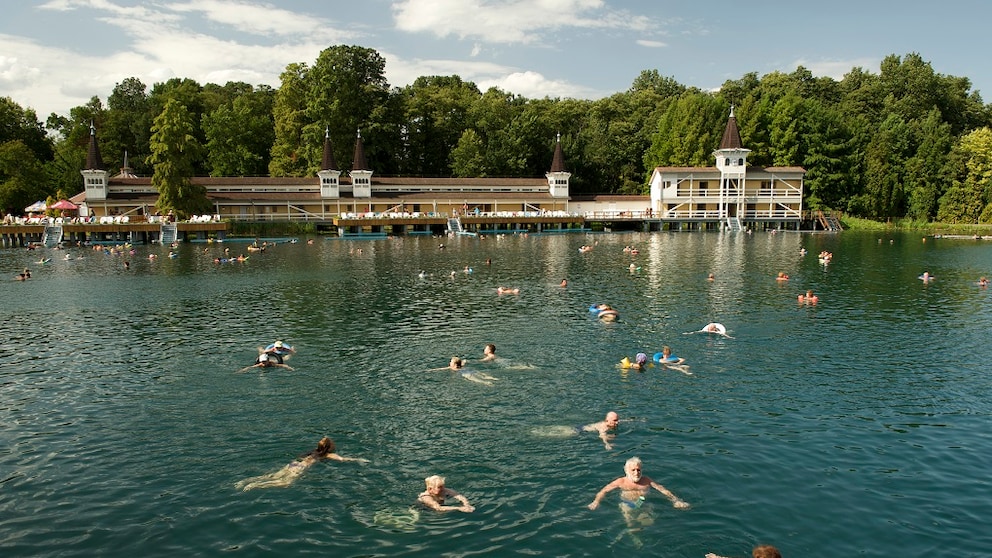
Near the legendary Lake Balaton in Hungary lies a natural wonder that people have known and cherished for more than 2,000 years: Lake Hévíz. This body of water is the largest natural and biologically active thermal lake in the world, attracting those seeking healing from its mineral-rich waters. However, for a long time, it was a mystery how the water remained warm even in winter, leading to numerous legends about Lake Hévíz. Swimming here is not recommended for everyone.
Recently, while vacationing with my girlfriend and a couple of friends at Lake Balaton in Hungary, I stumbled upon something journalists particularly love: the story of an unusual place, briefly described in an online travel guide. It was a body of water with hot, healing thermal water. The melodious name, Lake Hévíz, piqued my interest further, especially since it was only about an hour away from our campsite. There was just one problem: During our stay, the outside temperature was nearly 104 degrees Fahrenheit, and no one, not even I, felt like bathing in water that was almost as hot at up to 97 degrees. Yet, my fascination with the wonder lake was deeply sparked.
And its history is indeed quite astonishing, beginning with the formation of Lake Hévíz about 22,000 years ago due to volcanic activity. This also shaped the unique landscape we find today at Balaton; everywhere, the archaic chimneys of extinct volcanoes rise from the hills and vineyards, defining its image. According to the official tourism website of Hévíz, after which the lake is named, the Romans and tribes from the Migration Period used it for healing baths more than 2,000 years ago. Yet, for a long time, no one knew how the special temperature of the thermal water came about until divers made a remarkable discovery.
The Mystery of the Two Springs
But first, let’s look at the facts about Lake Hévíz. With an area of more than 46,000 square meters, it is, as mentioned, the largest thermal lake in the world. Its water comes from a spring more than 38 meters deep, gushing out at a flow rate of 410 liters per second. This results in up to 80 million liters reaching the surface daily, creating an astonishing effect. The lake’s water completely exchanges every 72 hours. In winter, it is about 75 degrees Fahrenheit, and in summer, up to 97 degrees. The lake is also popular with spa guests from around the world because of its mineral-rich healing mud.
Also interesting: Lonar Lake in India can change its color
This mud contains elements like calcium, magnesium, sulfur, iron, and sodium. The healing water of Lake Hévíz originates from a spring located in an underwater cave within the lake. But how it maintains its special temperature was a mystery for decades until divers discovered that the lake actually has two springs with different temperatures. One produces water at 79.3 degrees Fahrenheit, and the other at 105.8 degrees. When these two streams mix, they create the pleasant bathing climate.

Exploring the 2023 European Capital of Culture: Veszprém and the Balaton Region

8 Destinations for Easter Vacation 2026
Legends About the Lake
Archaeological finds in the form of coins in the water prove that the Romans already bathed in Lake Hévíz. However, the settlement of the area around the lake likely dates back even 6,000 years. Yet, the lake and its healing water fell into oblivion during the Middle Ages, becoming increasingly silted. It was the Hungarian Count György Festetics who initiated its renaissance in 1795. He had the mud removed and built the first bathhouse. Around this, the town of Hévíz eventually developed, which today is the largest and most popular spa town in Hungary. After the capital, Budapest, it records the most overnight stays in the country.
Also interesting: Laacher See in the Eifel: The best travel tips
It is not surprising that numerous legends surround a lake with such healing waters. One tells of a desperate mother who implored the Holy Virgin to cure her paralyzed child. Soon after, a spring burst from the ground, and after bathing in it, the boy was completely healed. According to legend, he was the future Eastern Roman Emperor Flavius Theodosius, who declared Christianity the state religion in 391. All other beautiful tales about Lake Hévíz also speak of miraculous healings. In another, the devil created the lake by hurling a plow to the ground at its current location.
Bathing Not Recommended for Everyone
Legends aside, the healing power of the water in Lake Hévíz is indeed documented. It is said to work wonders, especially for rheumatic diseases of the musculoskeletal system, the nervous system, and metabolic disorders. However, not everyone is advised to bathe here. Due to its high sulfur and radon content, pregnant women, for example, should avoid it or consult a doctor beforehand. The same applies, according to the online guide “Marco Polo,” to patients with heart diseases, malignant tumors, acute inflammations, asthma, as well as liver and gallbladder issues.
Also interesting: Lake Wakatipu: The lake of giant eels in New Zealand
Anyone who wants to visit Lake Hévíz and bathe in its thermal water has the opportunity to do so year-round. The bath’s opening hours vary by season and can be found on the official website. A 3-hour ticket for adults currently costs 4,500 forints, which is roughly 12.50 euros. A day ticket is available for 7,500 forints, or about 20 euros. Discounts are available for children, teenagers, and seniors. And even though I didn’t manage to bathe there this summer, a visit is firmly planned. In October 2026, I will be back in Hungary, and then I want to get a little closer to the mystery of Lake Hévíz in person.