

November 10, 2025, 5:08 am | Read time: 5 minutes
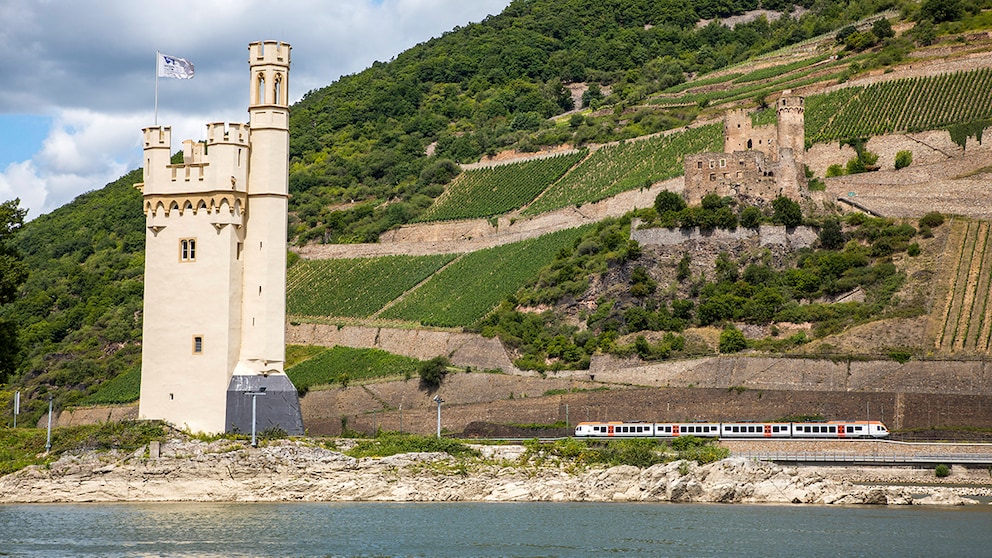
The Mouse Tower of Bingen in Rhineland-Palatinate is one of the most iconic landmarks along the Rhine. Now a tourist magnet, this unique small castle on an island in the river has existed for more than 700 years. It is surrounded by a dark legend about a greedy clergyman who supposedly met a rather unusual and bizarre death here. What is the truth behind the tale of the Mouse Tower?
The Rhine is the mightiest river in our country, winding 865 kilometers through the Federal Republic. And it is perhaps most impressive in Rhineland-Palatinate, where it is lined with numerous old fortresses, castles, and palaces. Among these is a very special structure that has stood out in the landscape near the city of Bingen for more than 700 years. Once a watchtower and later an important navigation point for shipping, the Mouse Tower of Bingen is also part of the UNESCO World Heritage Upper Middle Rhine Valley and is now a popular tourist destination. Likely also because it is associated with a real horror legend.
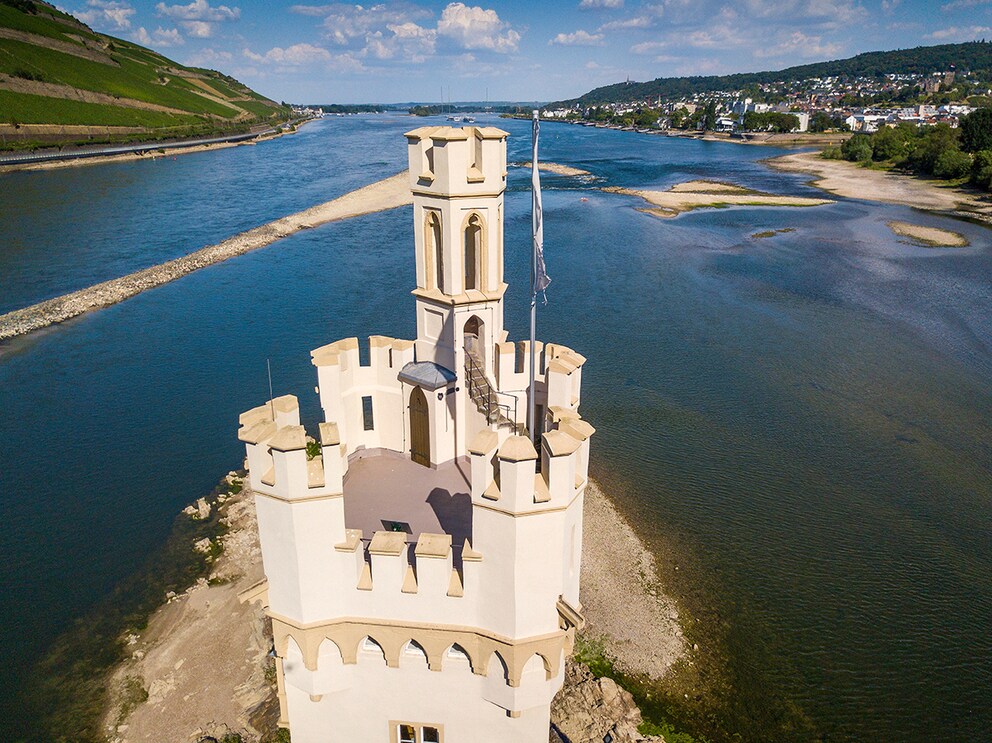
But first, let’s look at the known facts about the Mouse Tower. And there aren’t many. According to the official site of the city of Bingen, it was probably built in the first half or at the beginning of the 14th century, making it over 700 years old today. At the location where it still stands, there used to be a tricky and sometimes quite dangerous passage for ships, a difficult-to-navigate bottleneck called the “Binger Loch.” The mini-fortress served as a base for the toll system on the river, overseen by the nearby Ehrenfels Castle. The narrow passage in the river was used to extort tolls from passing ships.
A Hardhearted Archbishop
Presumably much earlier, during Roman times, there was already a small fortification at the same site. In the following centuries, it lost significance until the present Mouse Tower was built on behalf of the Mainz archbishopric. The name, by the way, has nothing to do with the animals but probably comes from the old German word mûsen, meaning “to spy” or “to lurk.” It may also refer to the term muta for “toll.” For the population, however, the Mouse Tower is still inextricably linked to a dark legend that supposedly took place here.
Also interesting: The World’s Most Leaning Tower is in Germany

This takes us back to the 10th century. In 968, Archbishop Hatto II took power in the Mainz diocese. According to the “SWR,” he was known to be particularly hardhearted and stingy and is associated with an incredibly cruel act. At that time, a great famine plagued the population. The farmers asked Hatto to open the archbishopric’s granaries to alleviate the hardship. However, the clergyman did not relent to any pleas, not even when people gathered in front of the archbishop’s castle to present their grievances.

Why the Three Wise Men Are Said to Rest in Germany
Frankenstein Castle–Germany’s Most Haunted Ruin
The Death of the Tyrant
Instead, he had the petitioners, depending on the version of the legend, arrested and locked in a barn. In another version, he invited his starving subjects into it, supposedly to feed them. There is only agreement on what supposedly happened next. The cruel clergyman allegedly set the barn on fire, causing all the unfortunate people, including the elderly and children, to burn alive. Hatto is said to have mocked their death cries with the words, “Just listen, the mice are whistling.” But fate repaid him for his deed in an unusual way.
Also interesting: Lohr am Main: Did the “Real” Snow White Live Here?
According to the story, only the mice in the barn survived the fire. And they pursued Hatto wherever he went. Driven half-mad by this constant plague, he finally saw only one place where he thought he would be safe from the rodents: the Mouse Tower of Bingen. So he crossed over to the supposedly safe hideout–but it ultimately became his death trap. A multitude of mice swam across the Rhine and killed Hatto, who had taken refuge in his bed as a last resort. The animals reportedly devoured the villain, and a few days later, only his skeleton was found.
Exclusive Tourist Destination

Destroyed during the Thirty Years’ War (1618-48), the structure served as a signal tower for shipping after its reconstruction by the Prussians in 1855. In 1973, the “Binger Loch” was finally blasted, making its use as a landmark obsolete. Today, the Mouse Tower of Bingen is a popular tourist destination on the Rhine, likely due to the spooky legend surrounding it. After being closed for years due to mold infestation starting in 2008, the tower has been open to the public again since 2016. It was recognized as part of the Upper Middle Rhine Valley by UNESCO as a World Heritage site in 2002.
According to the official site, the historic tower on the Rhine island can only be visited with the ship tours of Bingen Tourismus & Kongress GmbH. An employee told TRAVELBOOK: “Usually, there is one date each in spring and fall. Once we announce these, the tickets always sell out very quickly.” Since various bird species have their breeding grounds on the island where the Mouse Tower stands, more regular traffic is not possible. “But the Mouse Tower is, of course, a landmark and also a flagship of the city of Bingen.”