

April 29, 2026, 10:57 am | Read time: 3 minutes
Michael Jackson is considered one of the greatest stars of all time. But besides his music, one place remains inseparably linked to him: the Neverland Ranch. What became of the once fairytale estate?
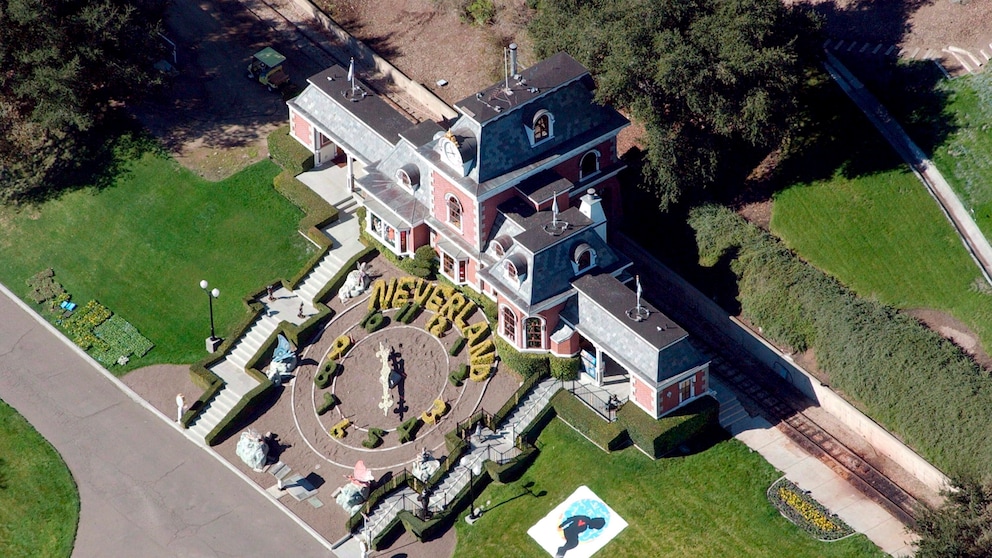
For nearly two decades, Michael Jackson (born 1958, died 2009) lived on the Neverland Ranch in California. In 1988, the musician purchased the approximately 2,500-acre estate in the Santa Ynez Valley near Santa Barbara. The name was fitting. “Neverland” refers to the fictional island from the Peter Pan story by James M. Barrie. With the ranch, Jackson, who had been performing since the age of five, likely wanted to reclaim a piece of his childhood.
Michael Jackson’s Neverland Ranch
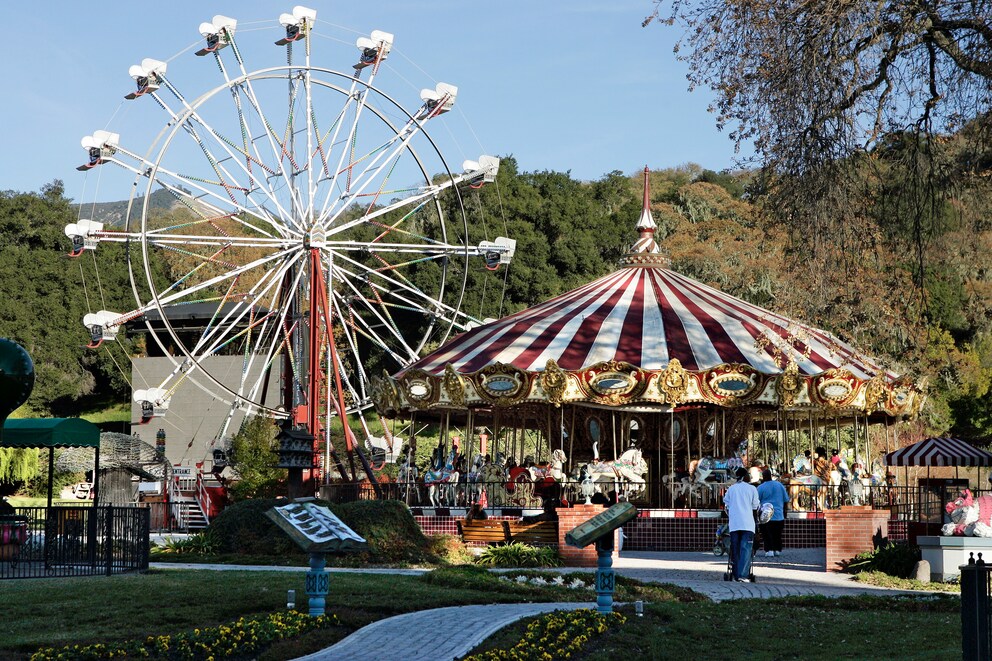
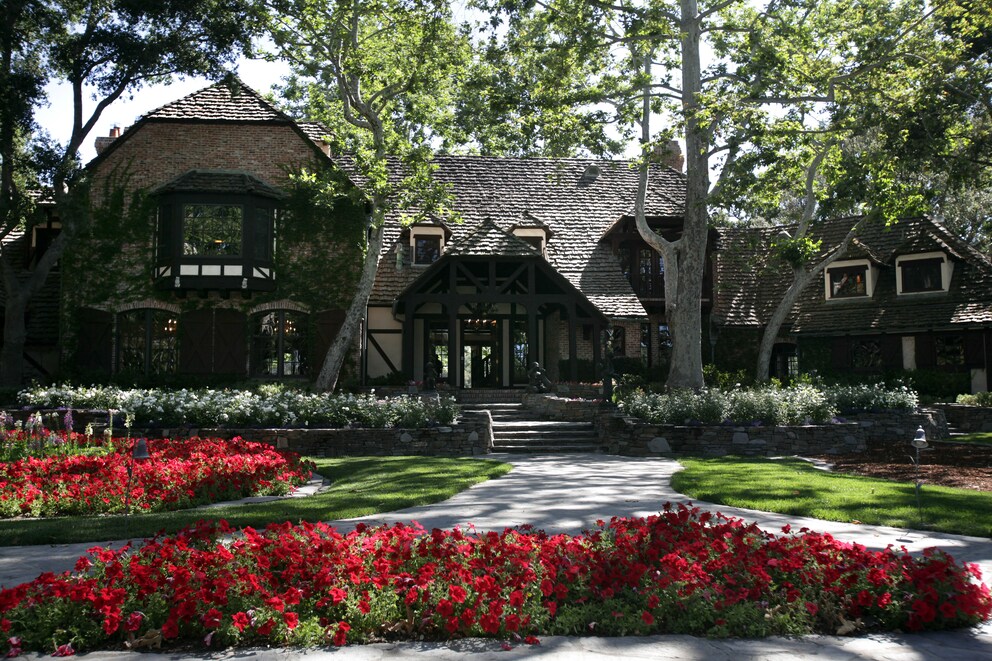
The estate, accessible only via a private road, served the “King of Pop” as a residence, among other things. The 22 buildings housed guesthouses, staff accommodations, and exhibition rooms. Behind the world-famous gates, however, lay much more than a luxurious home: a private amusement park with a carousel, Ferris wheel, bumper cars, and a roller coaster.
The attractions were not open to the public but reserved for selected guests personally invited by Jackson, including primarily sick or socially disadvantaged families who could visit Neverland free of charge.
Whether llama, chimpanzee, or rats, those who followed Michael Jackson know that he had a great love for animals since childhood. The Neverland Ranch provided the perfect space for this, as the estate reportedly housed a zoo with tigers, elephants, crocodiles, and giraffes.
The heavily secluded grounds were also said to have several lakes, a cinema, basketball and tennis courts, and even a private train station with a track through the park. Interestingly, due to the vast size of the area, a fire station was reportedly part of the estate to respond quickly if needed.
This Former Hostel in a Jumbo Jet Is Now an Abandoned Site
You Can Actually Visit the Waterfall From the “Stranger Things” Finale
What Became of Neverland?
A year before his death in 2009, Michael Jackson finally gave up the Neverland Ranch. As early as 2008, he had relinquished control of the estate to prevent a looming foreclosure. The main reason was said to be financial difficulties. Maintaining the vast area reportedly cost several million U.S. dollars annually, in addition to high expenses for legal disputes related to the abuse allegations against the musician.
For Michael Jackson, Neverland increasingly lost its significance. In the years that followed, the estate was repeatedly put up for sale, but for a long time without success. It wasn’t until 2020 that a buyer was found. The ranch was sold for around 22 million U.S. dollars and renamed “Sycamore Valley Ranch.”
Filming for the Movie
Subsequently, the new owner, U.S. entrepreneur Ron Burkle, renovated parts of the estate. According to the “Daily Mail,” rides were repaired, flower beds replanted, and the train station restored.
In the following years, work continued on the grounds. According to BILD, the ranch served as a filming location for the Michael Jackson biopic “Michael,” which has been in German theaters since April 2026. In the finished film, the estate is reportedly not visible. Whether the footage will be used later is uncertain. Insights into the interior remain rare. The former Neverland Ranch is still not open to the public.