

November 4, 2025, 9:35 am | Read time: 4 minutes
Leonardo da Vinci, the creator of the famous Mona Lisa, was an Italian painter and sculptor. This raises the question of why the work is not displayed in his homeland but rather in the Louvre in Paris. This leads to a fierce cultural dispute between Italy and France. More on this at TRAVELBOOK.
Of course, one might ask this purely out of interest. In fact, the fact that the Mona Lisa has been displayed in France since 1797 and not in Italy—where it would actually belong due to its “origin”—repeatedly sparks discussions. The debate became particularly loud in 2019, when the 500th anniversary of its creator’s death was commemorated. But more on that later.
Why the Mona Lisa is Displayed in France
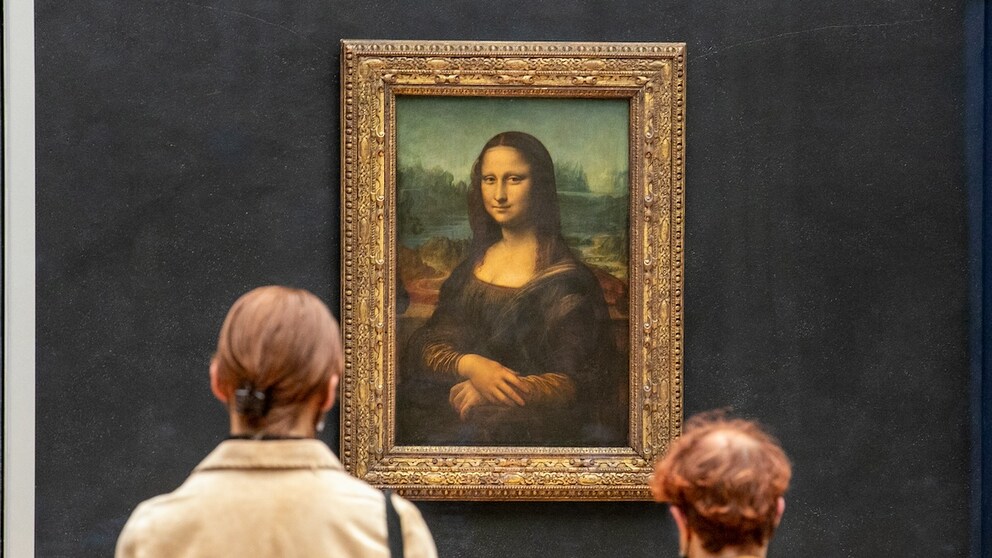
It is the most famous exhibit in the entire Louvre—and that says a lot. After all, the museum houses the largest and most significant art collection in the world. Leonardo da Vinci’s work attracts several million visitors each year. The oil painting was created between 1503 and 1506 in Florence, the then-home of the Italian Renaissance genius. However, it remained there for only about 13 years.
More details can be found in a documentary from the Arte series “Karambolage.” According to it, King Francis I invited the then 64-year-old da Vinci to France in 1518. The artist brought some of his paintings with him, which he wanted to continue working on during his journey, including the now world-famous painting of a woman without eyebrows—the Mona Lisa. During his visit, the king is said to have purchased it from him. He hung the work in his castle in Fontainebleau.
The Painting Had Many Homes Over the Years
The chambers of the French Renaissance king were just the first stop for the Mona Lisa. In the following years, it hung in various castles, including the Palais des Tuileries, the Louvre Palace, and Versailles, as well as in the bedroom of Napoleon Bonaparte. In 1802, he returned it to the Louvre.
Even though the Mona Lisa was not nearly as famous then as it is today, there were already Italians who longed to see it returned to their homeland. One of them was the craftsman Vincenzo Peruggia. He stole the painting in 1911 and hid it in a suitcase for about two years before being caught trying to sell it in Florence. His intention, as he later stated, was to bring the Mona Lisa back to Italy.

7 Castles on the Loire You Should See

These 7 Popular Attractions Disappointed Me the Most
Italy Wants the Mona Lisa Back
How the Mona Lisa came to France is thus clarified. But that does not mean, of course, that it must remain there forever—at least, some Italian, mostly populist politicians see it differently. On the occasion of the 500th anniversary of Leonardo da Vinci’s death, they made their stance clear.
As mentioned above, France planned a major exhibition of the artist’s works in his honor. The basis for this was an agreement made in 2017 with the Italian Ministry of Culture, which was intended to facilitate the exchange of significant artworks. However, this agreement increasingly met with resistance in Italy. Among the particularly vocal critics was the new Undersecretary of Culture, Lucia Borgonzoni, since 2018. She described the agreed loan conditions as “untenable” and argued that Italy would “culturally submit” by doing so. Particularly outrageous was that almost all of Leonardo’s significant works—foremost the Mona Lisa—were to be shown in France for months. The protests led to delays. But ultimately, the loans were carried out.
The Painting Created in Italy Will Remain French
It is more than unlikely that the Mona Lisa will “return” to Italy. Her creator brought her to France himself and sold her to the king there, which led to her inclusion in the Louvre’s collections. Today, she is, under French law, a so-called “inalienable national cultural asset,” meaning the oil painting cannot be sold, given away, or loaned. Moreover, it is clear: The fact that Leonardo da Vinci was from Italy does not establish ownership rights to his work.