

April 13, 2026, 5:34 am | Read time: 5 minutes
The initially unassuming small town of Görlitz in eastern Germany surprises not only more and more tourists with its city history and current appearance but also our TRAVELBOOK editor Lena Braun. Here, she reveals what she discovered during a long weekend in the city and why she highly recommends a visit.
Germany’s easternmost city has a long and exciting history. It is located right on the border with Poland and marks the eastern edge of the country. Strictly speaking, the actual extreme point is a few kilometers further north, but Görlitz is the more prominent place. Thus, the city is also part of the so-called Zipfelbund, which invites a special journey: visiting all four “corner cities” of Germany.
1. One City, Two Countries
The proximity to Poland has long shaped the town. However, the border has changed repeatedly: The Polish part, today’s Zgorzelec, was part of Görlitz until before World War II. It was only in 1945 that the Oder-Neisse line made the river the border, dividing the city into two. Border closures during the GDR era and later political changes eventually led to a cautious rapprochement. Designated a European city since 1988, Görlitz-Zgorzelec demonstrates how international cooperation and joint development can work.
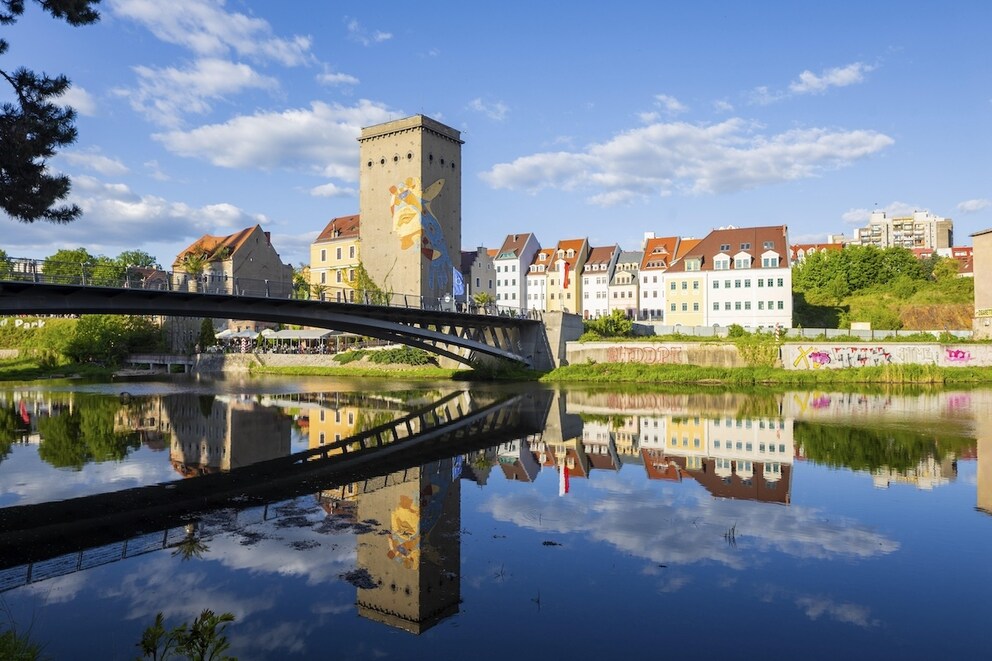
Once, seven bridges spanned the Neisse; in 1945, they were all demolished. You might know the song “Über sieben Brücken musst du gehn” by Karat, later also by Peter Maffay. It sings of the separation of a couple across the German-Polish border, almost symbolic for Görlitz. Today, pedestrians can again cross the renovated, 82-meter-long Old Town Bridge, while cars use a large city bridge further south as a border crossing.
2. Where Time Comes From
“In Görlitz, the clocks tick particularly accurately,” our city guide teased us. I only understood what that meant later when we came across a stone in the city park designed like a globe with a small plate. It symbolizes the next Görlitz peculiarity: The city lies exactly on the 15th meridian—the reference meridian for Central European Time (CET). So, the time that is legally standard in much of Europe originates here, as the city of Görlitz explains.
Fun Fact: During the city tour, we also learned a rather ironic anecdote about “time” in Görlitz. According to legend, dissatisfied citizens once gathered at night to plan a storming of the town hall. They could only start after midnight when the streets were free of night watchmen. But they were betrayed: The tower clock was set seven minutes ahead. Thus, all involved were noticed and caught. The alley was named “Traitor’s Alley,” the conspirators were executed—and the clock was never corrected. Even today, visitors wonder why the “Monk” tower clock at the Upper Market strikes seven minutes before all others at noon.
3. An Old Town from Many Centuries
Görlitz owes its exceptionally well-preserved old town to its history as a prosperous trading and later industrial city. As early as the Middle Ages, its location on an important trade route brought wealth and magnificent buildings. In the 19th century, as Germany’s richest city for a time, it experienced a second bloom. Because Görlitz remained largely undestroyed during World War II, buildings from many eras, from Gothic to Renaissance to the Wilhelminian period, are preserved in rare density today.

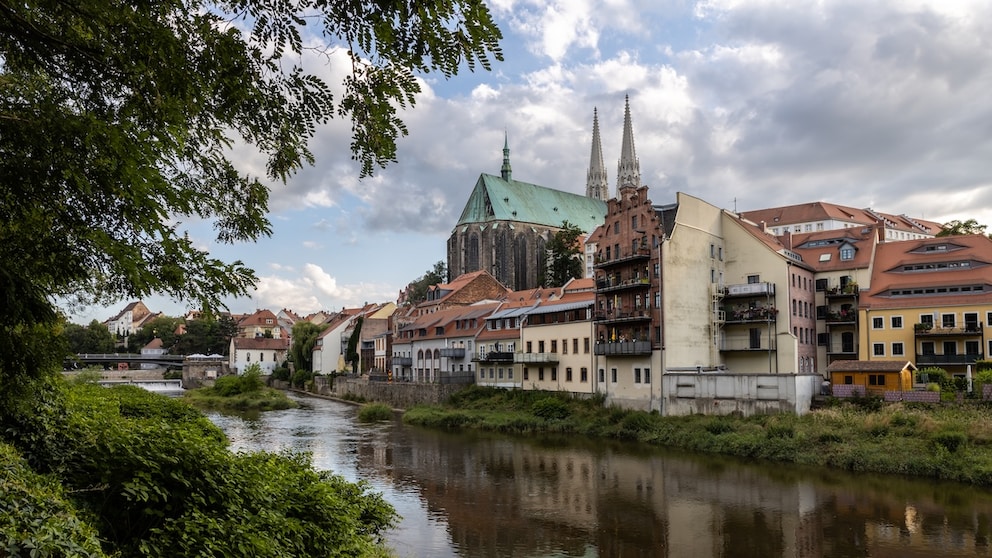
Particularly impressive is the St. Peter and Paul parish church towering high above the Neisse. A Gothic renovation of the former castle church in 1423 enlarged it many times over. The neo-Gothic towers made of lighter artificial stone stand out clearly from the older facade of the nave. The constant change of the landmark and thus also of the city is visible here. Another highlight is the preserved sun organ from the 17th century, which still regularly sounds today.
Monument preservation in Görlitz was also well-funded for a long time: Since 1995, exactly one million Deutsche Marks were deposited annually into the city’s account, donated by an anonymous benefactor. The last payment came in 2016, with a total of around 11 million euros flowing in over 22 years.
6 of the Most Beautiful Old Towns in Bavaria
6 of the Most Beautiful Old Towns in Baden-Württemberg
4. Hollywood Filming Location
When we were able to visit the Görlitz department store from the inside during a special tour, the location immediately seemed familiar to me—even though I had never been there before. I quickly realized why: Some scenes from my favorite film “The Grand Budapest Hotel” (Wes Anderson, 2014) were shot here.
Görlitz, also known as “Görliwood” in this context, is famous as a backdrop for numerous Hollywood films. The well-preserved and thus historically authentic buildings convince both directors and audiences.
5. Artificially Created Lake
If the Lusatian Neisse as a body of water is no longer sufficient, a trip to the nearby Berzdorfer See is worthwhile. By bike, you can reach it along an idyllic route between rivers and meadows in about half an hour. The lake is a special feature because it did not form naturally but was created by flooding a former lignite mine. It took over ten years to bring the lake to its current water level.
Also interesting: The Largest Artificial Lake Landscape in Europe Is Being Created in Germany
I was surprised by both the size of the lake and the wind that whipped around my ears. No wonder countless kite and windsurfers are out here. Swimming wasn’t possible yet, but it can be wonderfully made up for in the summer on the artificial sandy beach or at the “Blue Lagoon.” On the paved path that leads a large stretch around the lake, you can also ride inline skates or skateboards in addition to bicycles.