

December 1, 2020, 4:46 pm | Read time: 4 minutes
Spending just half an hour here could cost you your life: Lake Karachay in Russia holds a deadly secret–nearby, in 1957, one of the worst nuclear accidents in history occurred.
Imagine living in a place so dangerous that just a half-hour stay could kill you. What sounds completely absurd is a grim reality in the Russian city of Ozyorsk, home to Lake Karachay, the deadliest body of water in the world.
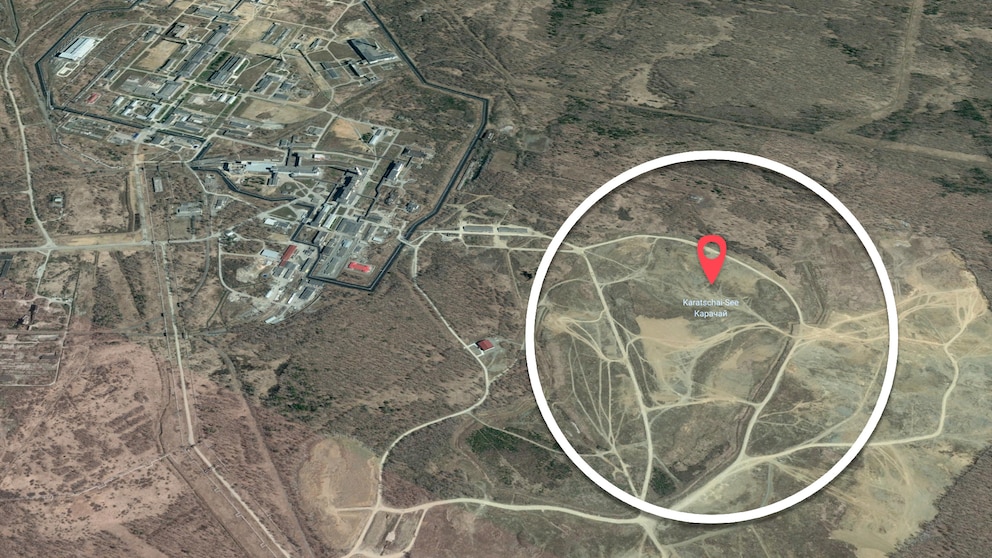
The reason for the danger around Lake Karachay: It is heavily contaminated with radiation. Starting in 1948, radioactive waste from the once-secret “Mayak” (Lighthouse) plant was carelessly dumped into the water. According to MDR, just a few minutes on the shores of the 130,000-square-meter lake today can expose you to a life-threatening dose of radiation.
Also of interest: Berkeley Pit–could one of the world’s most toxic lakes help fight cancer?
More Radioactivity Than the Chernobyl Disaster
But the dumping of toxic waste was just the beginning: In 1957, Ozyorsk experienced what is likely the largest nuclear disaster to date when a tank containing 80 tons of radioactive liquid exploded at the “Mayak” nuclear facility. At that time, more radioactive material was released into the environment than during the Chernobyl disaster in 1986, which is why the Soviet government kept the incident secret for more than 30 years. The already heavily contaminated Lake Karachay became a death trap. Even today, the city of Ozyorsk and its surroundings are under strict military surveillance, and foreigners are practically barred from entry.
According to “Zeit,” Lake Karachay still contains four exabecquerels of the radioactive element cesium-137–an unimaginable amount, meaning four billion (sic) radioactive decays occur every second. Ten years after the Ozyorsk nuclear disaster, Lake Karachay caused another nuclear catastrophe, according to “Welt“: Due to a hot summer with no significant rainfall, the lake dried up, and radioactive dust with a radiation level of 200,000 gigabecquerels was blown across the already contaminated land.
Also of interest: The most radioactive city in the world

9 Places Worldwide Tourists Can’t Enter

Germany’s Quirkiest Amusement Park Plans ‘Drive-In Christmas Market’
Contaminated for Millennia
The 300 km long and 50 km wide strip where the waste fell most heavily in 1957 and 1967 is ironically called the “Ural track” and will remain contaminated for centuries. The lake itself will likely remain radioactive for several thousand years. It wasn’t until the 1990s that it was finally sealed with a meter-thick concrete cover. Everyone involved in the work could only work for a short time to reduce radiation exposure, and all work vehicles were reinforced with lead plates for protection against radiation.
Even today, the radiation levels in the area exceed global standards by up to a thousand times, and residents are prohibited from picking berries, mushrooms, or fishing in the waters around Ozyorsk.
Alarmingly, the concrete seal over Lake Karachay, completed only in 2015, is already crumbling, according to MDR, and there are fears that radioactivity could reach the Arctic Ocean through groundwater. A visit to the lake is still considered deadly despite the concrete cover.
A Deadly Golden Cage
The most bizarre aspect: The residents of Ozyorsk were not even unhappy about their “situation” for a long time; quite the opposite. To keep them, many of whom were researchers and their families, content, the Soviet Union created an isolated little world full of luxury. While most of the country lived in poverty, Ozyorsk residents had everything in abundance, including exotic delicacies like caviar and bananas, good schools for the children, a wide range of cultural offerings, and, ironically, health care.
Also of interest: The 9 most dangerous islands in the world
The price for this: Even today, radiation-induced illnesses such as leukemia are significantly more common around Lake Karachay than in the rest of the country or the world, and children are still born with sometimes severe deformities. The damaged “Mayak” plant is still in operation today, albeit in a different capacity: It now reprocesses nuclear fuel.