

November 24, 2026, 6:18 pm | Read time: 4 minutes
Lavish Christmas decorations, string lights, and church services–all things you wouldn’t typically expect in the Philippines. But that’s misleading: In the tropical island nation, Christmas is celebrated for almost five months straight. This includes street and lantern festivals and many Christmas masses. Everything shines and sparkles. TRAVELBOOK reveals how to celebrate the world’s longest Christmas in the Philippines.
When the first gingerbread appears on shelves here, the Christmas season is already in full swing in the Philippines. From September to January, one festive highlight follows another. Here’s an overview of the most beautiful events:
In the Philippines, people wish each other “Maligayang Pasko” for a third of the year. This translates to “Merry Christmas and a Happy New Year.” The people of the island nation love the Christian holiday, and you can feel it throughout the country. Everyone is just wearing shorts, T-shirts, and flip-flops. That’s because the average temperature in the Philippines is 79 degrees Fahrenheit. But this kind of Christmas is completely normal here. It traditionally starts on September 1. That’s when Christmas trees are set up in shopping malls, and Christmas music plays from the speakers. Numerous other events invite you to join in the celebration.
The Lantern Festival in San Fernando
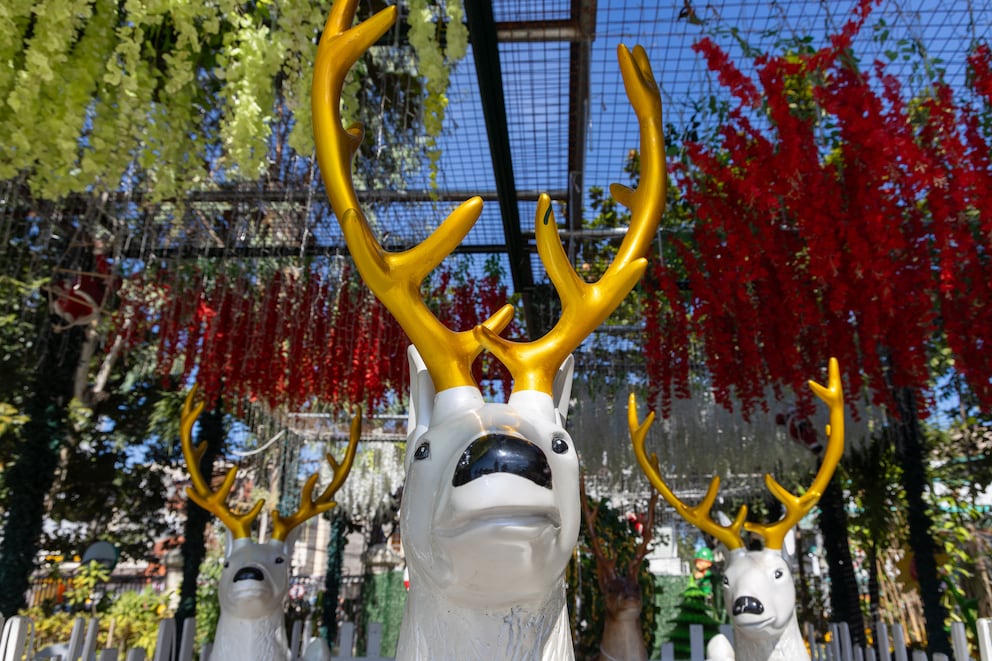
A visit to the Giant Lantern Festival in San Fernando is not to be missed. The city is located about 43 miles north of the capital, Manila. There, you can admire giant, brightly colored lanterns. The festival takes place from December 17 to January 1 and is a legacy from the colonial era. In the past, locals made small lanterns from bamboo and colorful paper.
Light Show in Ayala Triangle Gardens City Park
In the Philippine capital, Manila, the Christmas season is also celebrated in grand style. Every year, massive LED projections transform Ayala Triangle Gardens city park into a twinkling winter scene. The spectacular light show traditionally takes place from mid-November to early January every evening between 6 and 10 p.m. at 30-minute intervals. In the Philippines, they certainly know how to celebrate Christmas extensively.

8 Special Places in Europe to Celebrate New Year’s Eve
4 of the Most Beautiful Christmas Markets in Saarland
More Than Just a Dazzling Spectacle
In the Philippines, the celebration of Jesus’ birth holds special significance. This is linked to the Spanish colonial period. The Catholic faith still shapes the country today: About 90 percent of the population is Roman Catholic. Christmas is celebrated there as extensively as almost nowhere else in Asia–and preferably bright and colorful. But in the days leading up to Christmas, a religious and spiritual atmosphere also sets in. Children go from house to house singing Christmas carols. The so-called Simbang Gabi masses are particularly contemplative. They start nine days before Christmas Eve, at 3 a.m., and are always well attended–mainly by local families. According to folklore, anyone who attends all nine masses will have a special wish granted. It’s also worth visiting for the food. After the mass, you can sample regional specialties at the food stalls. For example, Bibingka, a sweet rice cake with coconut shavings. December 25 is celebrated with family, just like here. On this day, it is especially important to show respect to the elderly. On December 31, the family also gathers for the Philippine midnight feast “Media Noche” to bid farewell to the year with a big celebration.
Dancing Finale at the Santo Niño Festival
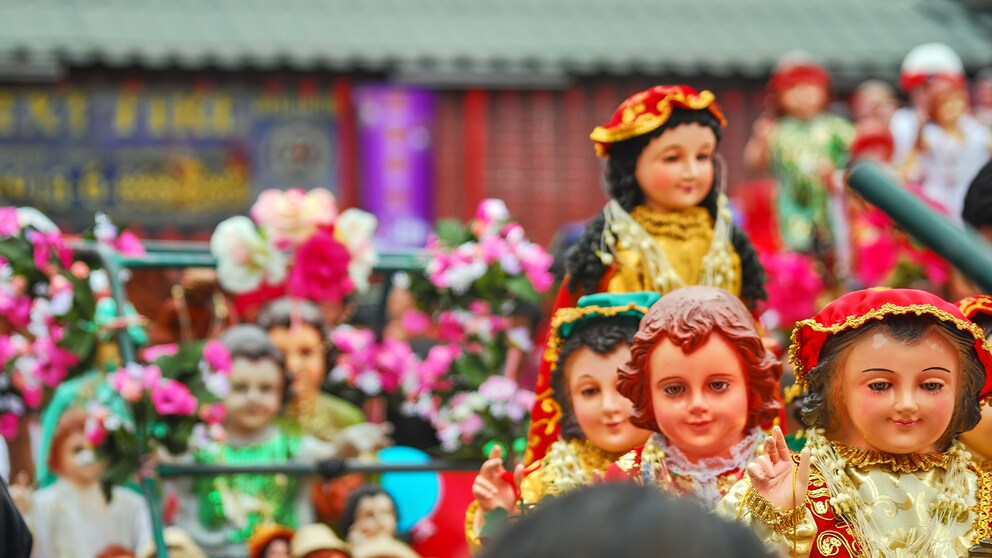
The Christmas season officially ends on January 6, the Feast of the Three Kings. However, in the Philippines, the celebrations continue: The Santo Niño Festival in the city of Cebu marks the festive conclusion of the Christmas season. Until the end of January, street parades are held in its honor, with dancing and celebrations. This colorful spectacle is a must-see.
If you’ve had enough of artificial snow, you can take a break on the snow-white sandy beaches of the Philippines.