

February 19, 2022, 5:17 am | Read time: 5 minutes
Wroclaw–the name might not ring a bell for many. But when you hear Breslau, it clicks for a lot of people. Poland’s fourth-largest city is perfect for a short trip, and TRAVELBOOK knows what you shouldn’t miss when visiting!
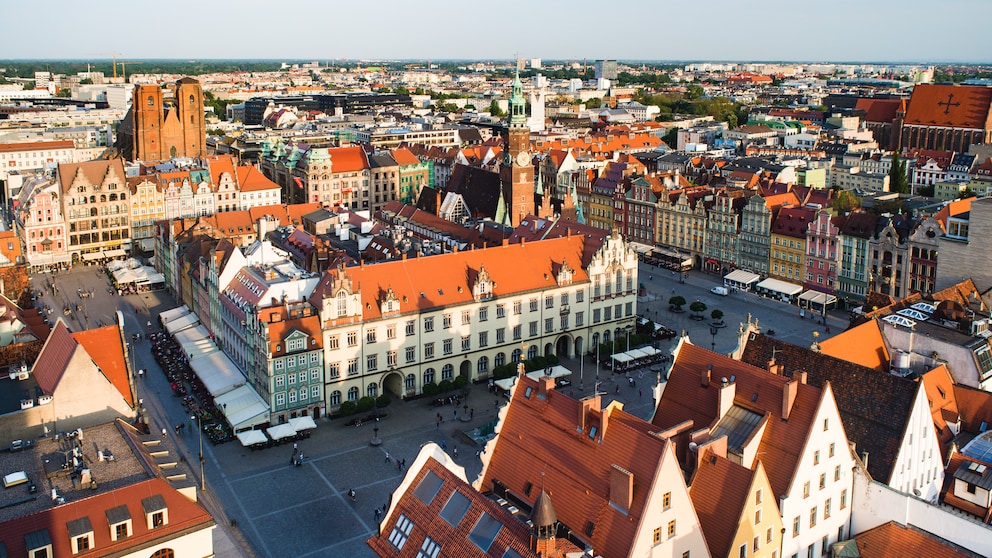
A vibrant student city by the water with charming cafes, picturesque alleys, and one of the most beautiful and largest medieval market squares in Poland: That’s Wroclaw (Breslau). Over its more than 1,000-year history, the city has been called “The Flower of Europe.”
“WrocLove,” as the old Oder city is affectionately called today, is worth a visit not only for culture enthusiasts: partygoers, romantics, fans of good food, delicious beer, and even dwarf lovers will find something to enjoy here. There are many good reasons to visit Breslau, and TRAVELBOOK has selected six of them.
1. The Picturesque, Lively Old Town of Wroclaw (Breslau)

The medieval market square with the Gothic town hall, surrounded by magnificent townhouses in Baroque, Renaissance, and Art Nouveau styles, and the dreamy alleys of the old town: When it comes to romance and beauty, Breslau can easily compete with famous cities like Prague in the Czech Republic or Krakow in Poland. Yet, the old Breslau, now called Wroclaw, remains a hidden gem. A bonus, as the city is still relatively undiscovered by tourists.
For now, you’ll mostly encounter students and other locals in the many cafes, restaurants, pubs, and live music clubs at the Old Market Square, known as “Rynek” (“the Ring”). Breslau’s old town, almost completely destroyed after World War II, was painstakingly rebuilt by Wroclaw’s new Polish residents. Thus, beautiful old houses provide the backdrop for a modern, lively, and diverse cultural and nightlife scene.
Also interesting: 28 Destinations to Visit Before Turning 30
2. Water, Bridges, and Islands

Wroclaw is shaped by the Oder River and its tributaries: The water city boasts twelve islands and more than 100 bridges. The Cathedral Island and the Sand Island, with their eight magnificent Gothic and Baroque churches, are an oasis of tranquility–yet just a short walk from the market square with its many pubs and cafes. Couples stroll along the riverbank, and boats invite you to take tours on the water.
Also interesting: The 7 Most Beautiful Places on the Baltic Coast in Poland
3. The Funny Dwarfs of Wroclaw

While strolling through the city, it’s worth looking down. Then you can see Wroclaw’s smallest landmarks: tiny dwarfs. They’re called “Krasnale” in Polish. They stand all over the city, prompting city travelers to kneel down to photograph them.
The funny bronze figures look harmless but have a political origin: In the 1980s, the opposition movement “Orange Alternative” used spontaneous art actions to criticize the socialist regime in Poland, such as demonstrations in dwarf costumes.
During this time, the artists also placed a cast-iron dwarf in Wroclaw’s old town. “Papa Krasnal” on Świdnicka Street is a reminder of that. In 2001, students began placing dwarfs, and the Krasnale multiplied. There are now more than 300 Wroclaw dwarfs. They have their own Wikipedia entry, and there’s an official website with a Krasnale city map in four languages.
Also interesting: The Best Tips for the Beautiful Hel Peninsula on Poland’s Baltic Coast
4. Breslau is a Student City
Breslau has been a student city since at least 1702. The university is technically even older, as in 1505, the Bohemian ruler, King Vladislav II, decided to establish it. After wars and other obstacles initially prevented its construction, Emperor Leopold I founded it again almost 200 years later from various predecessor institutions.
Wroclaw is shaped by the university, whose history is as eventful as the city’s. There are cafes, jazz pubs, clubs, and restaurants on every corner. The highest density is at the Rynek in the old town, but there are also plenty of places heading toward the university. For example, the enchanting Art Café Kalambur: a café by day, a pub and music bar by night, offering vegetarian food and entirely in Art Nouveau style, from the floral patterned colorful window panes to the Art Deco lamps.

5. Shopping in Wroclaw (Breslau)
Poland’s fourth-largest city is ideal for extensive shopping tours. Shopaholics can indulge themselves in large shopping centers with 100 to 200 stores each, such as Magnolia Park, Galeria Dominikańska, or the former Wertheim department store, now Renoma.
Fashion boutiques and charming shops of all kinds line Świdnicka Street, known as Breslau’s main shopping street. A stroll through the picturesque Stare Jatki Street in the old town is delightful. In the old buildings of the former butcher’s alley, small galleries and shops for souvenirs and handicrafts have settled, offering amber jewelry, ceramics, carvings, wicker products, and amber jewelry in their displays.
The Beauty of the Polish Port City Gdansk
4 Cities on Corsica You Should Visit
6. The Delicious Polish Food
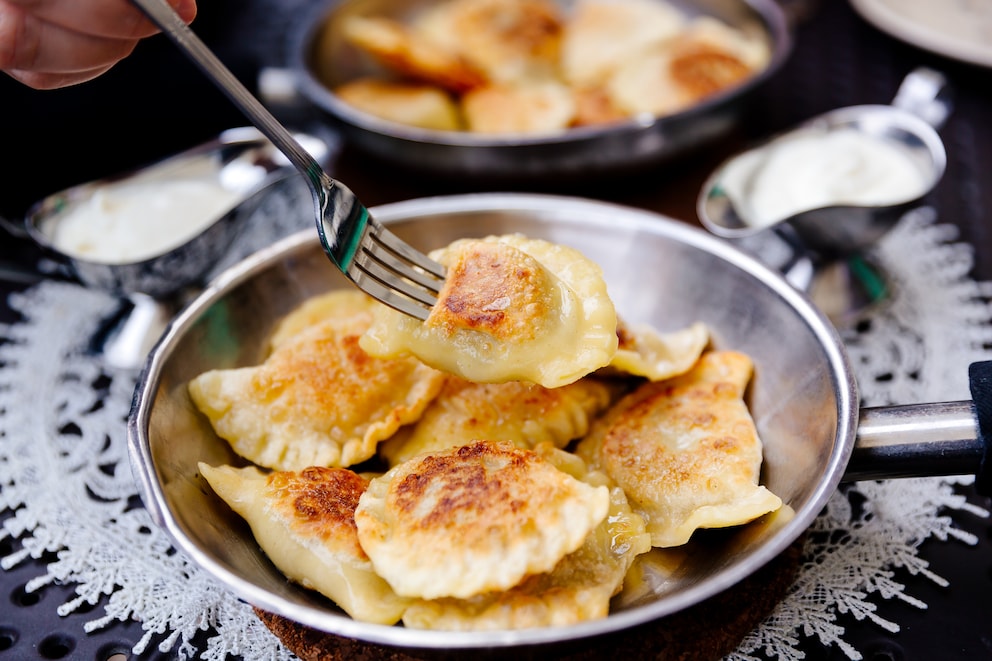
The current residents of Wroclaw come from various regions of Poland and brought their own traditions with them. Thus, you can indulge in the entire Polish cuisine in Breslau, which is often unjustly underestimated.
Specialties include Oscypek, a smoked sheep’s cheese from the Tatra region of Zakopane, Pierogi Ruskie, typical Polish dumplings with potato, cream cheese, and onion filling, and, of course, the sinfully delicious cakes and tortes for which Polish bakers are known.
Our Tips for Wroclaw (Breslau) on the Map:
The participation in the trip was supported by the Polish Tourist Office. Our standards of transparency and journalistic independence can be found at www.axelspringer.de/unabhaengigkeit.