

August 2, 2026, 5:06 am | Read time: 6 minutes
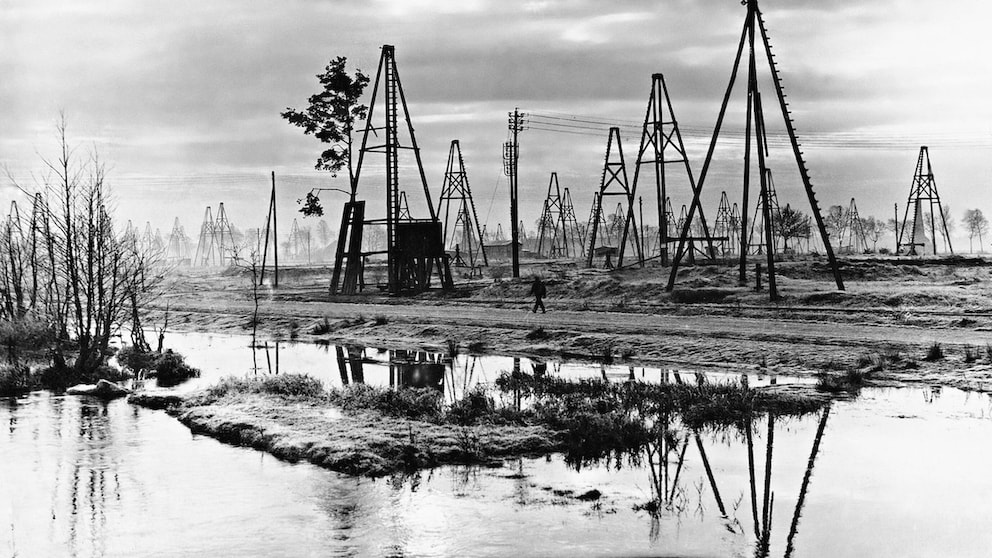
In 1858, a new chapter in human history began in the small Lower Saxony town of Wietze in the Lüneburg Heath. It was here that drilling in search of lignite accidentally led to the first extraction of crude oil. Today, a museum in Wietze commemorates the nearly forgotten birthplace of the oil industry.
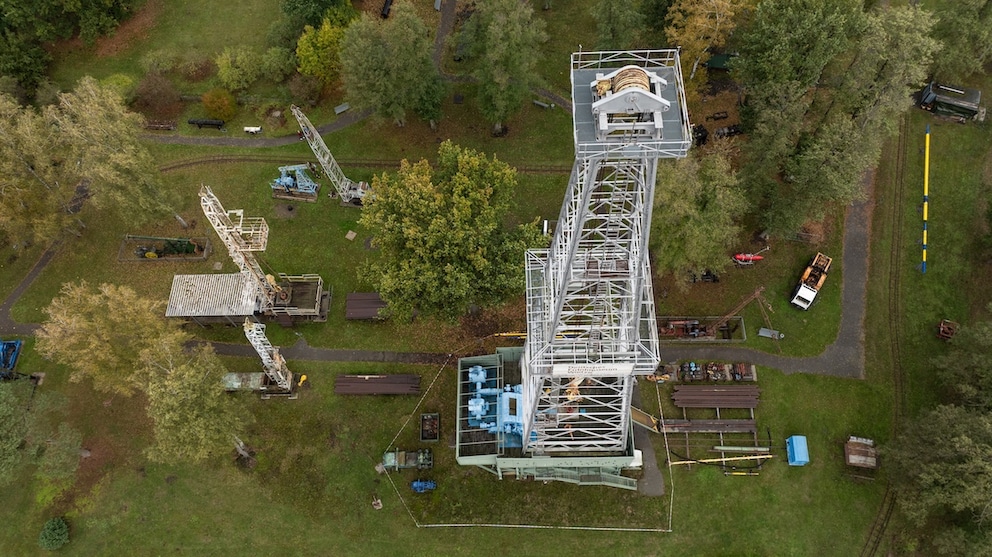
The Lower Saxony community of Wietze, located in the Lüneburg Heath between Hanover and Celle, is now a quiet small town. From afar, however, you can see a tower that recalls the time when the whole world suddenly focused on the town, which now has about 7,400 residents. It was here that, by chance, the most valuable resource today was extracted for the first time: crude oil. This discovery brought an unprecedented boom to the village and marked the start of a new industrial era. Wietze is now hoping for another such boom, but this time with a different resource.
On April 24, 1858, the Goslar-born geologist Christian Konrad Hunäus made a sensational discovery. According to the official tourism site of the Lüneburg Heath, the Hanoverian royal court sent him to the small town of Wietze because they suspected a coveted mineral resource: lignite. As early as 1652, there was the first documented mention of a black sludge in the area, which farmers repeatedly extracted and used in various ways. They called it “tar” or “devil’s fat” and sold it profitably, for example, as a remedy. It was also used to seal ship planks and was popular as wagon grease.
The Boom Started in Wietze
According to widespread belief, this “devil’s fat” indicated that lignite might be found in deeper layers of the earth. The viscous black sludge was considered a kind of “exudation” of the resource. Hunäus, in search of the mineral resource, initiated a drilling operation—and unknowingly conducted the first oil drilling of all time. What he extracted from about 36 meters deep in Wietze, instead of the hoped-for coal, was something the geologist could not initially identify. His technical director was more visionary, reporting back to the royal court: “The considerable amount of the purest and most easily obtainable tar will bring immeasurable prosperity and blessings to the fatherland, especially to the village of Wietze (…).”
Also interesting: The dramatic eco-disaster around the Caspian Sea
Hunäus himself was the first to give the discovered resource the name “crude oil.” He had no idea that his discovery would soon revolutionize society, the economy, and an entire era. But in 1859, retired train conductor Edwin Drake also found crude oil during a drilling operation in the U.S. state of Pennsylvania. Just a year later, according to “WDR,” there were 2,000 drill holes on site, sparking an unprecedented boom around the black gold that sent waves worldwide. Suddenly, the small town of Wietze in Germany was back in the public eye. However, it wasn’t until 1899 that drilling master Friedrich Hasenbein managed to extract oil in a quantity interesting to the industry.

This is Likely Germany’s Quirkiest “Amusement Park”
Europe’s Largest Artificial Lake Landscape is Being Created in Germany
Pollution and Lawlessness
In the first year, Wietze extracted 2,500 tons of crude oil per time unit. By the turn of the century, it was already 27,000 tons per time unit. A true oil rush broke out in the Lüneburg Heath. Farmers leased their fields at top prices to oil hunters, roads and a railway line to Celle were built, and the Aller River was canalized and made navigable. For the thousands of workers, new and larger housing estates were built, and company directors constructed stately villas. At the same time, a Wild West atmosphere increasingly prevailed, leading to lawlessness and occasional shootouts. Oil that, for example, entered the waters during floods poisoned the fields.
Also interesting: Berlin: The U.S. ghost town that holds a special treasure
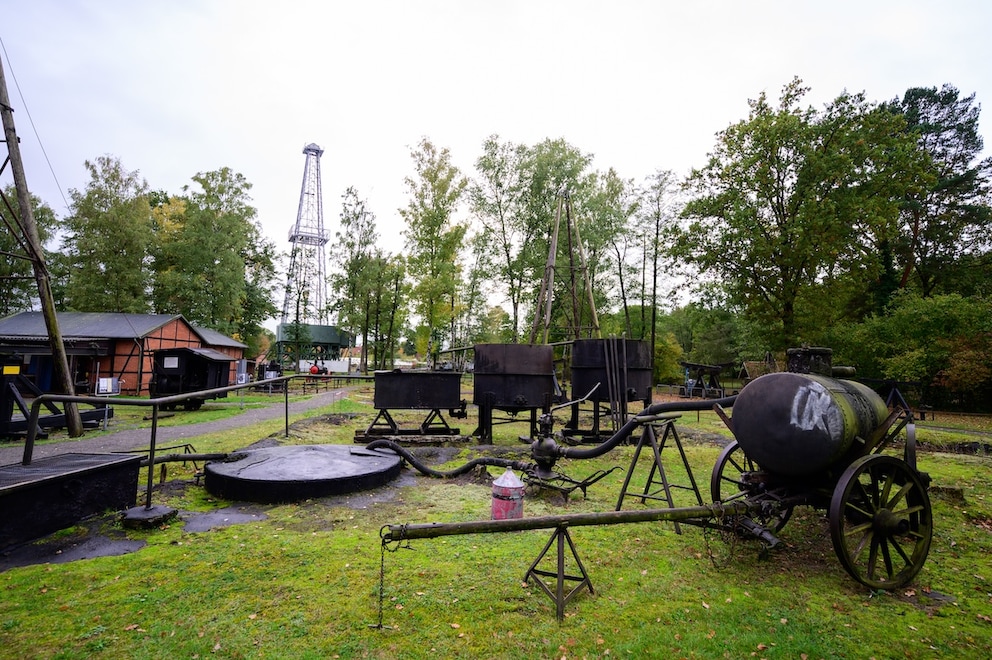
At times, Wietze’s production covered 80 percent of the then total German demand for crude oil. It reached its absolute peak in 1909, and by the mid-1930s, there were 52 production companies on site. By this time, however, more profitable oil fields had long been discovered in Germany. Additionally, oil, which was now also being industrially extracted in the U.S., South America, and the Persian Gulf, was pushing into the domestic market. In 1964, after 1,600 successful out of a total of 2,000 drillings on site, operations in Wietze were finally ceased. On September 29, 1970, the German Oil Museum opened on site, which still commemorates the era that the oil brought to the small town.
“Many Don’t Know the Story”

In 2025, the ARD series “Black Gold” perhaps brought this little-known chapter of German industrial history to a broader audience for the first time. In Wietze, they hope for a completely new boom, as stated in response to TRAVELBOOK inquiries from the German Oil Museum—namely, a visitor boom. “Many people don’t know the story yet.” The highlight of the approximately one-and-a-half-hour tours is the museum’s outdoor area. There, many of the old extraction instruments can still be seen, some in their original locations. “And our drilling tower is now the landmark of Wietze.” Interest was already high before the ARD series. “Afterward, most visitors are enthusiastic and say they didn’t expect it at all.”
Also interesting: The Lieberoser Desert is Germany’s little Sahara
Incidentally, oil is still extracted in Germany to this day. According to “NDR,” it was 1.6 million tons in 2023. The majority comes from the Wadden Sea from the drilling and production platform “Mittelplate,” where more than 40 million tons have been extracted since its commissioning in 1987. Today’s production only covers about two percent of the current total German demand. The city of Celle remains an important center of the global oil industry. The local drilling master school has been training international specialists in the field since 1937. While Wietze itself may be quiet today, the town will forever be known as the place where the global oil boom began.