

November 25, 2026, 12:47 pm | Read time: 3 minutes
Golden yellow leaves, bright red treetops, and streets that look like they’re straight out of a picture book: In autumn, South Korea’s capital, Seoul, shows its particularly beautiful side. But this colorful natural spectacle has a downside. The very trees that create the dreamy autumn scenery emit a rather unpleasant odor.
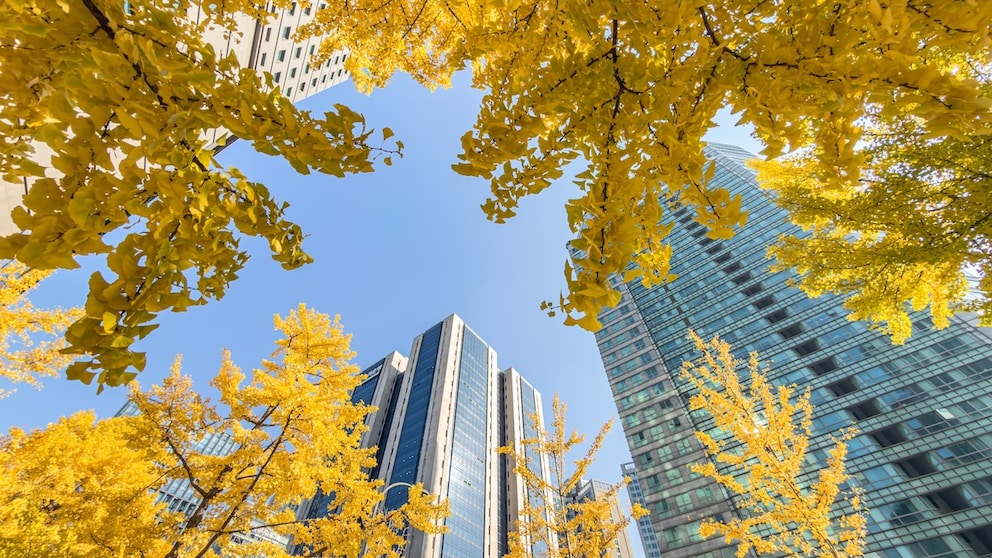
Amid modern skyscrapers, traditional palaces, and sprawling parks, the numerous ginkgo trees especially contribute to the unique autumn atmosphere. However, those strolling through the fallen leaves might encounter an unpleasant surprise. Instead of fresh autumn air, a smell reminiscent of vomit rather than a romantic autumn walk suddenly hits the nose.
The characteristic fan-shaped leaves turn golden yellow and cover streets and sidewalks. Since 1971, the ginkgo has even been the official city tree. According to the city administration, it was chosen for its longevity and resistance to air pollution and pests. Its robust growth is also meant to symbolize the development and prosperity of the capital. In Seoul, there are a total of 100,000 ginkgo trees lining the streets.
Why Seoul’s Ginkgo Trees Smell So Bad
As beautiful as the trees look, their smell can be quite unpleasant. The culprits are the female trees, which drop fleshy-coated seeds in the fall. When these are crushed on the ground, they release a pungent stench. This is mainly due to two substances in the seed coat: butyric acid, which is also responsible for the typical smell of vomit, and hexanoic acid, which is reminiscent of rancid cheese. Particularly troublesome: If remnants stick to the soles of your shoes, you might even bring the stench home with you.
The reason there are so many female ginkgo trees in Seoul is surprising: In the past, the gender of the trees could only be determined after many years. It wasn’t until 2011 that the South Korean National Institute of Forest Science developed a DNA method to distinguish between male and female specimens. This can even be done with one-year-old trees, as the institute explains.

Why Dijon Is Considered France’s Hidden Gem

The best destinations for every month of the year
Using Nets and Shaking Machines Against the Stench
Seoul is now trying to tackle the odor problem with various measures. According to CNN, nets are being set up to catch the falling seeds. Special machines also shake the trees to make the seeds fall and be collected before pedestrians fill the streets.
In some cases, female ginkgo trees are being replaced with male ones that do not produce smelly seeds. However, after criticism from environmentalists who oppose the unnecessary felling of sometimes centuries-old trees, the city has limited these replacement plans. As reported by the Korean news agency Newsis, there will be a greater focus on collecting the seeds in the future.
The Most Beautiful Autumn Routes Through Seoul
Those who want to experience Seoul’s golden autumn for themselves have plenty of opportunities. In early November 2026, the city administration published a list of 110 particularly beautiful autumn routes. In total, the walking paths stretch over 167 kilometers and lead through parks, along rivers, and through autumn-colored avenues.
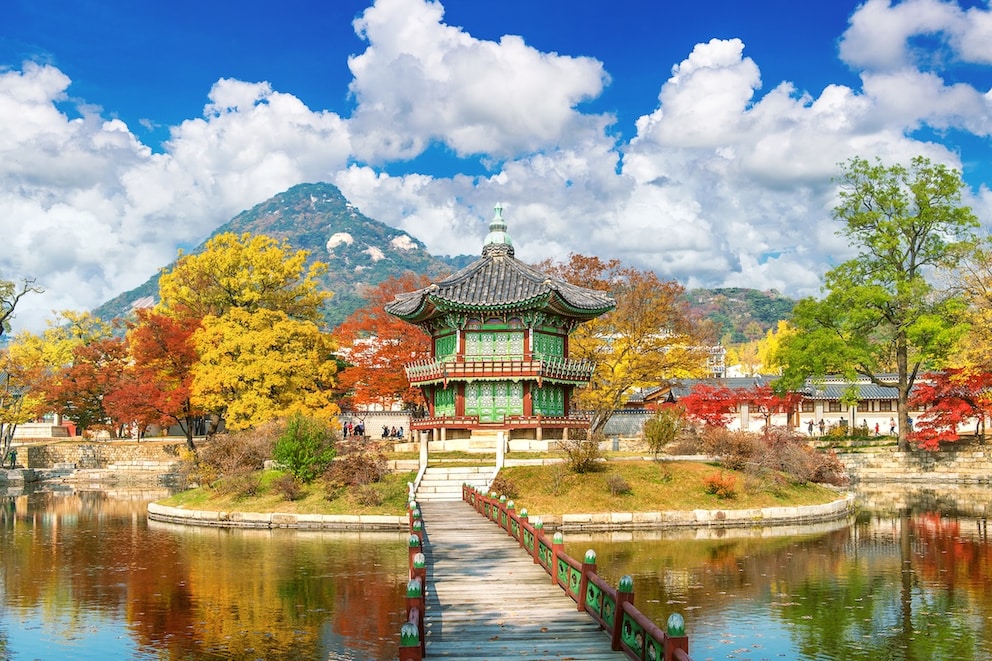
Particularly noteworthy is the Samcheongdong-gil near the Gyeongbokgung Palace, where 188 ginkgo trees form a golden yellow avenue. The Deoksugung-gil with its historic palace walls and the expansive Seoul Forest are also among the recommendations. The autumn colors in Seoul usually reach their peak between late October and early to mid-November.