

November 15, 2025, 1:08 pm | Read time: 7 minutes
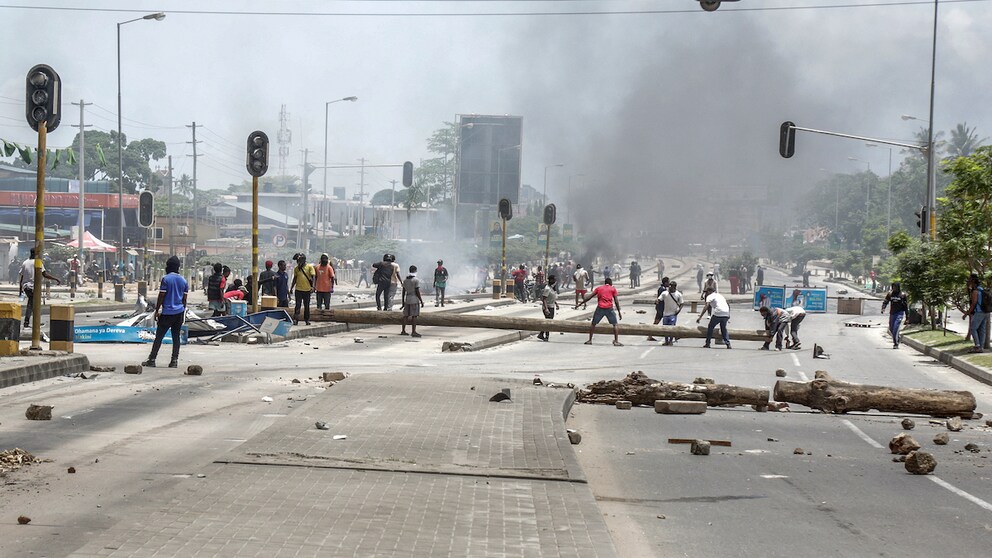
Violent protests and arrests have shaken Tanzania since the controversial presidential elections at the end of October. Given the uncertain situation on the ground, travelers planning a trip to Tanzania are wondering if it is currently safe to proceed. The German Foreign Office has a clear answer. TRAVELBOOK provides a current overview.
Tanzania is a popular travel destination in East Africa. It is home to the famous Serengeti National Park, which attracts safari tourists every year. Tanzania is also home to Mount Kilimanjaro, the picturesque Zanzibar archipelago, and many other exciting travel destinations. Currently, however, it is not the natural beauty of the East African country that is likely to concern travelers. Rather, it is the unrest, which has particularly gripped the cities, leaving many travelers questioning how safe a trip to Tanzania is at present.
Overview
Current Situation
On October 29, 2025, the incumbent President Samia Suluhu Hassan won a controversial presidential election with nearly 98 percent of the vote. Potential opponents were excluded from the election in advance. Critics doubt the result. This was followed by massive, sometimes violent protests and numerous arrests. Many young Tanzanians opposed the election of the increasingly authoritarian president and demonstrated in the thousands. According to various media reports, the police cracked down hard on the demonstrators. Many people lost their lives in the protests. The actual number of victims is unclear, with estimates ranging from ten to a thousand, depending on the source. For several days, the internet was completely shut down, and there were significant disruptions in the supply of food and fuel. Air travel was also severely affected. Since then, the situation has stabilized, as the German Foreign Office writes in its travel advisories for Tanzania. However, it remains volatile.
The atmosphere remains tense, partly because arrests of opposition politicians and sympathizers continue, who, according to the government, are said to have instigated the protests and boycotts. According to the German Foreign Office, renewed demonstrations and riots cannot be ruled out. “In this case, there may again be restrictions on supplies, including communication channels,” it warns. Elsewhere, it states that the political situation in Zanzibar is “currently stable.” There had also been protests there.
German Foreign Office Advises Against Travel to Tanzania
So how safe is Tanzania given the uncertain political situation? The German Foreign Office gives a clear answer: “Travel to the southern part of the Mtwara region (immediate border region with Mozambique) as well as to the islands and coastal region south of Kisiju is advised against.” And not only that. The German Foreign Office also clearly advises against “non-essential travel to other regions of Tanzania.” Travelers in Tanzania are advised: “Contact your airline or tour operator before departure. Only go to the airport if you are sure that your flight is operating as scheduled and your flight is confirmed.” In addition to Germany, other countries have also adjusted their travel advisories.
Terror Threat
But it is not only the current domestic political situation that raises questions about safety for travelers. The German Foreign Office writes in its travel advisories that the security situation in the country has already deteriorated since 2023. There is a “risk of terrorist attacks in all regions of the country, especially in the city of Dar es Salaam” and in the Mtwara region near the border with Cabo Delgado province in Mozambique.
In the past, there have been attacks on the mainland and on Zanzibar. Places of worship and religious leaders were attacked. Currently, the risk of terrorist attacks is particularly high near symbolic sites such as landmarks, religious gathering places, government and administrative buildings, and foreign embassies. Economic and tourism centers, hotels, markets, and large gatherings of people could also become targets of terrorist acts.
Crime and Pirates
In addition to the threat of terrorism, crime has also increased since 2023, and it is generally considered quite high. According to the German Foreign Office, criminal acts are on the rise throughout the country, particularly in tourist hotspots like Arusha, Zanzibar, Dar es Salaam, and Morogoro, where money is extorted. In some cases, these involve kidnappings by seemingly helpful passersby or taxi drivers who rob their victims or force them under threat of violence to withdraw cash. In other cases, foreigners are forced to arrange money transfers through their families or acquaintances.
Travelers should be particularly cautious about whom they get into a car with and at places like train stations, ferry terminals, and bus stations. Such incidents are also increasingly occurring in residential areas. Unsupervised beaches, city beaches, and remote areas are particularly dangerous.
Caution is advised not only on land but also on the water. There are still numerous pirate attacks off the coasts of Somalia, Tanzania, Kenya, and other neighboring states. According to the German Foreign Office, those traveling by ship risk being attacked and hijacked.
LGBTQ+ and Legal Particularities
Homosexual acts are punishable in Tanzania and can result in very high prison sentences. This also applies to foreign nationals. To be safe, travelers should exercise restraint both in public in Tanzania and on social media, advises the German Foreign Office.
High prison sentences also apply to prostitution, sexual contact between adults and minors, and with students of secondary schools, regardless of age. Any drug use, possession, and trafficking are also prohibited.
Furthermore, the dissemination of content “that could spread panic” is punishable, according to the travel advisories. This regulation is currently being applied in connection with the protests. Plastic bags are also banned, although small zip-lock bags, as commonly used on airplanes, are exempt.

How Safe Are Trips to Morocco Right Now?

Australia Issues Travel Warning for Thailand–Here’s What the Foreign Office Says
Health
Tanzania is also not entirely safe regarding the various diseases one can contract locally. These include dengue fever, which is transmitted by mosquitoes. Severe complications with fatal outcomes can occur, especially in children. However, complications are rare in travelers, writes the German Foreign Office. There is a vaccine against dengue fever. Chikungunya fever, also transmitted by mosquitoes, often comes with high fever and sometimes joint and muscle pain. Tanzania is also a malaria area, which is also transmitted by mosquitoes. The risk is high nationwide and year-round, even in cities and on Zanzibar.
Other health risks include HIV/AIDS, diarrheal diseases, African tick-bite fever, sleeping sickness, meningococcal disease, sometimes leptospirosis, schistosomiasis, and altitude sickness during mountain climbing. There is also a risk of being bitten by venomous snakes, spiders, and scorpions.
What to Consider When Vacationing in Tanzania
Those traveling to Tanzania despite the current events should stay well-informed about the domestic political situation to react quickly. This means following local, social, and international media to assess how the situation is developing and to know what is happening on the ground.
The German Foreign Office has also published a number of tips for a safe stay in Tanzania. TRAVELBOOK summarizes the most important ones:
- Be especially vigilant and avoid demonstrations and crowds, and follow the instructions of security forces.
- Be cautious in busy places and those with an international audience, such as hotels, embassies, and other meeting points.
- Register in the crisis preparedness list of the German Foreign Office (ELEFAND).
- Only get into registered taxis (white license plate and green, yellow, or blue stripe on the white body) whose drivers you know. Even with taxi drivers booked through a hotel, caution is advised.
- Avoid overland travel, cycling, and walking after dark.
- Keep windows and doors closed and locked while driving.
- Do not resist in the event of a robbery.
- Keep money, IDs, driver’s license, and other important documents safe and store electronic copies.
- Use mostly cashless payments and only carry the cash you need for the day and no unnecessary valuables.
- Be skeptical of unfamiliar emails, phone calls, prize notifications, offers, and requests for help, and do not share any data.
- Inform yourself about exposure prophylaxis and vaccinations before the trip, consistently protect yourself from mosquito and fly bites, and regularly check your body for ticks.
- Drink only water from safe sources, never tap water.
- Never swim in freshwater bodies and avoid contact with damp natural soils.
- Always be careful where you reach, step, or sit and lie down.