

October 9, 2025, 11:25 am | Read time: 8 minutes
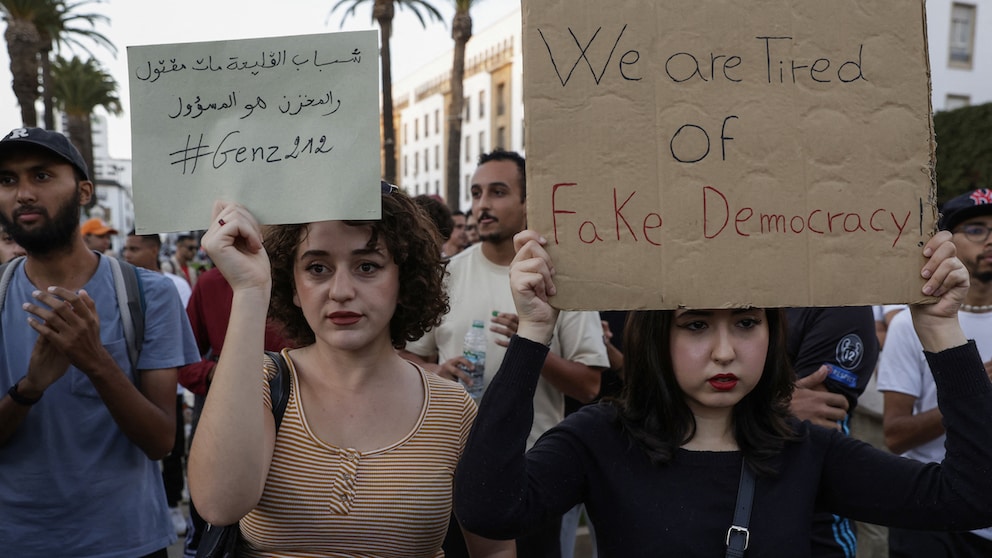
The situation in the Middle East remains tense, but currently, Morocco’s domestic political situation is particularly gripping. Since the end of September, young Moroccans have been demonstrating against the conditions in their country and demanding reforms. This also affects travelers. Given the uncertain situation, prospective vacationers to Morocco are wondering if it’s currently safe to travel. TRAVELBOOK provides a current overview.
Morocco is a popular vacation destination in North Africa. Its fascinating desert landscape, diverse cities, and long coastline attract numerous tourists every year. So many, in fact, that it has now surpassed Egypt as the most visited country in Africa. Morocco is considered one of the safest countries on the African continent and warmly welcomes its international visitors. However, given the escalating situation within Morocco itself, the question arises of how safe a trip really is at the moment.
Overview
Current Demonstrations in Morocco
Since the end of September, Morocco’s youth have taken to the streets, led by the organization Genz212. They are protesting against social inequality and corruption in their country and demanding reforms, particularly in the education and health systems, as well as a change in government. The protests were triggered by the deaths of eight pregnant women who were supposed to give birth via cesarean section at the state hospital in Agadir. This is reported by sources such as “Deutsche Welle.”
The wave of protests has now spread across the entire country, with violence escalating in some places. Three demonstrators were shot by police, as reported by sources such as “Tagesschau.” However, the protests continue. In addition to the youth movement Genz212, numerous well-known Moroccan personalities have now sided with the young Moroccans. On Wednesday (October 8, 2025), 60 artists, human rights activists, and intellectuals published an open letter to King Mohammed VI, urging him to initiate “constitutional reforms and an ‘effective fight against corruption,’” as stated by “Zeit Online.” The king is scheduled to deliver his annual speech this coming Friday. On that day, the protesters plan to pause, but a major demonstration is planned for today (Thursday, October 9, 2025).
Foreign Office Advises Caution
What do the current demonstrations in Morocco mean for travelers? According to the Foreign Office, the political situation in Morocco is “largely stable and calm” despite the protests. The protests are described in the travel advisories as “peaceful,” with violent incidents occurring only “sporadically.” The German Foreign Office states that the demonstrations are “primarily taking place in Rabat, Casablanca, Agadir and surroundings, Oujda, Tangier, Beni Mellal, Taza, Temara, and Lqliaa,” but further demonstrations cannot be ruled out.
The office therefore advises closely monitoring developments and staying informed through local and social media. Hotels or travel agencies may also have more precise information about the situation on the ground. For personal safety, travelers should avoid demonstration sites and large crowds. Additionally, it advises limiting “movements after dark,” which we interpret as a recommendation to avoid going out at night. Furthermore, it suggests refraining from public political expressions.
Morocco and the Current Middle East Situation
In light of the conflicts between Israel and Hamas in Gaza and the sometimes intense reactions in neighboring countries, the question of how safe travel is for travelers to Morocco remains. The German Foreign Office has issued travel warnings for Israel and the Palestinian territories, as well as for neighboring countries Lebanon, Syria, Iraq, and parts of Egypt, as well as for Iran. Travel to certain areas of Jordan is strongly discouraged. For Morocco, there has been no travel warning from the German side due to the Middle East situation.
References from earlier versions of the travel advisories, which indicated that one could expect “pro-Palestinian demonstrations with sometimes high numbers of participants” in Morocco, have since been deleted by the office. In an earlier version of this article, it was also mentioned that Morocco had recently normalized its relationship with Israel by signing the Abraham Accords. According to a report on ZDF, Israel is no longer considered the main enemy. Many Arab countries see a much “greater threat” in Iran and its allies in Syria, Iraq, Yemen, and Lebanon.
Terrorism and Border Areas
More than the effects of the Middle East conflict, tourists in Morocco currently seem to fear terrorist attacks. Although there are significant security measures in place, the German Foreign Office writes that the risk of terrorist attacks persists. For example, in 2018, two tourists were victims of a violent crime with a terrorist background during a hike “near Mont Toubkal in the Atlas Mountains,” as stated in an earlier version. The Swiss Department of Foreign Affairs also writes: “Moroccan security authorities regularly report the dismantling of terror cells.” However, Switzerland is also convinced that travel to Morocco is “generally safe.”
According to the German Foreign Office, special caution is advised in certain parts of the country and border regions. For example, travel to the border region with Algeria is not safe, and the Foreign Office strongly advises against it. The national border with Morocco’s neighboring country has been closed since 1994. Travelers must expect arrests and other impairments to their safety. “Desert tours in the dune landscapes of southern Morocco (Erg Chebbi south of Merzouga or Erg Chegaga and Erg Lihoudi south of Zagora)” can still be undertaken. However, tourists should book local tour operators, preferably travel in a group, and under no circumstances leave the main roads. Additionally, the current security situation should be checked before such a trip.
The Foreign Office also strongly advises against traveling to Western Sahara. There is no consular support available there, and off-road, there is a risk of mines and unexploded ordnance, especially in the border area with Mauritania. Furthermore, the Foreign Office warns against traveling to the Rif Mountains in the northeast of the country. Cannabis is grown there, and harassment by drug dealers cannot be ruled out. Travelers to this area should not travel alone and should not buy drugs. Possession of drugs can lead to severe prison sentences in Morocco.
Crime and Natural Disasters
There is also a risk in Morocco from robberies and thefts, especially in tourist areas. “Violence and weapons can sometimes be used against tourists, particularly if attackers are under the influence of drugs,” according to the Foreign Office.
Nature can also potentially affect the safety of travelers. The country is located in a seismically active zone, and earthquakes cannot be ruled out. In the high Atlas Mountains, flooding during the rainy season (November to March) must also be expected. Stray dogs are also a problem and can be dangerous. Keep your distance.
How Safe Are Trips to Tanzania Right Now?
Australia Issues Travel Warning for Thailand–Here’s What the Foreign Office Says
Couples, Solo Female Travelers, and LGBTQ+
Morocco is a Muslim country, and the majority of the population is conservatively minded. Thus, traditional gender roles are prevalent. The German Foreign Office advises solo female travelers to act modestly and show a “healthy distrust.” Extramarital relationships are prohibited by law and can be prosecuted accordingly. A marriage certificate may need to be presented at the hotel, or separate rooms may need to be booked.
Sexual relationships between same-sex partners are also prohibited and can be prosecuted. There are strong prejudices in the population, and fines and even prison sentences of up to three years are possible. The Foreign Office strongly advises discreet behavior in public. In the “Gay Travel Index 2025” (TRAVELBOOK reported), Morocco remains in 189th place out of 210 places overall, very far behind in the worldwide comparison.
What to Consider When Vacationing in Morocco
Perhaps the most important advice, given the current domestic political situation and the situation in the Middle East, is to keep an eye on developments if you plan to travel to Morocco. This means staying well-informed through local, social, and international media to assess how the situation is evolving and to know what is currently happening.
The Foreign Office has also published a series of tips for a safe stay in Morocco. TRAVELBOOK briefly summarizes the most important ones:
- Stay informed through local and social media and closely monitor the political situation.
- Avoid demonstrations and large crowds widely.
- Refrain from political expressions in public.
- Avoid the aforementioned areas and do not attempt to cross the border into Algeria.
- Do not travel alone or off the roads.
- Undertake desert and other off-road tours only with local guides and in groups.
- Keep personal documents such as IDs, money, etc., safe and store copies.
- Do not bring unnecessary valuables and only carry a small amount of cash.
- Stay vigilant.