

March 9, 2026, 3:13 pm | Read time: 5 minutes
Palma aims to become the Mediterranean cultural capital, and perhaps even the European Capital of Culture in 2031. However, the Playa de Palma, known locally as the Ballermann, is a hindrance. Changes are planned for this area. TRAVELBOOK spoke with Palma’s tourism strategist, Pedro Homar, about the plans for Ballerman.
“We don’t need you. We don’t want you”—Pedro Homar, head of the Fundación Turismo Palma 365, is clear about his stance on the excessive partygoers at Ballermann. In an interview with TRAVELBOOK, he explains how Mallorca plans to handle the traditional visitors at Playa de Palma. With the island’s transformation and Palma’s bid to become the 2031 Capital of Culture (as reported by TRAVELBOOK), the popular party beach among Germans is increasingly problematic.
Ballermann Will Not Disappear
More than half of the Ballermann tourists are German. Recently, there have also been many British, Polish, Hungarian, and Dutch visitors, among others. They primarily come to Playa de Palma for one thing: to party. Or, in Ballermann terms: to drink, preferably to the point of ecstasy. Respectful behavior towards each other, other tourists, or locals is often lacking. This is a problem the Spanish Balearic island has been trying to address for some time.
According to the tourism expert, Ballermann is part of the collective consciousness for certain groups—a narrative of a specific type of party and vacation culture. “Honestly, I sincerely doubt it will disappear,” says Homar. There is a demand for this type of experience—”that’s reality.” At the same time, however, “there is also another reality: It is becoming increasingly difficult to have this excessive behavior on the streets.”
Higher Fines, More Police
Accordingly, Mallorca plans to rein in the party crowd: “There will be an increase in fines,” predicts Palma’s tourism strategist. Businesses, bars, and clubs will face stricter penalties if they do not comply with the laws. Additionally, there will be more fines and “more police on the streets to pursue tourists who do not want to behave properly,” says Homer in the TRAVELBOOK interview.
“We understand that you are on vacation. Spain is a very social country, and part of the social aspect of the country is to sit on a terrace and have one, two, three, or four beers. We do this with our friends, with our families, it’s part of our culture,” explains Homer, adding: “But that doesn’t mean you can’t do it respectfully. So if you drink your beers on the terrace with your friends, chat, talk about last night’s soccer game, and discuss life—no problem.” This is still possible and encouraged. “But: If you decide to take it to the streets or the beach—forget it. We don’t need you. We don’t want you. That’s not the type of tourists we want,” says Homer. Fun and Ballermann will continue, but the way it happens will change.

Instead of Party Tourism: What Mallorca Wants to Stand for in the Future

Alternative accommodation is booming on Mallorca
The Wall Must Go
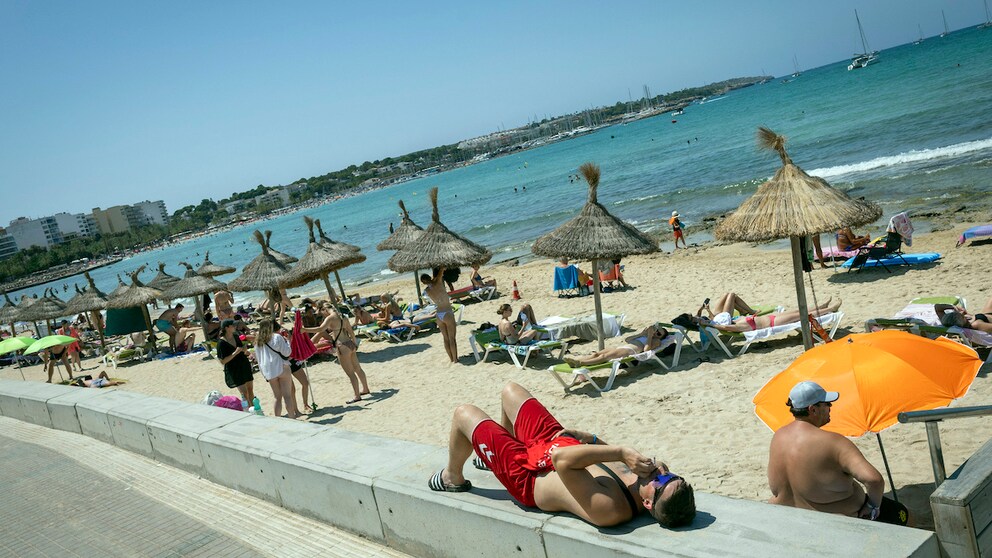
There have already been some changes last season, and more are expected this summer. Mallorca has “a very ambitious plan for Playa de Palma,” says Homer. Three hundred fifty million euros will be invested in the renovation and transformation of Playa de Palma over the next ten years. “One of the things that might disappear is the wall around the beach where everyone sits and starts drinking,” says Homer. If this wall disappears, there will be no place to “bring a bucket with twelve beers and drink while sitting on this small wall.” Originally, the wall was built to prevent sand from blowing onto the street and thus losing sand from the beach. “But we didn’t think that this wall would be used as a place to drink in public,” explains the head of the tourism foundation.
Plans for Playa de Palma
The plans for the new Ballermann include much more than just tearing down the wall and enforcing existing rules. Playa de Palma itself is set to change, becoming more modern, greener, and higher quality, with an overall ecological upgrade. Palma’s Mayor Jaime Martínez presented the corresponding plans at the International Tourism Exchange Berlin, or ITB Berlin. According to the “Mallorca Magazin,” the development plan consists of more than 30 measures for Palma and Playa de Palma. These include plans for improved infrastructure and mobility, more sustainability, additional housing, and increased security.
Green Zones and Improved Infrastructure
Mallorca plans to establish five large green zones, some of which have been known for some time. Renaturation measures are also planned for Playa de Palma to make the beach and its surroundings more climate-friendly and livable. One of these, along the Camí de Les Meravelles, already exists.
Various urban development projects are also planned, such as the redesign of the Plaza de Les Meravelles, the renovation of Mar Jònic Park, and the creation of a new recreational facility with green spaces and sports facilities. In Les Meravelles, a parking lot with more than 300 spaces will be built as part of a park system, and the city’s bike-sharing system will be expanded. A major project planned to begin construction in 2027 is a new trade and event center. It will accommodate around 8,000 visitors on 20,000 square meters.
Higher-Class Hotels and Fewer Vacation Rentals
In addition to the urban infrastructure, the tourist infrastructure is also set to be modernized. Already, 70 percent of the hotels at Playa de Palma are in the four- or five-star category. The focus now appears to be on upgrading smaller three-star or lower hotels. Additionally, outdated tourist facilities could soon be converted into residential complexes or public facilities.
At the same time, Palma is gradually reducing the number of beds, and the same applies to licenses for vacation rentals. Homer explains in the interview: “When a hotel closes, those beds do not return to the market. Those beds disappear.” The same applies to apartments with rental licenses. If the owner of a vacation rental decides not to rent it out anymore, the license disappears. “We are moving towards a model based on fewer tourists who spend more,” explains Homer.