

November 21, 2026, 6:45 am | Read time: 4 minutes
In winter, Weimar reveals a particularly cozy side. While Christmas lights illuminate the city center and ice skates come out on Theaterplatz, museums, historic buildings, and the traces of Goethe and Schiller await just a few steps away. The short distances and the mix of culture, history, and leisure make the small town ideal for a weekend trip.
Winter Walk in Goethe’s Footsteps
If a few rays of sunshine appear in winter, a walk through the Park an der Ilm is worthwhile. Paths along the river lead through the expansive park landscape, which is part of the UNESCO World Heritage “Classical Weimar.” Among old trees, wide meadows, and historic buildings, you can wonderfully discover a quieter side of Weimar here.
The park is particularly closely associated with Goethe, who, starting in 1778, collaborated with Duke Carl August on its design. During a walk, you also pass by Goethe’s Garden House, where the poet lived for a time. A little further on, the Roman House, another historic building, awaits. Thus, the winter walk becomes a small discovery tour through Weimar’s history.
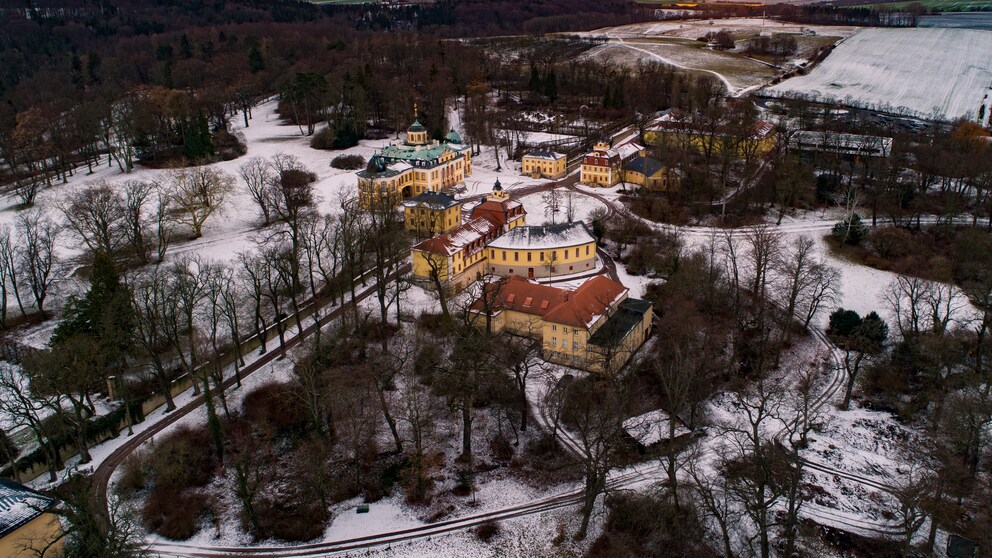
Those who want to continue walking can explore the historic park grounds around Belvedere Castle.
Ice Skating Between Goethe and Schiller
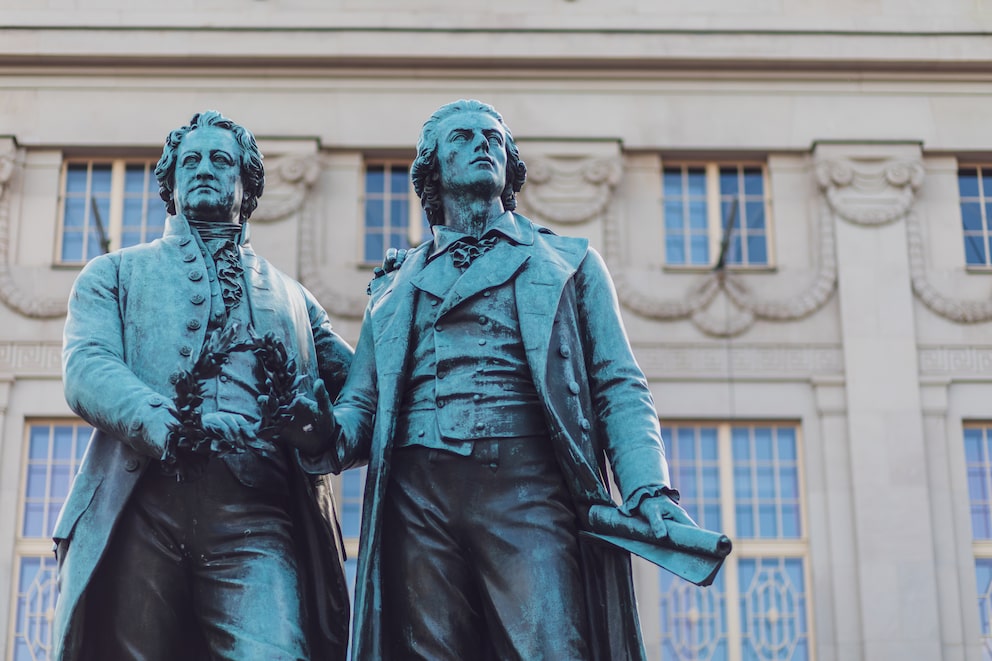
It becomes especially wintry right in the center of Weimar. A highlight is the “Weimar on Ice” rink on Theaterplatz. Visitors can skate right by the famous Goethe-Schiller Monument. Just behind it is the German National Theater, which is also worth a visit.
All around, the Weimar Christmas market creates an Advent atmosphere. Decorated stalls, handicrafts, and winter specialties make Theaterplatz a lovely stop during a city stroll. Those who wish can easily combine an afternoon museum visit with the Christmas market and ice skating in the evening.
Also interesting: Which Christmas Markets Are Already Open

9 of the Most Beautiful Ice Rinks for Skating in Germany

Why Dijon Is Considered France’s Hidden Gem
In the Footsteps of Goethe and Schiller
Walking through Weimar, you encounter German cultural history almost everywhere. The Weimar Classicism is particularly prominent. Goethe and Schiller shaped the city as much as Duchess Anna Amalia and Duke Carl August. In Goethe’s residence and the Goethe National Museum, visitors can still walk in Goethe’s footsteps today. Just a few minutes’ walk away, Schiller’s residence also offers insights into the poet’s life and work.
One of the most impressive historical sites in the city is the Duchess Anna Amalia Library. Its centerpiece is the oval Rococo Hall, which spans three floors. Galleries full of books, bright colors, and historical artworks make it a special sight and an ideal destination for a cold winter day.
The City Palace is also closely linked to Weimar Classicism. The former residence of the dukes and grand dukes tells of Weimar as a courtly and cultural center. After several years of renovation, visitors have been able to explore parts of the palace again since 2026. Among other things, the restored Beletage, a new permanent exhibition, as well as artworks by Caspar David Friedrich and the Cranach collection, can be seen.
Bauhaus, Republic, and Weimar’s Recent History
But Weimar is not just about Classicism. In 1919, the Bauhaus, whose ideas influenced architecture and design far beyond Germany, was founded here. Today, the Bauhaus Museum commemorates the famous art and design school. Those who want to see how the Bauhaus members envisioned contemporary living can visit the Haus Am Horn. The experimental house was built in 1923 for the first major Bauhaus exhibition.
Weimar also moved into the political spotlight in 1919: The National Assembly met in the city. The House of the Weimar Republic is dedicated to this period and the emergence of the first German democracy. Those who want to delve deeper into the history of Weimar and Germany during their stay can also plan a visit to the Buchenwald Memorial on the Ettersberg.
The mix of culture, history, and winter experiences shows: A trip to Weimar is definitely worthwhile even in the cold season.