

July 3, 2026, 9:07 am | Read time: 4 minutes
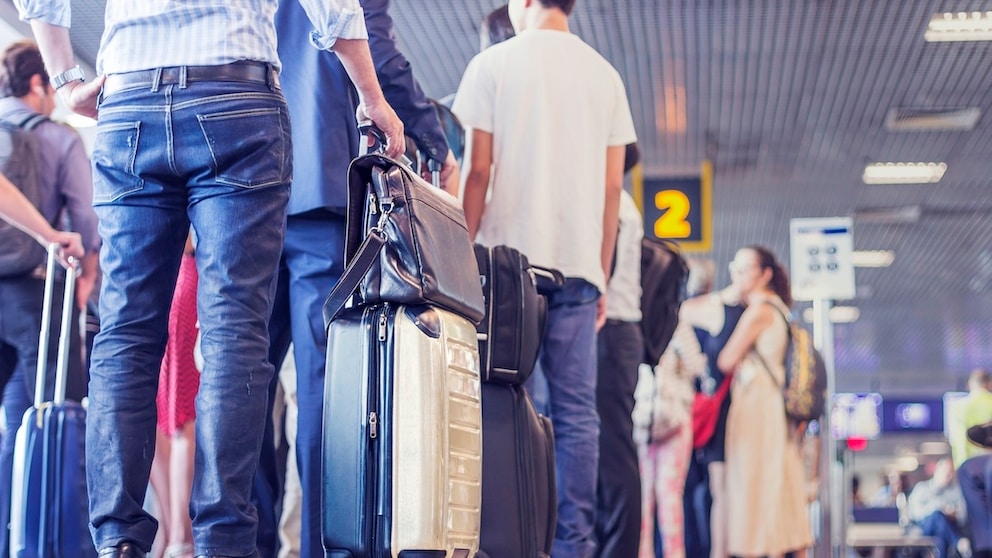
In the first German states, summer vacation has begun, marking the start of peak travel season at Europe’s airports. Alongside the increasing number of passengers, the risk of chaos grows, specifically long lines, delays, and other disruptions. Some airports are considered particularly vulnerable. TRAVELBOOK provides an overview.
Entry System (EES) Promotes Chaos at Airports
Industry representatives increasingly view the new, gradually introduced EU Entry System (EES), which includes additional biometric checks, as a burden on summer travel. The EU reform is seen as an important step toward modernizing border controls. However, in practice–especially given the high passenger volume during vacation time–it proves challenging.
In Italy, there is even consideration of temporarily suspending biometric border checks, as reported by the “Financial Times.” The goal is to prevent potential travel chaos at busy airports like Rome-Fiumicino and Ciampino. The operator Aeroporti di Roma warns that the system is only partially feasible with high passenger volumes and could significantly slow down processing. Initial impacts are already visible in Portugal.
Long Wait Times Threaten in Portugal
At Lisbon Airport, in particular, there have been severe delays at passport control for several months. The main cause is the gradual transition to the new EES, along with high passenger numbers and limited capacity at border counters.
The British “The Guardian” reports on wait times of several hours in this context. Due to its structure and the high proportion of international passengers, Lisbon-Portela Airport is particularly prone to border bottlenecks, which can quickly affect the entire processing during vacation periods.
New Problems at Amsterdam Airport
Travelers at Amsterdam Schiphol Airport currently face significant disruptions. “Of all places,” one might say, as it is not only the third-largest airport in Europe, but it has also repeatedly experienced problems recently.
At the end of June, an incident occurred when a ceiling over a security checkpoint in the terminal area collapsed. The result was hours-long lines, and numerous passengers missed their flights. “AeroTelegraph” reports on this.
For regular visitors, this may evoke unpleasant memories. Earlier this year, snow chaos, ground handling bottlenecks, and issues following a change in security checks caused massive disruptions.
EU Border Control System EES Causes Chaos at Airports
In These Cases, Your Luggage May Be Left Behind at the Airport
Several Greek Airports Prone to Chaos
For years, Crete’s Heraklion Airport has been one of the busiest holiday airports in Europe. Passenger numbers are continuously rising–this year, the airport recorded new record levels. The influx regularly pushes the aging Nikos Kazantzakis Airport to its capacity limits. The new airport under construction in Kastelli is expected to provide relief, set to replace the current airport by 2028. Whether this will actually solve the problems remains to be seen. TRAVELBOOK editor-in-chief Yannic Stock has already critically examined the major project in this commentary.
In the short term, the situation is unlikely to ease. According to the Greek newspaper “Kathimerini,” staff shortages among air traffic controllers, outdated technology, and high airspace utilization during peak travel times repeatedly lead to delays in Greek air traffic. This can also affect connections to popular holiday islands like Rhodes, Kos, or Corfu. Travelers should therefore expect delays and longer wait times, especially on busy travel days.
Tips for Travelers
Those planning a flight in the coming weeks should allow for ample time. It is also advisable to check in online as early as possible and stay informed about potential changes in procedures that may result from restructuring or capacity shifts at major hubs.
For example, consider Germany’s largest airport in Frankfurt am Main. This summer, it expects one of the busiest travel periods in recent years. The operator Fraport recommends that passengers traveling outside the Schengen area arrive at the airport at least three hours before departure. This is due in part to changes following the opening of Terminal 3 and the relocation of airlines and processes within the airport.