

September 22, 2025, 7:15 am | Read time: 4 minutes
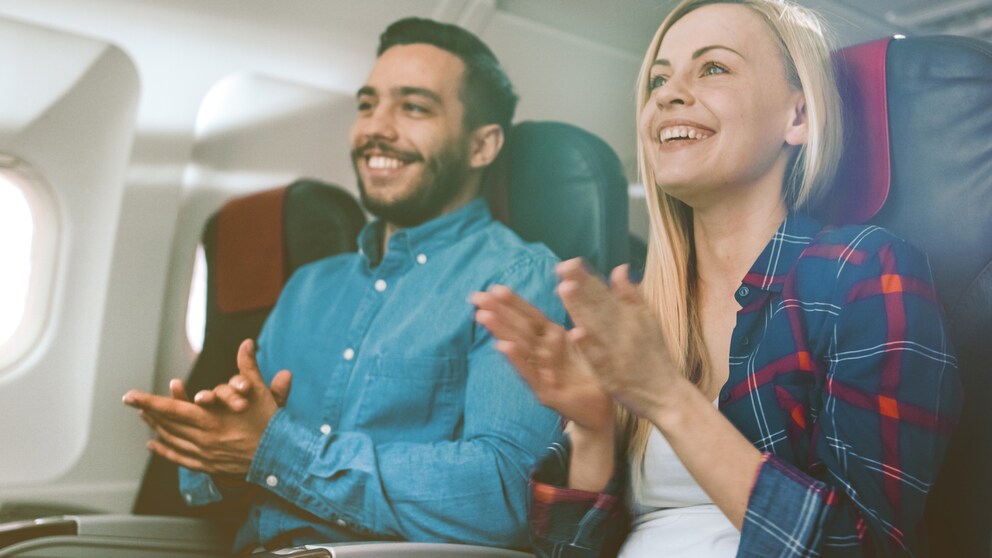
Clapping on airplanes used to be much more common than it is today. Many found it embarrassing even back then, and gradually, applauding has completely gone out of style. TRAVELBOOK explains why. And whether we should perhaps start doing it again…
People who don’t suffer from severe fear of flying generally assume they’ll arrive safely at their destination when boarding a plane. It seems odd, then, to applaud this supposed certainty upon landing. Yet, about 10 or 15 years ago, it was quite common to clap when the plane touched down. What has changed since then?
Clapping on Airplanes Is Out
“Flying has become a normality,” says flight attendant Michelle P.* in response to a TRAVELBOOK inquiry, “almost like taking a train or bus.” While air travel used to be something special, today it’s primarily about efficiency, meaning getting from point A to point B quickly. Frequent flyers, according to Michelle P., certainly wouldn’t think of joining in applause.
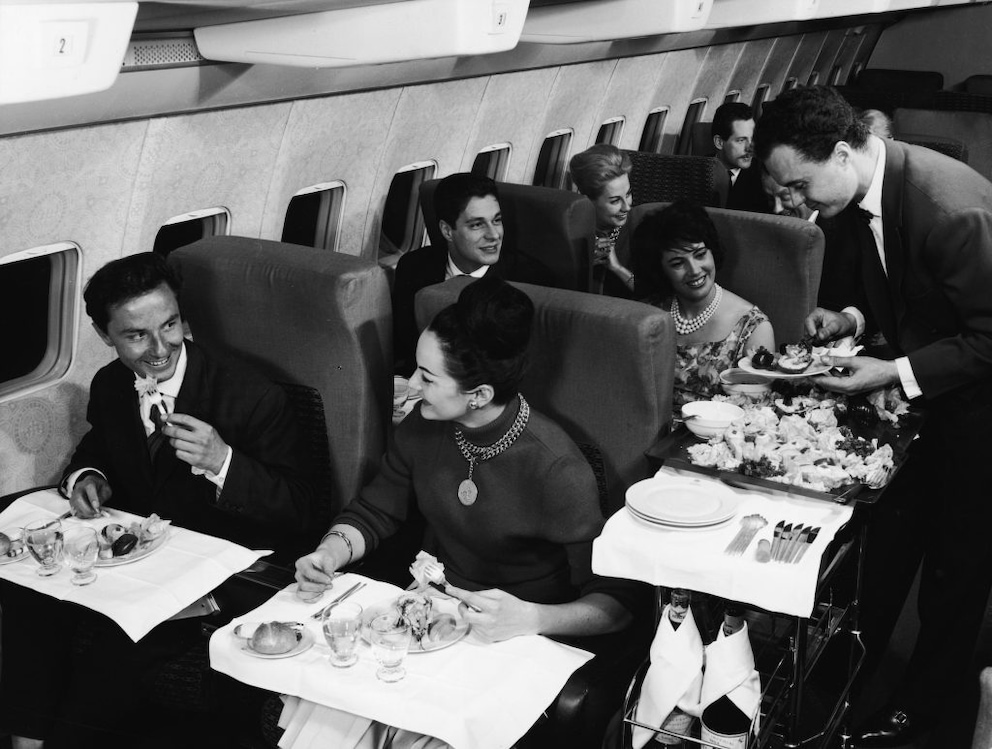
Clapping on airplanes comes from a time when flying was still a luxury. Accordingly, the onboard experience was different: First-class meals were served, passengers were dressed for their little adventure, and they showed their respect even when boarding. Clapping was seen as recognition of the courteous service and also as a tribute to the pilots.
Applauding is sometimes even frowned upon
Today, things are much more relaxed. Flying in sweatpants is common, as is more and more passengers ignoring the safety instructions from the flight crew. No wonder that hardly anyone thinks of applauding anymore. “If someone claps today, it’s only people who fly very rarely or for the first time,” reports flight attendant Michelle P.
The fact that clapping on airplanes has fallen out of fashion doesn’t necessarily (only) indicate a decline in manners. Many people refrain from it with good intentions. Even etiquette experts advise against it, as mentioned on the blog of the travel company Tui. “Many consider clapping a friendly gesture; others find it annoying. So it’s better to skip it.”
Severe turbulence is generally considered a special situation that justifies “embarrassing” clapping. In such cases, more passengers are inclined to express their gratitude or great relief in the form of applause.
Why Many Flight Attendants Only Earn Money Once the Plane Starts Taxiing
11 Things You Shouldn’t Touch on a Plane
Differences in Eastern and Western Europe
Some find clapping on planes embarrassing, others do it out of habit—whatever the reasons, there are significant geographical differences. This is shown by a recent study by Wizz Air, as reported by “travelnews.ch”. According to the study, in countries like Georgia (75 percent) or Bulgaria (70 percent), there is a lot of applause after landing. In Western Europe, passengers are more reserved. In the UK or Switzerland, for example, only about 30 percent clap. About one-fifth admitted to clapping only because others do. Travelers from Eastern Europe, on the other hand, celebrate the safe landing.
The study also found that younger passengers are more likely to clap than older ones. Sixty-four percent of 18- to 24-year-olds join in—among 25- to 34-year-olds, it’s only 50 percent.
Should we start clapping again?
If you’re thinking about starting to clap on airplanes again, you should know: At least the pilots wouldn’t hear you anyway. For several years now, the doors to the cockpit have been armored (to protect against potential intruders).
Your applause would therefore “only” reach the cabin crew. And Michelle P. and her colleagues consider it a “very sweet gesture” that at least demonstrates appreciation. But it’s definitely not necessary. “Especially since guests often thank us personally when disembarking,” she reports. That’s worth much more.
*Name changed by the editorial team; the flight attendant wishes to remain anonymous.