

July 23, 2026, 11:28 am | Read time: 4 minutes
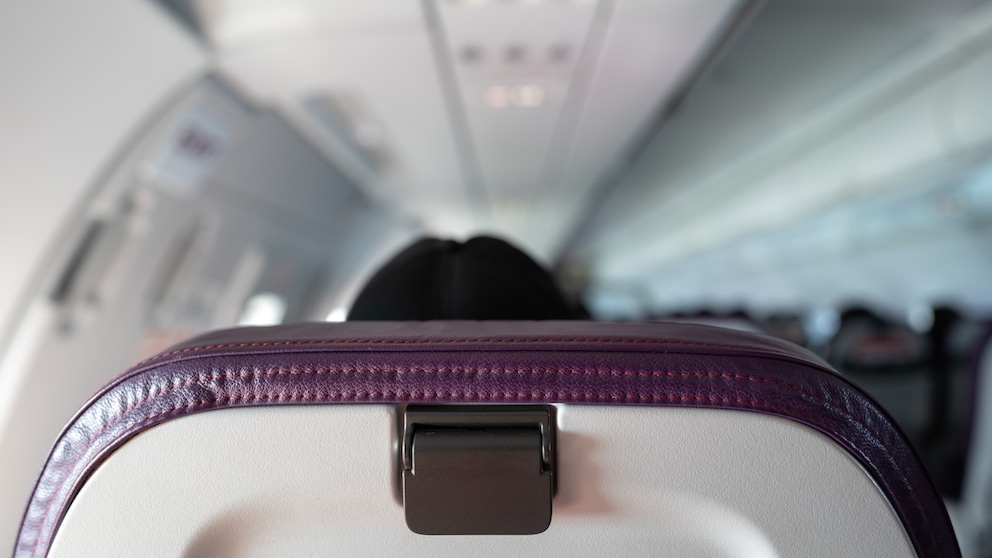
As soon as the familiar “ping” sounds, indicating a plane has reached its cruising altitude, many passengers look forward to reclining their seatbacks. However, there’s an opposing view: some people find it rude to further limit the already tight space of the person behind them. Initially, the right seems to be on the side of those reclining—many seats are equipped with this feature. But that’s not the whole story.
To cut to the chase: Of course, passengers are allowed to recline their seatbacks. This is confirmed by a flight attendant from a major German airline, who wishes to remain anonymous, when asked by TRAVELBOOK. “It’s about making the flight experience as pleasant as possible,” she explains. The seats are intentionally designed to allow for this “relaxation position.”
So the question may not be whether you can recline your seatback, but when and how you do it. Even though the function is part of the seat, consideration for fellow passengers is necessary when reclining. There are also situations where the seatback must remain upright, and others where courtesy suggests refraining from reclining.
When You Should Not Recline Your Seatback
During takeoff and landing, seats must be in an upright position for safety reasons. Additionally, passengers are asked to keep their seatbacks upright during service times, as the flight attendant explains. This ensures that all passengers can eat in peace. Afterward, reclining is allowed again.
Even though the question seems answered, the topic remains controversial. Many passengers find it not only during meals but also when reading or in general, rude if the seatback in front suddenly leans into their already limited space.
And that’s often the crucial point. It’s usually not the act of reclining itself that causes annoyance, but the way it happens—often completely unexpected for the person behind. One could handle this situation more gracefully.
Knigge Views Reclining Differently
According to Linda Kaiser, deputy chair of the German Knigge Society, reclining the seatback is primarily about consideration and mutual respect. When traveling, you share a limited space with many others. Therefore, your decision for comfort should also consider fellow passengers.
She succinctly states a principle of modern etiquette: “You don’t have to do everything just because you can.” The adjustable seatback is an offer from the airline—but the comfort gain for one person can mean a restriction for another. “If the plane or train is fully booked, it’s best to coordinate with the person behind you to see if it’s okay to recline the seatback,” she advises. “You might agree on a set time period.”
Communication seems to be the key. As the etiquette expert emphasizes, the person behind can also “politely and factually point out that the action is problematic and ask for a correction.”
Behave as You Would Wish Others to Behave
In summary, she reminds us that travel always involves certain restrictions and compromises. And precisely for this reason, you should behave as you would wish others to behave toward you.
How to do it right: take a quick look back and, if necessary, politely ask before reclining the seatback. While this gesture doesn’t solve the fundamental space issue on planes, it can make a big difference. Those who feel considered by the person in front are usually less annoyed when the seatback actually reclines afterward.
That this approach seems to have become generally established is also shown by numerous comments on “Reddit.” Many users report that they check before reclining to see if the passenger behind has anything on the table—such as a drink, a book, or a laptop—or briefly inform them.
Which Seats Are Best for Sleeping on a Long-Haul Flight
8 Tricks You Can Use to Almost Always Fly Next to an Empty Seat
When the Reclining Issue Becomes Tricky for Flight Attendants
Our insider mentions a recurring situation where she and her colleagues have to mediate: when passengers are upset because the person in front reclined their seatback, but they themselves cannot. “On short-haul flights, there are also seats where the seatback cannot be adjusted,” she explains. “We always try to explain kindly that we understand the frustration. On short flights, however, we also hope for the passengers’ understanding.”
The Dispute Is Only About a Few Inches
Incidentally, the recline angle of seatbacks in economy class is usually less than many passengers assume. Depending on the aircraft and seat model, the seatbacks can typically recline only about five to ten degrees, slightly more in premium economy class. (Business class seats are an exception: They often allow significantly larger recline angles but also offer more space between passengers and the person in front.)
In practice, the top edge of an economy seatback often moves only a few inches backward. This small change is still noticeable because, with the already limited seat spacing between passengers, even a slight loss of space can make a difference.