

November 29, 2026, 1:53 pm | Read time: 6 minutes
Pet owners are naturally pleased when they can take their four-legged friends on trips–ideally in the airplane cabin. One airline has recently relaxed its rules for this scenario: Larger dogs weighing up to 66 pounds can now travel outside a carrier. This may be less pleasing for people with dog allergies, especially since most airlines may have dogs (or cats) on board. How is this situation handled on flights? TRAVELBOOK has gathered information and consulted an allergist.
Allergies on Airplanes Are a Relevant Issue
The seriousness of contact with allergens is evident in the case of peanut allergies. Exposure to peanuts can trigger severe reactions and, in the worst case, be life-threatening. Airlines handle this differently to protect affected passengers. Some airlines request all other passengers via announcement to refrain from consuming peanuts during the flight after an allergy notification. This is common practice with British airlines, as reported by an affected individual on the online platform “Reddit.” Lufthansa, on the other hand, states that peanuts are not part of their onboard offerings.
What about a so-called pet hair allergy? There is a significant difference in the severity of allergic reactions, as explained by allergist Prof. Dr. med. Karl-Christian Bergmann to TRAVELBOOK; he will be quoted more extensively later in the text. For those with peanut allergies, even tiny amounts of the allergen can trigger a life-threatening anaphylactic reaction, while similarly severe reactions are not expected with dog and cat allergies.
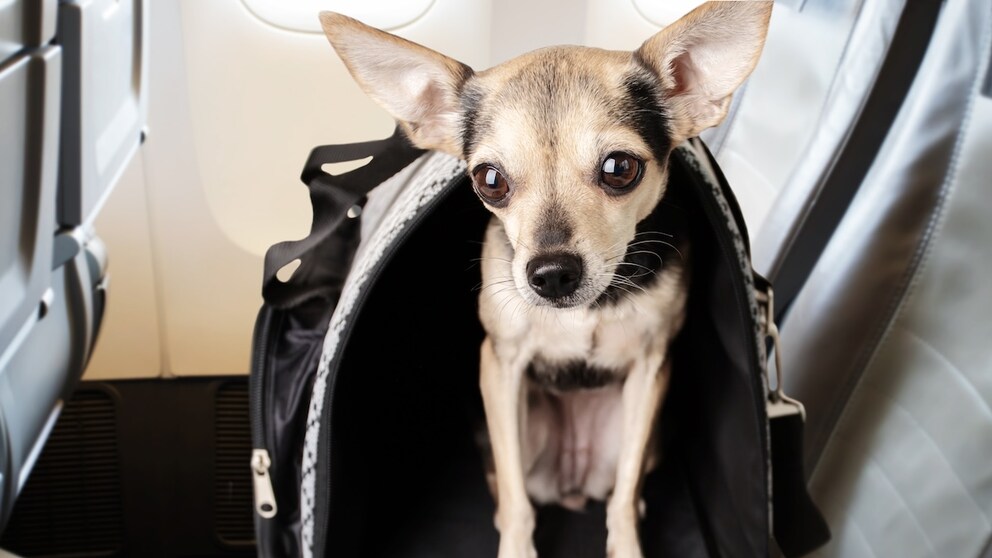
Nevertheless, contact with dog or cat allergens can be quite uncomfortable for affected individuals, causing symptoms like allergic rhinitis or allergic asthma. Many airlines allow pets in the cabin. The specific regulations vary by airline, but a weight limit of around 17 pounds, including the carrier, usually applies. Dogs or cats must generally remain in these carriers during the flight. Fortunately, these carriers are not hermetically sealed.
Contrary to common belief–and what the colloquial name suggests–the allergy is not actually against the pet hair itself. In this case, affected passengers could simply avoid touching the animal. As a study from 2013 showed, it is specific proteins found in the saliva and skin flakes of the animals that trigger allergic reactions. These can attach to dust particles in the air and settle on surfaces, coming into contact with allergy sufferers when they board the plane.
Flight Attendant Finds Pet Regulations for Flights “Absurd”
Despite this, dogs can still be found on flights with many airlines, including the German Lufthansa. A flight attendant there explained this to TRAVELBOOK; she wishes to remain anonymous. The transport of dogs is explicitly provided for in the airline’s conditions of carriage.
However, the flight attendant finds it “absurd” that officially only small dogs are allowed and must remain in their carriers during the flight. The rule is based on the fact that other passengers might be allergic to dogs or afraid of them. She can generally understand this consideration. However, there are also service dogs on board, sometimes even large shepherd dogs. These are dogs that assist blind individuals or people with other types of disabilities (such as physical or psychological impairments) in daily life. These animals are not required to stay in a carrier. For allergy sufferers, the “profession” of the dogs makes no difference.
Also interesting: Pets can fly on seats with Italian airlines
Airlines Urge Passengers to Proactively Address Allergies
Informing allergy sufferers in advance if a dog or cat has been registered for the cabin is not standard procedure for airlines. Such information is not possible due to privacy and logistical reasons. Conversely, passengers should inform airlines of an existing allergy as early as possible–ideally at booking, but at the latest at check-in. Austrian Airlines, a Lufthansa subsidiary, advises this on its website, stating they are happy to check “what precautions are possible in your individual case.”
Prepared for Allergy Sufferers
Lufthansa also recommends that passengers with allergies communicate their health situation to the crew as early as possible. “Our cabin crews are generally sensitized to dealing with allergies. There is no special registration or marking of passengers with allergies. Therefore, it is important for affected guests to proactively communicate their allergy–ideally at the gate, but at the latest during boarding,” a company spokesperson told TRAVELBOOK.
On board, the crew will respond to the situation within the scope of their possibilities and may take measures. “This may include relocating the affected guest, for example, at an appropriate distance from a ‘Pet in Cabin,’ or pet in the cabin.” According to our informant, the cabin crew is also equipped with EpiPens, the common adrenaline auto-injectors used to treat acute or anaphylactic shocks.
The Lufthansa spokesperson also reminds passengers of the option to contact the Medical Operation Center (MOC), the airline’s medical contact point, for an individual assessment or consultation before traveling. Passengers with various health restrictions or special medical needs can seek advice there before a flight, including in connection with allergies.
Can HEPA Filters in Airplanes Eliminate Allergens?
Austrian Airlines also points to the technical equipment of their aircraft in connection with allergy sufferers. All deployed aircraft are equipped with modern HEPA filters that continuously clean the cabin air of various particles–including pet hair. Additionally, the cabins are thoroughly cleaned after each flight.
These HEPA filters are currently considered the most effective method for removing allergens from the air. This is confirmed by allergist Prof. Dr. med. Karl-Christian Bergmann in response to TRAVELBOOK’s inquiry. However, they do not offer complete protection. They can only reduce the risk of an allergic reaction.

Why Power Banks Can Catch Fire on Airplanes

Why Are Airplane Seats Becoming More Uncomfortable?
What Should Allergy Sufferers Do? A Doctor’s Assessment
Prof. Bergmann confirms that the mere presence of a dog “somewhere in the airplane cabin” can trigger symptoms like allergic rhinitis or asthma in people with a dog allergy. Dogs release allergens into the air that can spread throughout the cabin and reach passengers sitting several rows away. With cats, the problem is even more pronounced. “They can trigger significantly stronger allergic reactions than dogs,” the doctor says.
Taking antihistamines as a precaution, as some allergists recommend, is considered excessive by Prof. Bergmann. Instead, one should first wait to see if a dog or cat is on board or if initial allergic symptoms appear. “Modern antihistamines would work within minutes and could still be taken in time,” he explains.
However, it is important to have the medication readily available in hand luggage and not stored in checked baggage. The Allergy Information Service website recommends carrying the original packaging of the medication, including the doctor’s prescription, as some airlines require it.
You Can Reduce the Likelihood of Dogs on Board
There are also various airlines that generally do not allow pets on board. These include budget airlines like Ryanair, EasyJet, Wizz Air, and some Asian carriers. Allergy sufferers can try their luck here–but should be aware that certified service dogs may still be present in the airplane cabin in exceptional cases.