

November 5, 2025, 3:34 pm | Read time: 5 minutes
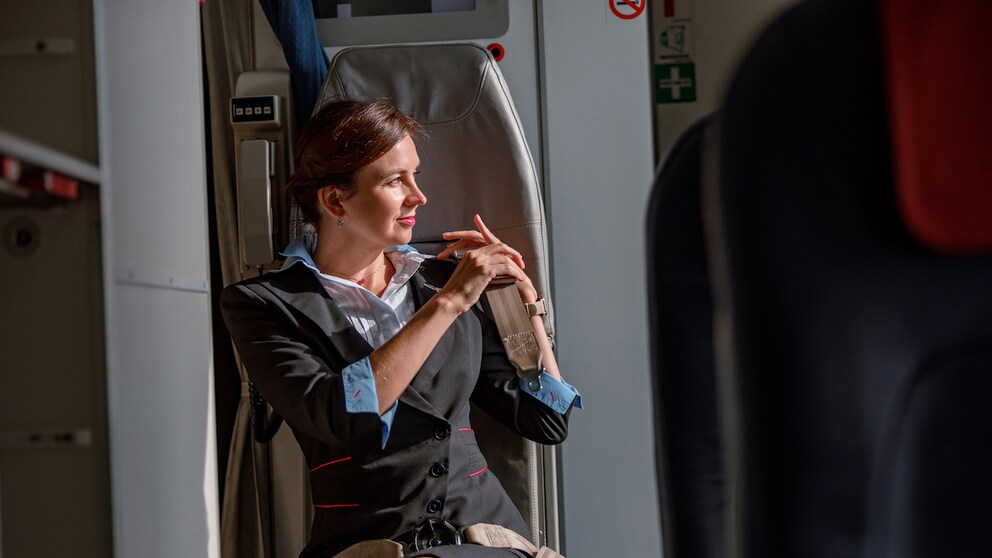
Just as flight attendants take their seats on the jumpseat during takeoff and landing, this is never a random or even comfortable position—it always follows strict guidelines from the respective airline. In some cases, cabin crew members even have to sit on their hands. The reason for this? TRAVELBOOK asked an aviation expert.
Have you ever met someone who isn’t employed by an airline but still had the privilege of riding in the jumpseat on a plane? If so, that person certainly had a special role. Normally, jumpseats are reserved exclusively for crew members. TRAVELBOOK spoke with aviation expert Heinrich Großbongardt about when exceptions might be possible and why flight personnel of some airlines sit on their hands during takeoff and landing.
Overview
Flight attendant posture on the jumpseat serves safety
In December 2023, reports about a TikTok video by flight attendant Henny (on TikTok: _hennylim_) circulated in the media. In it, she explains why she and her colleagues at the Philippine low-cost airline Cebu Pacific sit on their hands during takeoff and landing. “The position involves fastening the seatbelt, sitting upright, and sitting on the palms,” she summarizes. The thumbs point upward, the arms are relaxed, and the feet are flat on the floor.

The reason for this posture is safety. While safety is certainly a priority for all airlines—for example, at Lufthansa, flight attendants do not sit on their hands. “The exact seating posture varies from airline to airline,” says Heinrich Großbongardt. “But the goal is always the same: to create body tension.”
The more body tension, the lower the risk of injury
Whether with hands under the buttocks, on the knees, or thighs: The slightly different seating positions that flight attendants of various airlines are supposed to take on the jumpseat always have the mentioned body tension in common. According to expert Großbongardt, this reduces the risk of injury should an incident occur. For example, if the plane lands particularly hard, injuries mainly occur when arms, legs, or the head hit something. In a firmly tense posture, this happens much less frequently.
… and greater the ability to act
At the same time, the seating posture on the jumpseat serves the greatest possible ability to act. “Because that is the main task of flight attendants,” Großbongardt reminds us: “to be able to ensure the evacuation of the aircraft in case of an emergency.”
His descriptions align with what TRAVELBOOK learns from a flight attendant upon inquiry. She works for a major German airline and wishes to remain anonymous. She and her colleagues do not have to sit on their hands. Instead, the instruction is to sit up straight, not cross their legs, and place their hands on their thighs. “And above all, we should be ‘aware,'” the flight attendant emphasizes, meaning to look into the cabin and “be attentive in case something happens.”
Also interesting: In these flight phases, the risk of accidents is highest
Flight Attendant: “Using Tape to Restrain Passengers Is Actually Taboo”
Where You Feel Turbulence Least on a Plane
Who may sit on the jumpseat in exceptional cases
It is now clear why only trained cabin personnel should sit on the jumpseat. Besides the clear posture requirements, there are important tasks and corresponding responsibilities. According to expert Großbongardt, it does happen that airline employees who are not on duty, such as those returning from a business or, more rarely, a private trip, may ride in the jumpseat.
Sometimes, it is also relatives or registered domestic partners of flight attendants—referred to in the industry as “ID guests” or sometimes “PADs”—who are allowed to ride in the jumpseat at a discount. The prerequisite is, of course, that one is available, meaning not needed by a crew member. Additionally, the pilot must give their approval.
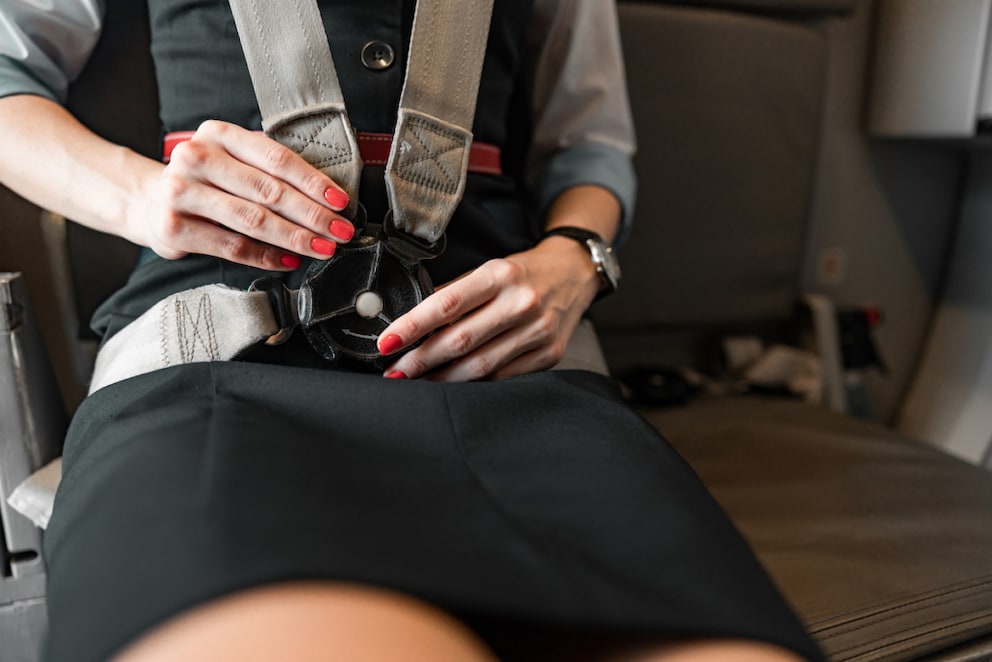
In the frequent flyer forum “Airliner,” an insider describes what laypeople must prepare for on the jumpseat: “You must be able to put on the (cockpit) oxygen mask yourself and rappel out of the cockpit in case of an emergency.” The cabin crew will not assist the jumpseat passenger, and the seatbelt works differently there.
Also interesting: Why pilots are not allowed to engage in small talk during takeoff and landing
Is the jumpseat safer than regular passenger seats?
A quick note on the mentioned harness. “These so-called four-point harnesses, which are also found in the cockpit, ensure that the personnel are strapped in more securely,” explains aviation expert Großbongardt. More securely sounds safer—so why aren’t the regular passenger seats equipped the same way? “Mainly for comfort reasons,” we learn. “And for the journey, the standard lap belt is completely sufficient.”