

September 11, 2025, 9:31 am | Read time: 2 minutes
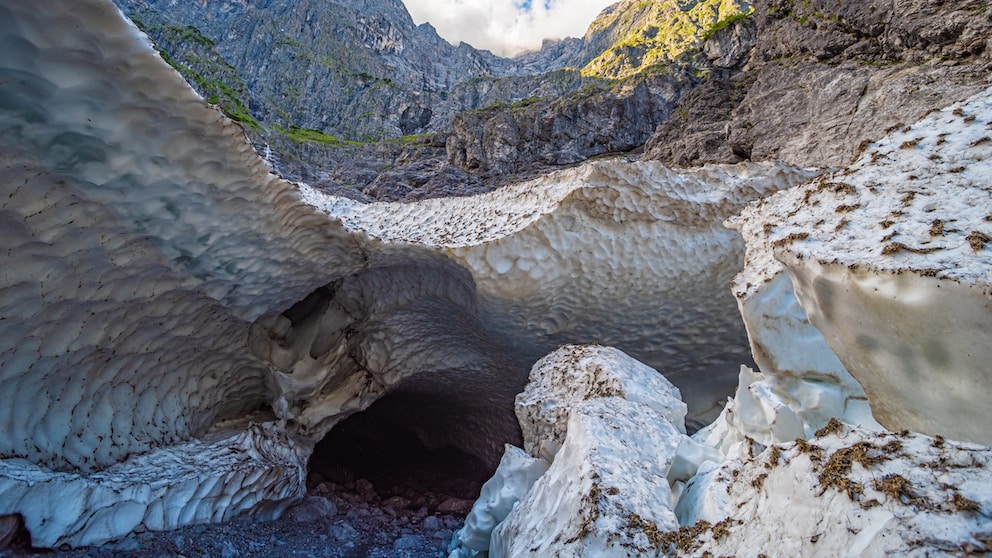
A spectacular natural monument has disappeared—along with a piece of alpine history. As BILD reports, the famous ice chapel beneath the Watzmann has collapsed. The formation of firn ice was not only a popular destination but also a scientifically significant geotope. The sudden collapse not only brings new risks for hikers but is also seen as a visible sign of climate change.
Climate Change Led to Collapse of a Natural Wonder
The ice chapel was located at the foot of the Watzmann East Wall at about 900 meters altitude. Over decades, a natural cavity in the firn ice had formed there, fed by avalanche snow. Since the end of 2019, the structure has lost more than 575,000 cubic meters of firn ice, according to the Berchtesgaden National Park. Researchers had already predicted the collapse, although the exact timing was surprising. According to the national park, the collapse is a direct result of global warming.


Why Europe’s Tallest Mountain Is Shrinking by Meters

Experts Warn! Historic Coastal Town Sinks into the Sea
Life-Threatening Danger from Rockfall and Unstable Ice Remnants
With the disappearance of the ice chapel, the danger for hikers and mountaineers increases significantly. National Park Director Roland Baier issued a stern warning: “We strongly warn hikers against entering the remnants of the ice chapel; there is an acute risk of rockfall throughout the area. Even the last standing ice arch and the ice walls at the edge can collapse at any time.” Particularly affected are the well-known approaches to the Watzmann East Wall. The entire area has been closed for safety reasons.
Loss of a Unique Geotope
“It is both depressing and shocking that the ice chapel, which Alexander von Humboldt visited in November 1797, is now simply gone,” said Baier. “We are losing not only an important regional attraction but also a geotope of overregional value.” Whether another ice chapel will form in the same place is uncertain. Andreas Wolf, chairman of the Association of German Cave and Karst Researchers, stated: “The future will show in what size and extent.” Firn ice fields are expected to form at the end of the ice trench in the future, making a new cave system possible—though uncertain in size and shape.