

February 20, 2026, 11:56 am | Read time: 3 minutes
Alarm at Tenerife’s beaches! Portuguese man-of-war are currently spreading off the popular vacation island. A swimmer had to be hospitalized after contact.
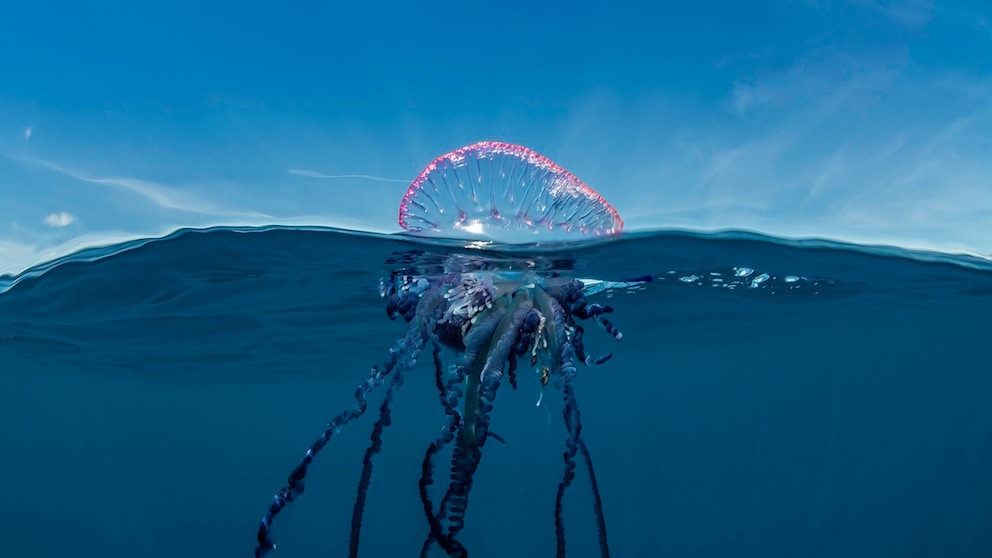
Portuguese man-of-war, also known as the floating terror, are currently causing trouble off the Canary Islands. Tenerife is particularly affected, as reported by the online magazine “Teneriffa News.” Several of the venomous creatures have been spotted along the island’s north coast. Authorities are now warning at some beaches and urging caution.
North Coast of Tenerife Affected
The bluish creatures have been discovered at several beaches. Affected areas include the beach of the Garachico municipality and the popular Playa de la Teresitas in the Santa Cruz de Tenerife area. According to “Teneriffa News,” the water at Teresitas Beach is shallow thanks to breakwaters, but jellyfish and other marine life remain longer because they are not washed away by natural currents.
Vacationers are therefore advised to follow the lifeguards’ instructions. The Garachico town hall advises beachgoers to temporarily refrain from swimming. At Teresitas Beach, a person has already come into contact with the venomous Portuguese man-of-war and had to be hospitalized.
These Sea Creatures Can Pose Be Dangerous on Vacation
“Blue Dragon” Spotted! Spain Closes 11-Kilometer Stretch of Beach
Tentacles Up to 50 Meters Long
Portuguese man-of-war resemble jellyfish and are related, but they actually form their own species. Contact with these cnidarians can be even more painful than with regular jellyfish. The tricky part about the man-of-war is that they have a bluish color but are mostly transparent, making them hard to spot in the water until it’s too late.
Their bodies measure about 10 to 30 centimeters and consist of a gas-filled float. The tentacles can grow up to 50 meters long.
Contact with the tentacles of the Portuguese man-of-war causes red welts on the skin, which are very painful, according to several medical websites. It becomes more serious if the venom reaches the lymph nodes. Healthy adults generally face no further health risks. However, people with weakened immune systems or allergies may experience a shock reaction, which in the worst case can be fatal.
Neutralize Wound with Vinegar
If you come into contact with these cnidarians, any remnants should be carefully removed, according to the website of a dermatology practice. However, do not touch or rub the remnants to avoid further venom discharge. Unlike other jellyfish species, the wound should not be rinsed directly with seawater, as this could inject the venom into the skin. Instead, vinegar is recommended for neutralization. Once the wound is clean, wait a bit and then rinse it with water at least 45 degrees Celsius to neutralize the venom.