


September 25, 2025, 5:16 am | Read time: 7 minutes
The weather doesn’t play a big role when you want to shuffle through the autumn leaves in boots and a parka. It doesn’t matter much if a few drops fall from the sky–after all, you’re relatively well protected by the trees in the forest. When the colorful display of autumn leaves, the Indian Summer, is added, a trip to the forest can hardly be more beautiful. It’s best to take a whole weekend and stay in cozy hotels close to the spectacular natural event.
Overview
- Where does the term “Indian Summer” come from?
- Indian Summer in Spessart, Bavaria/Hesse
- Indian Summer in the Swabian Jura, Baden-Württemberg
- Indian Summer in Jasmund National Park, Rügen, Mecklenburg-Vorpommern
- Indian Summer in the Moselle Region, Rhineland-Palatinate
- Indian Summer in the Bavarian Forest, Bavaria
- Indian Summer in the Palatinate Forest, Rhineland-Palatinate
- Indian Summer in the Spreewald, Brandenburg
- Indian Summer in Hainich National Park, Thuringia
- Indian Summer in Eifel National Park, Rhineland-Palatinate
- Indian Summer in the Elbe Sandstone Mountains, Saxony
- Indian Summer in Edertal, Hesse
- Indian Summer in the Harz, Saxony-Anhalt
Where does the term “Indian Summer” come from?
If you say, “I know that, it’s just autumn colors,” you’ve never been to Canada or the northeastern U.S. What is red in Central Europe becomes even redder here, and the orange and yellow shine more intensely. The spectacle is so impressive that it attracts thousands of tourists every year.
The explanation for the phenomenon is simple and, as is often the case, rather sober. In late autumn, the New England states of Connecticut, New Hampshire, Maine, Massachusetts, Rhode Island, and Vermont are particularly warm, but there is already frost at night. The combination of night frost and daytime warmth colors the leaves especially intensely. However, the exact origin of the term “Indian Summer” is not definitively clarified. For the colorful leaves, people in New England use the term “fall foliage.”
Even if the colors of the leaves here may not shine as brightly as in North America, they are still beautiful to look at! TRAVELBOOK has twelve suggestions for where you can particularly enjoy the Indian Summer in Germany.
Indian Summer in Spessart, Bavaria/Hesse
If you want to see mighty oaks that are hundreds of years old, you’re in the right place in Germany’s largest contiguous mixed deciduous forest area. To see them, head to the protected areas of Rohrberg, Eichhall, or Metzgergraben and Krone. Otherwise, the entire Spessart is suitable for admiring the golden autumn splendor.

Indian Summer in the Swabian Jura, Baden-Württemberg
Danube Valley, monasteries, castles, mountain peaks (more than 1,000 meters high!): The area is a must for autumn hikers. The heart is the former military training area Münsingen. Until 2005, shooting took place here and tanks plowed through the landscape. Today, it is a paradise for hikers, with a 50-kilometer network of hiking and biking trails.

Indian Summer in Jasmund National Park, Rügen, Mecklenburg-Vorpommern
The chalk cliff formation Königsstuhl is THE attraction on the island of Rügen. But the surrounding beech forests in Jasmund National Park, some of which are UNESCO World Heritage sites, are just as worth seeing. Park your car at the Hagen parking lot and wander through the enchanted forests to the Königsstuhl–like in a fairy tale.

Indian Summer in the Moselle Region, Rhineland-Palatinate
Hardly any river in Germany meanders through the landscape as much as the Moselle. This gives the region between Koblenz and Trier and further south its special character. On the steep slopes, vines cling tightly, and at the foot of the river lie beautiful medieval towns. There are many reasons to visit the area–and in autumn, there are two more: the colorful forests and vineyards, and of course, the many wine festivals now being celebrated there.

Indian Summer in the Bavarian Forest, Bavaria
It was the first German national park. Since 1970, nature has been left to its own devices. Since then, fallen trees have been left lying around, and “tree corpses” destroyed by pests stand everywhere. No forest area in Central Europe offers more green and colorful than the Bavarian Forest and its neighbor, the Bohemian Forest–and is thus a great partner for extensive walks: There are 1,100 kilometers of long-distance hiking trails, rushing streams in deep gorges, and around 70 peaks (of which the Arber, at 1,456 meters, is the highest).

Indian Summer in the Palatinate Forest, Rhineland-Palatinate
The Palatinate Forest is the largest contiguous forest area in Germany. Although more than two-thirds are conifers, there are valuable oak stands inside and beautiful sweet chestnuts in the east. When the chestnuts fall from the trees and new wine is offered everywhere, the Palatinate wine country shows its most beautiful side.

Indian Summer in the Spreewald, Brandenburg
One hour’s drive separates bustling Berlin from one of the most relaxing nature refuges–the Spreewald. If you take a boat ride on the “Fließe,” as the Spree arms are called, in autumn, you won’t have to deal with pesky mosquitoes like in summer. Orange-yellow willows and poplars reach far into the water, and at dusk, you can spot deer and wild boars on the shore.

Indian Summer in Hainich National Park, Thuringia
Here, beech communities grow with names like “Waldmeister-Buchenwald” or “Orchideen-Buchenwald.” But it is the richness of tree species that makes Hainich special: up to 25 different species on one hectare. On the treetop path near Craula, visitors can walk through the treetops and look far into the Thuringian countryside from the 44-meter-high observation tower.

Also interesting: The 5 most popular hiking routes in Germany
Indian Summer in Eifel National Park, Rhineland-Palatinate
Large beech and oak forests characterize this “forest national park.” Mainly in the forest districts of Dedenborn and Kermeter, the beeches stand, and you can hike under oaks in Hetzingen or the Urft Valley. In the oak forests of Kermeter, larger herds of mouflons roam, wildcats hunt in the park, and the lynx is said to be sneaking through the undergrowth again.

Indian Summer in the Elbe Sandstone Mountains, Saxony
The Elbe Sandstone Mountains, with their bizarre rock formations, are undoubtedly among the most beautiful natural wonders in Germany. In autumn, when fog forms over the valleys and the leaves are colored in golden tones, the view of the landscape is almost magical. The best tips for the Elbe Sandstone Mountains can be found here.


5 UNESCO World Heritage Sites in Germany You Might Not Know
13 Underrated Travel Destinations for a Vacation in Germany
Indian Summer in Edertal, Hesse
In apparent infinity lies one of the largest contiguous beech forests in Central Europe. On the steep slopes descending into the Eder Valley, ancient oaks and beeches stand–gnarled, stunted, quirky. It looks like an enchanted primeval forest! Above, kites and buzzards soar in the sky, and the colorful leaves are reflected in the shore of the Edersee.

Indian Summer in the Harz, Saxony-Anhalt
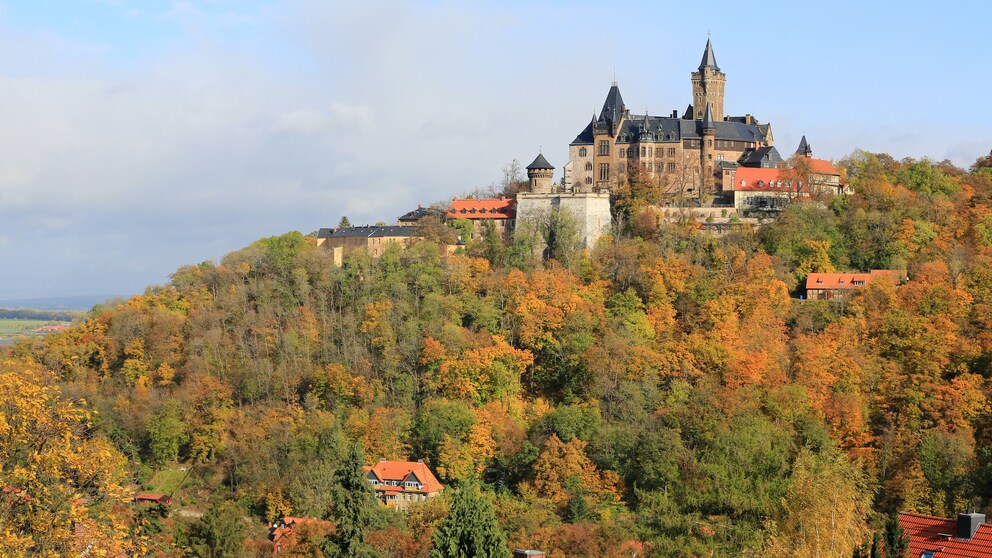
Even in the Harz, the autumn colors are spectacular. For hikers, September and October are favorite months, even though the first snow can already fall in October at higher altitudes. But it is usually still mild, and the trees compete for the most beautiful leaf colors.

Particularly great views can be enjoyed in the wild Bodetal, with trees sitting on rocks that glow golden yellow in autumn. The Ilse Valley with its many beeches and the Oker Valley adorn themselves in the Indian Summer with so much red, orange, and yellow that you can’t get enough of it.