

September 23, 2026, 5:41 pm | Read time: 4 minutes
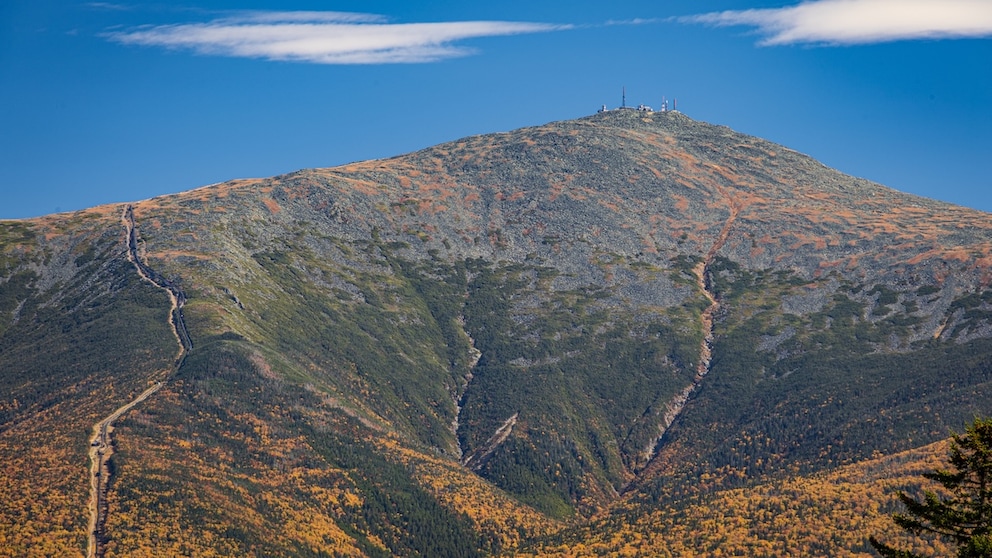
Mount Washington is one of the top attractions in the northeastern United States. Yet, despite hundreds of thousands of visitors each year, it is considered one of the most dangerous places in the world due to its extreme weather. What visitors need to know.
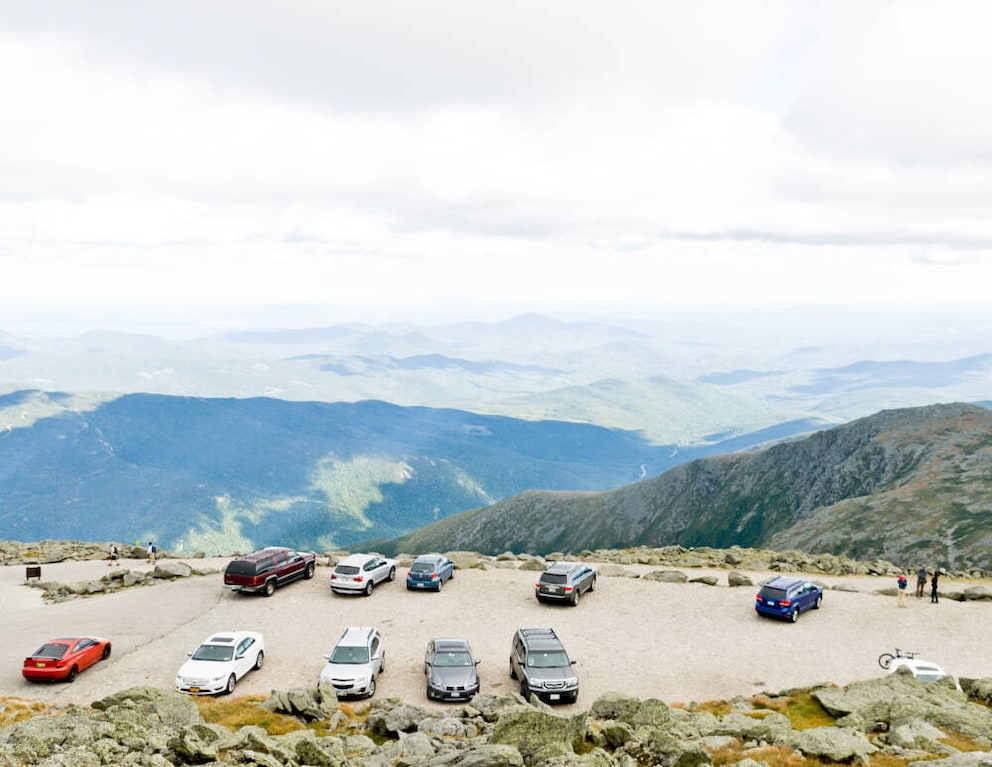
Sneakers, flip-flops, and rarely hiking boots: A glance at the footwear of those getting their photos taken on Mount Washington gives a good impression of how accessible this highest peak in the northeastern U.S. has been for many years.
Most visitors reach the 6,288-foot summit comfortably by car or cog railway. Hikers are clearly in the minority.
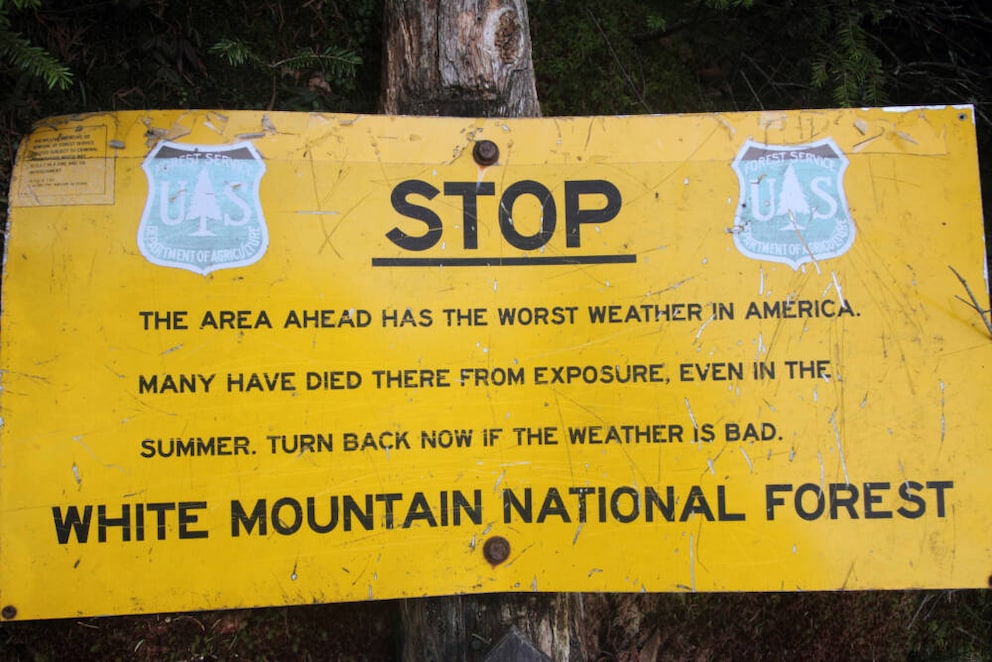
And so, it’s easy to forget in the sunshine where you are: in one of North America’s most dangerous weather zones. Almost every hiker has seen the yellow sign along the trail where the U.S. Forest Service warns: “The area ahead has the worst weather in America. Many have died from hypothermia there, even in summer. Turn back in bad weather.”
Windy and Cold–Even in Summer
The warning is absolutely serious. Mount Washington, which at less than 2,000 meters wouldn’t be significant in the Alps, is a mountain of extremes. It is not only the highest of the White Mountains in New Hampshire but also a particularly windy and cold place. In January 1934, temperatures of minus 43.9 degrees Celsius were recorded. Until 1996, Mount Washington held the world record for wind speed. The storm raged around the summit at 231 miles per hour–more than 372 kilometers per hour.
It can happen that the mountain is suddenly shrouded in clouds while the sun shines in the valley. Not being able to see the summit from below doesn’t necessarily mean the trip isn’t worth it: “Sometimes you can see from Mount Washington to the Atlantic, but not 300 meters down. Every day is different,” explains Dan Houde from the Mount Washington Auto Road, marketed by the operators as “America’s oldest man-made attraction.”
Also of interest: The myth behind Mount Everest

7 of the World’s Most Dangerous Adventure Destinations
USA – The Most Beautiful Destinations and Best Tips
Tourist Crowds on the Mountain
Despite the weather extremes, about 280,000 people stand at the summit each year, almost all during the summer season from mid-May to October. Most drive up. Another way to reach the top of Mount Washington without much effort is the cog railway, in operation since 1868.
The third way to climb Mount Washington requires a lot of effort and takes the longest, but it is also the most beautiful: on foot. The Crawford Path, used since 1819, begins at the Highland Center of the Appalachian Mountain Club (AMC) in Crawford Notch. On the east side of the mountain, the Tuckerman Ravine Trail is heavily used by hikers. From the southwest, the Ammonoosuc Ravine Trail leads to Mount Washington, starting from the cog railway base station.
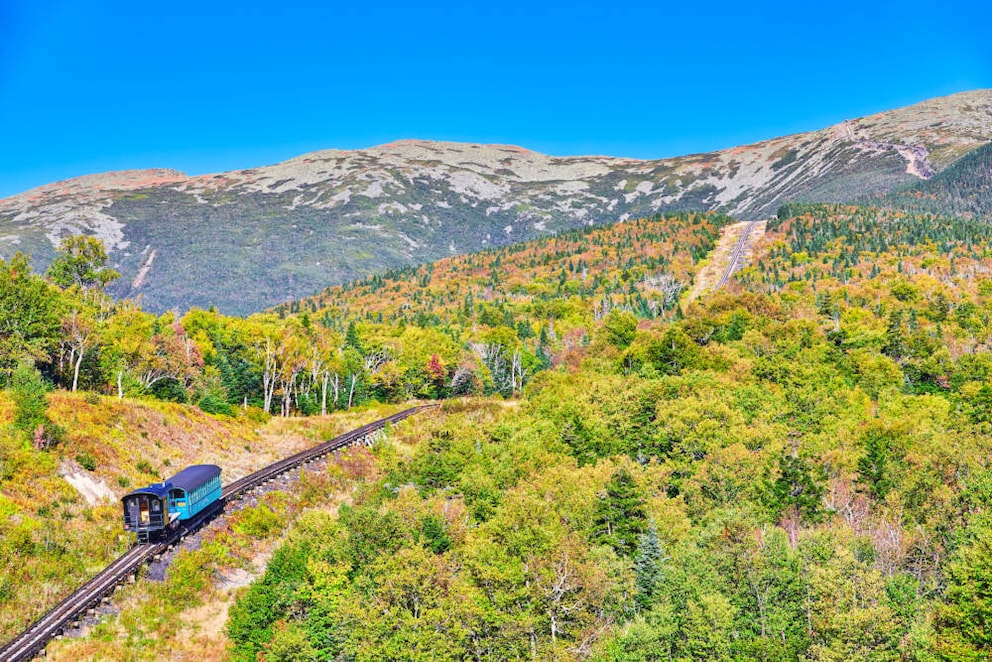
America’s Worst Weather
Often, the ascent here is very steep, but it is not dangerous at any point. The trail passes small waterfalls, offering expansive views to the west. Soon, the tree line is reached–nowhere else in the world is it so low at this latitude as in New Hampshire. Just above, the AMC’s “Lake of the Clouds” hut nestles in the saddle between Mount Eisenhower and Mount Washington. From here, the shadowless path leads over scree to the highest point of the White Mountains.
As beautiful as the weather can be here, it can change just as quickly, and suddenly the mountain is shrouded in fog and clouds, with heavy rain setting in. Often, it remains rainy and windy for several hours, with visibility reduced to less than 20 meters. On some days, it is even referred to as “America’s worst weather.”