

November 26, 2026, 9:40 am | Read time: 6 minutes
Beautiful beaches, impressive natural wonders, ancient sites–Crete has plenty to offer. However, there are only a few well-preserved places where German tourists can directly encounter their own history. One of them is in the idyllic mountain village of Kokkino Chorio, which once served as the backdrop for the classic film “Zorba the Greek” starring Anthony Quinn. Here lies a dark chapter of German history from World War II. TRAVELBOOK reveals what this place is all about.
During the occupation, the Wehrmacht forced locals to carve one of the island’s most important bunker systems into the Drapanokefala mountain. Although this fortress is only about 17 miles east of Chania, few tourists know about it.
Bunker on Crete–a dark chapter of German history
On May 20, 1941, German paratroopers jumped over the island–the airborne battle for Crete began. After nearly two weeks, on June 1, Crete was conquered. This was followed by an occupation until 1945, marked by cruelty against the civilian population. To secure the island, German soldiers fortified dozens of locations–one of the most important was high above Souda Bay.
A mountain village with a dark secret
Kokkino Chorio–translated as “Red Village”–is part of the Apokoronas municipality in the Chania regional district. The small village, with about 190 residents, sits roughly 500 feet above the coastal town of Plaka. Above, a tranquil mountain village with sea views; below, hidden in Drapanokefala, lies the silent testimony of the occupiers.
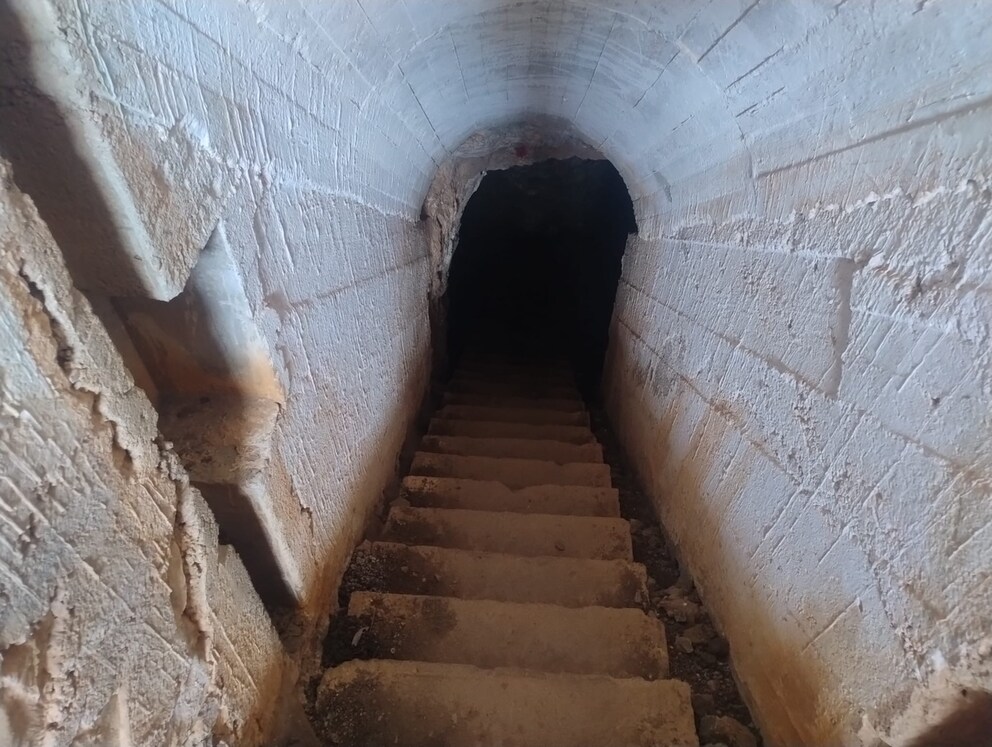
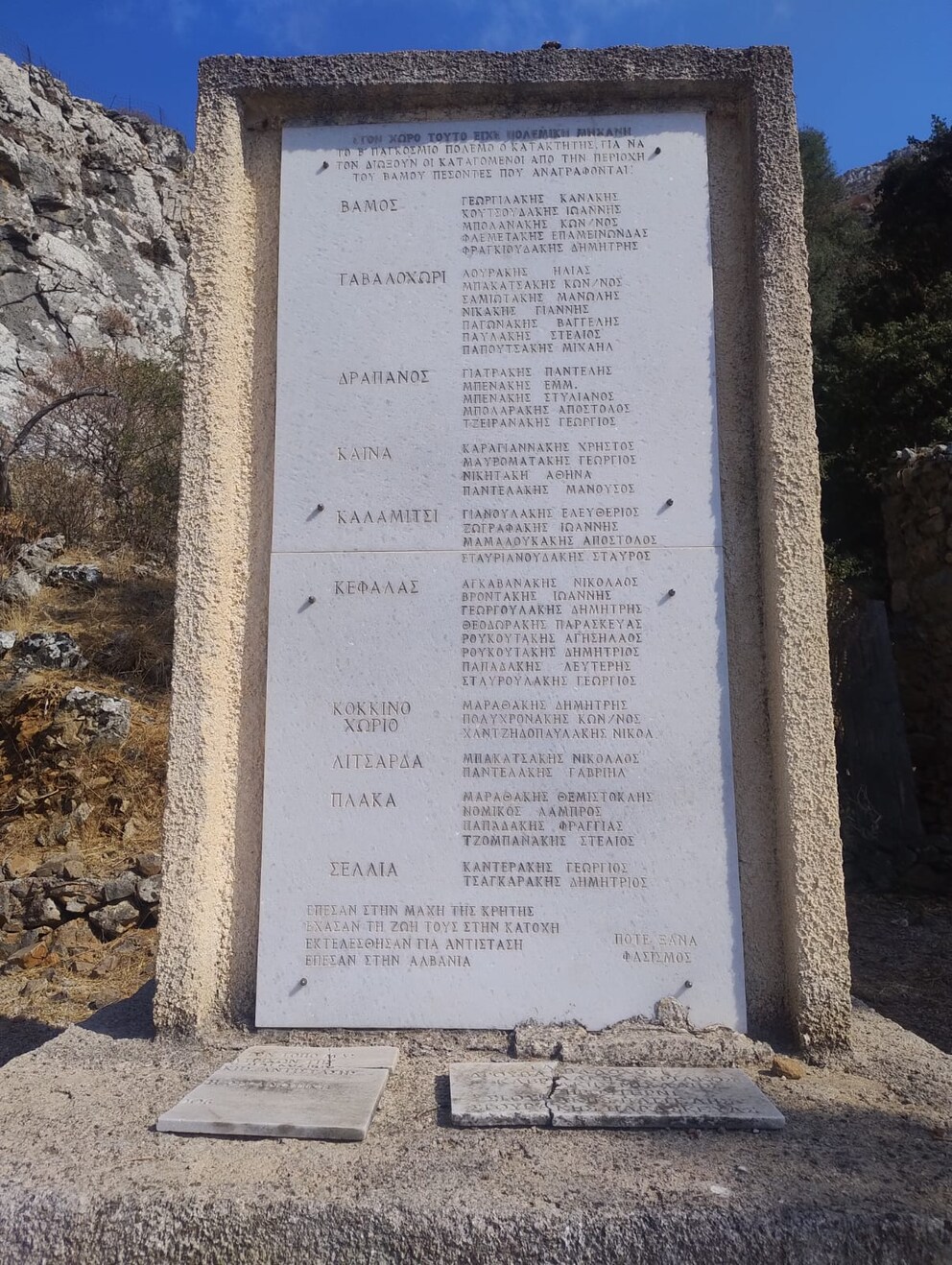
Near the small chapel of Agios Georgios stands a memorial pillar that recalls the “war machine of the conqueror.” There, the entrance to the tunnels of the German bunker on Crete opens. With each step deeper inside, daylight fades; without a flashlight, one is lost here. Surrounding you is bare rock, the corridors are about 13 feet wide and high. They lead to chambers that served as storage, quarters, or offices.
A stronghold above Souda Bay
Why the Wehrmacht chose this mountain becomes clear at first glance: From above, you overlook Souda Bay and its entrance, the largest natural harbor in Crete. Here, the Germans established their most significant observation post in the northwest of the island to monitor ship traffic.
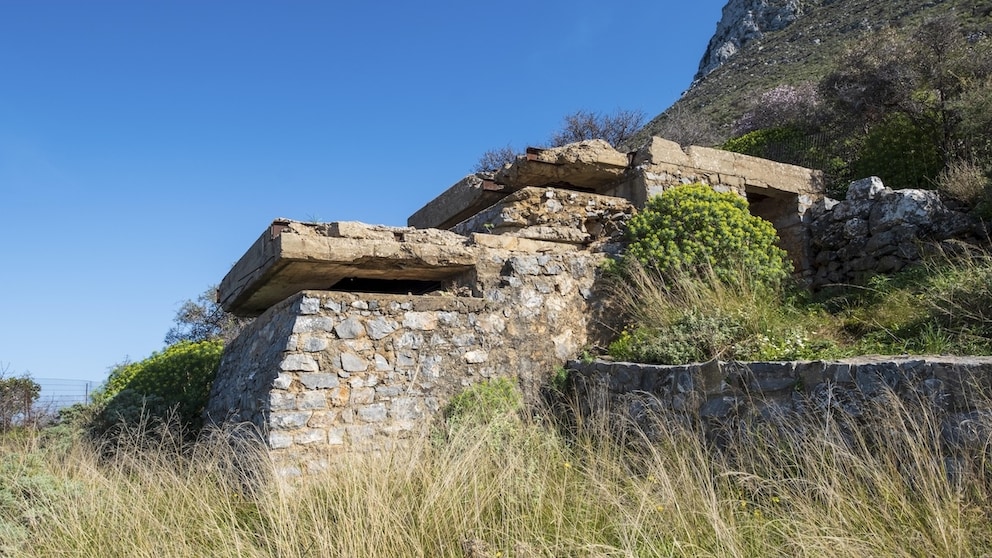
On the hill, guns were stationed, and a cable car brought soldiers and supplies up. Inside, ammunition was stored, and a generator provided electricity. The side wings were reinforced with walls of stone and reinforced concrete. Work was carried out according to the NS-Organization Todt, which prescribed a specific construction method. From the outside, the bunker was not visible. The rock served as both camouflage and cover, with concrete used only where necessary. Even the nearby chapel was apparently not spared and served as an explosives depot.
The German guide Florian Knaack, known as “Kreta-Flo”, who has lived on the island for years, offers tours of the complex. “Construction began in 1941, shortly after the island was conquered,” he says. Possibly out of fear of a British counterattack, the Germans pushed the work forward at full speed. The bay is about 9 miles long and 2.5 miles wide. Three heavy guns possibly covered the entire range. On the opposite peninsula of Akrotiri, today lie the Chania airport and a NATO base. Thus, Souda Bay has retained its military significance to this day.
Extensive tunnel system in the Crete bunker
The vastness of the tunnel system becomes apparent during the tour. “Kreta-Flo” describes the complex as “laid out like a dome, with the tunnels roughly forming a ring.” Concrete stairs lead to three levels. Sometimes you see gun slits in the rock, sometimes mounts for steel doors. Above is the fire control center, a concrete lookout with a wide viewing slit. On a clear day, you can see over Souda Bay to Maleme airfield. In almost every room, unknown individuals have left neo-Nazi symbols in red spray paint–at a place that reminds us of the crimes of the Nazi era and shows how quickly freedom can be destroyed by enemies of democracy.
Built by forced laborers
As impressive as the engineering feat of this construction project may be, its price was bitter. Forced laborers from the surrounding villages sometimes manually extracted the rock from the mountain. Greek sources report “horrific conditions.” Under great time pressure, locals had to drill holes in the mountain, blast, and rework after each explosion–always underground and in constant danger.
Concrete machine gun posts and bunker remnants can still be found in many areas of Crete today. In Platanias, west of Chania, the Wehrmacht drove tunnels into the rock; today, the corridors house a well-known museum. Many other facilities are now just ruins or at risk of collapse, as the Germans blew up numerous fortifications before their withdrawal. It is all the more remarkable that the tunnels of Kokkino Chorio have been spared, remaining freely and safely accessible. Unlike the museum in Platanias, however, there are no explanations or showcases here, except for a plaque above the entrance.
What Travelers Should Know Before Vacationing on the Greek Dream Island of Zakynthos
This Massive Underground Nazi City Is Now a Tourist Attraction
Officially recommended–and yet rarely visited
Although the Greek tourism authority recommends the site on a themed route, few tourists find their way here. First, you have to locate this spot. “Kreta-Flo” has been here several times with his small groups but has only once encountered other visitors–also Germans.
Those who emerge from the tunnels back into the sunlight and read the names of the war victims on the memorial pillar understand the significance of this place. This site serves as a reminder of the horrors of the Hitler dictatorship, which ruthlessly exploited other countries and people for its own purposes. History is made tangible and serves as a call to look where many pass by carelessly.
Getting There
Kokkino Chorio is located on the Drapano peninsula, just a few miles from the vacation spots of Kalyves, Almyrida, and Plaka; it is also easily accessible from Georgioupolis. The most convenient way to reach the destination is by rental car. A paved road leads close to the tunnels, and there is parking in front of the large entrance.
Even on the drive, it’s worth glancing at the roadside. In a ditch lies a concrete base with a metal shaft, where a rotating anti-aircraft gun was once mounted.