


March 12, 2026, 6:08 pm | Read time: 6 minutes
From oil state to diverse travel destination: Angola aims to forge new paths. As the partner country of ITB 2026, the nation presented its tourism vision at the world’s largest travel trade show in Berlin. However, growth at any cost is not the goal.
In an interview with TRAVELBOOK, Tourism Minister Márcio de Jesus Lopes Daniel explains why Angola deliberately avoids mass tourism in certain areas, the role Luanda is to play as the “Meeting Room” of the continent, and why he considers safety a hallmark of the country.
Tourism as “Green Oil”
TRAVELBOOK: Angola was in the spotlight as the partner country at ITB 2026 for three days. What key message should visitors take home?
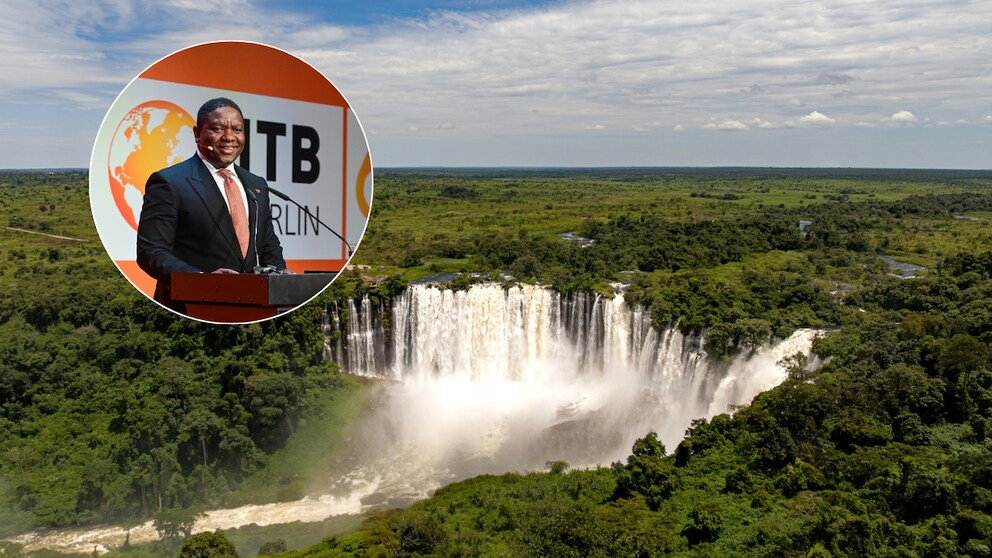
Márcio de Jesus Lopes Daniel: “Angola is emerging as a travel destination. The country is transitioning from a largely overlooked to a burgeoning destination with one of Africa’s most diverse tourism offerings: sun and beach, safari, tropical forests, deserts, national parks, and one of the continent’s largest waterfalls.”
Angola’s economy was heavily reliant on oil for decades. Is tourism a supplement or a strategic future project?
“Tourism is the green oil that will accelerate the diversification of our economy. It’s not healthy for an economy to rely on a single product. For many decades, we have almost exclusively depended on oil production, and the entire economy revolved around this sector.
By developing additional pillars—in agriculture, industry, trade, and of course tourism—we can broaden the economic base. In terms of employment and foreign exchange earnings, tourism has great potential. It can significantly advance diversification and help open new economic pathways and avoid dependencies.”
Authenticity as Key
You cite authenticity, people, and communities as the core of your tourism offering. How do you showcase vibrant culture without turning it into a backdrop?
“Authenticity is currently the most important key for tourism in Angola. After the pandemic, travelers are increasingly seeking genuine experiences with a different culture, its people, and its communities.
Much here remains untouched. Visitors can experience this directly—by spending time with the people, seeing how they cook or how community life functions. This makes Angola a unique travel destination. And that’s exactly what we want to preserve.”
Does this also mean a conscious limitation on visitor numbers?
“In certain regions, we do not want to develop mass tourism because we want to protect the lifestyle of local communities. They should not feel impacted by increasing visitor numbers.
At the same time, there are other areas where we are deliberately focusing on growth—such as beach tourism in selected coastal regions. However, for our waterfalls, we are not aiming for mass tourism but rather targeted, controlled development.”
The KAZA visa for Angola, Botswana, Namibia, Zambia, and Zimbabwe will enable cross-border travel experiences in a unique environment. Could it also become a kind of “Mini-Schengen” for southern Africa?
“The initiative is based on the fact that the countries of the Kavango-Zambezi Trans Frontier Conservation Area share the same nature and wildlife. We use a common brand and promote cross-border tours.
When travelers come to Angola, they should be able to easily visit the other countries in the region. The KAZA visa is crucial for this. You don’t need multiple visas, just one. It strengthens the spirit of cooperation rather than competition.”
Luanda to Become a Hub
You want to establish Luanda as the “Meeting Room” of the continent. What role should the capital play in the business travel segment, and what else does it offer?
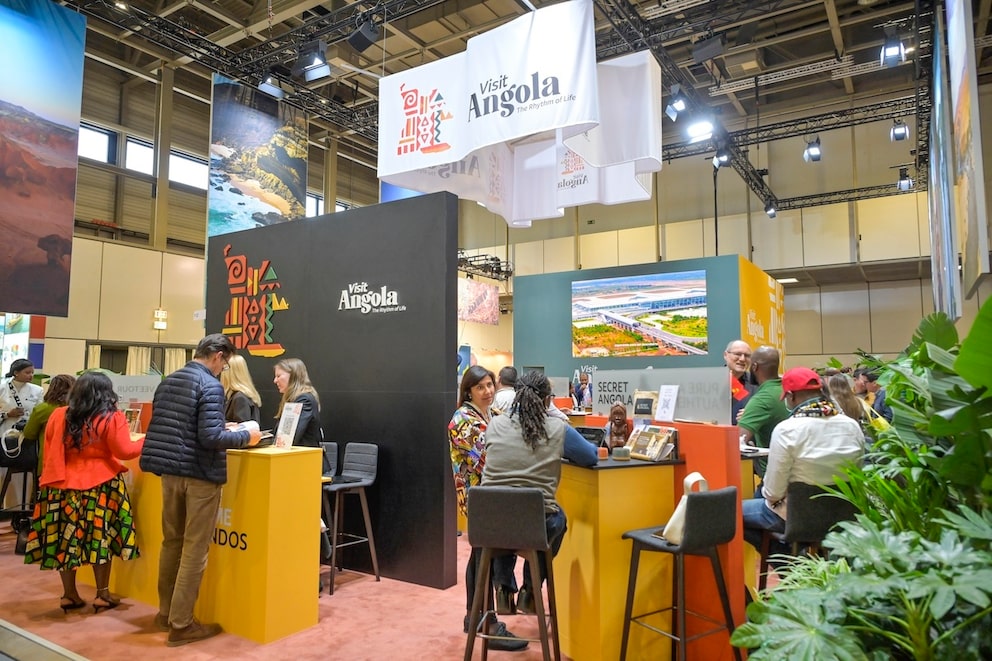
“We pursue this ambition because we are convinced that investments in our infrastructure will benefit not only Angola but the entire region. With the Dr. António Agostinho Neto International Airport, we have one of Africa’s largest international airports with a capacity of five million passengers per year.
Luanda is one of the best-connected cities on the continent: direct connections to numerous African metropolises, the U.S., Brazil, and soon also to Cuba and China, as well as to Dubai and Qatar.
For most European countries, as well as for America and Asia, there is visa-free travel, and we are working to extend this to all African states. Additionally, we are opening one of Africa’s largest conference centers. All this makes Luanda an attractive destination for meetings and conferences—with good accessibility and international hotel capacity.”
Is Luanda also a potential destination for leisure travelers?
“Business trips often also create opportunities for leisure. That’s why we don’t just talk about business tourism, but about bleisure—the combination of business and leisure.”

National Parks, Desert and Sea–What Angola Offers Travelers

Tourism Minister: “India Is One of the Safest Countries for Solo Travelers”
Young Population, New Opportunities
Sixty-six percent of the population is under 25 years old. How can tourism offer real prospects to this generation?
“Africa has the strongest population growth worldwide. When two-thirds of the population is younger than 25, it’s a huge challenge. The economy must move away from extractive sectors like oil, gold, or diamonds, which are capital- and technology-intensive, and turn to areas that rely more on human capital—especially services.
This includes the creative industries. We Africans are very creative. Tourism can help move people from unemployment to employment. And according to the UN development goals, it’s not just about jobs, but about good, sustainable jobs. That’s why we are also investing in education and training programs—in a world of 2026 shaped by AI and technological changes.”
Safety and New Self-Perception
Many Europeans still associate Angola with its conflict-ridden past. How do you plan to build trust?
“For a long time, we had no reason to actively promote our country because the oil industry was already present. The international reputation was therefore not a priority. Today, that is different. We want the world to see Angola as a country with history—50 years independent, 22 years in peace.
A large part of our past was shaped by war, and that affected our image. Now, the world should get to know Angola and its ‘rhythm of life.’ Safety is an important feature. Of course, no country is perfect, and we have challenges. But we don’t have a serious problem with major crime like kidnappings. Angola is a very safe travel destination.”