

February 28, 2026, 11:57 am | Read time: 5 minutes
Angola is still considered a blank spot on the tourist map–but at the travel fair ITB, the country in southwestern Africa is now in the spotlight. Between massive waterfalls, colonial history, and a wild Atlantic coast, a nation that long stood in the shadows is cautiously forging new paths.
Late Independence and Visible War Effects
Angola is not yet familiar with mass tourism. The former Portuguese colony only gained independence in 1975 after a long liberation struggle. Shortly thereafter, the country plunged into a civil war that lasted until 2002.
The effects are still felt today. In some regions, landmines continue to pose a threat. Warning signs with the inscription “Perigo Minas” mark mined areas and should not be ignored during overland travel. Authorities strongly advise against driving off paved roads.
Apart from these remnants, Angola offers travelers a variety of little-known natural and cultural treasures.
Natural Wonders Between Waterfalls and Desert
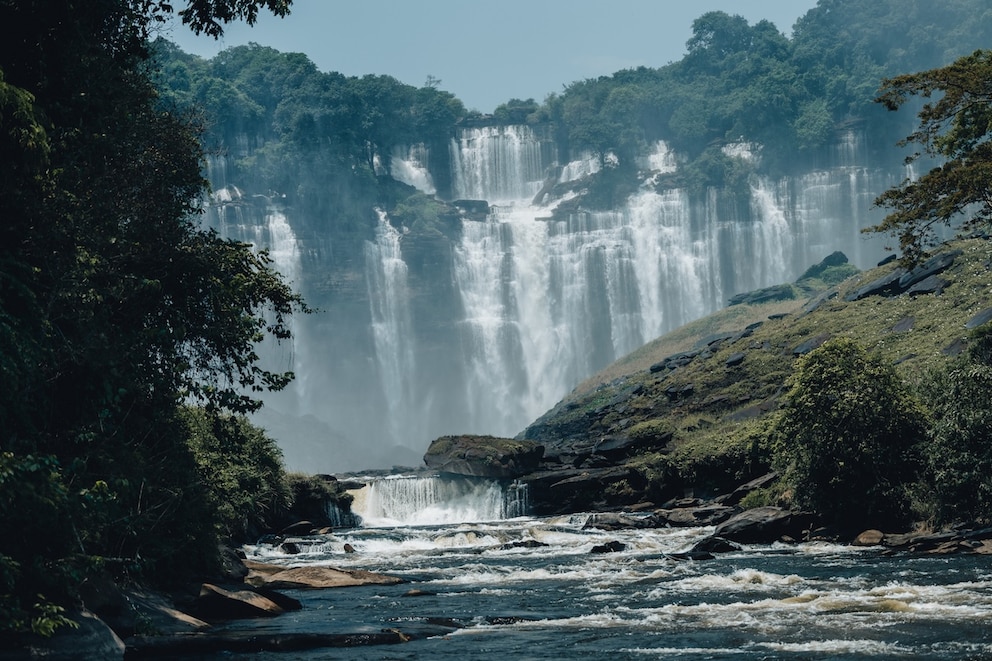
Among the most impressive sights are the Kalandula Falls. With a width of 400 meters and a depth of more than 100 meters, they are among the largest waterfalls in Africa.
Wildlife viewing is offered at Kissama National Park, where elephants, giraffes, and antelopes roam freely. To the south lies the spectacular Namibe Desert, which Angola shares with Namibia–a landscape of sand, vastness, and bizarre formations.
The Iona National Park in Angola is also one of the best destinations for a sustainable safari. Learn more here.
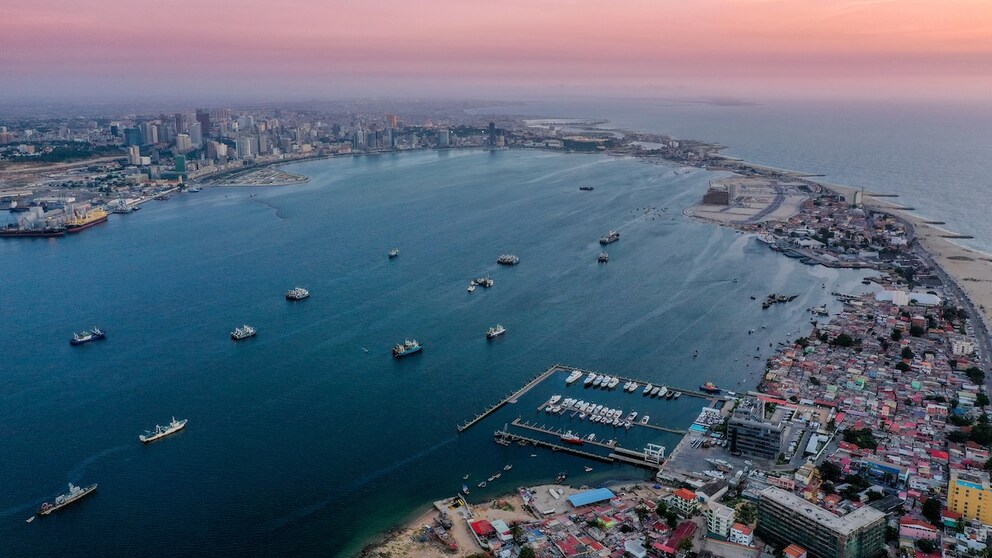
Luanda: Colonial Facades, Brutalism, and Glass Palaces
For most visitors, the journey begins in the capital Luanda on the Atlantic. Since the end of last year, arrivals are via a new international airport, about 50 kilometers outside the city. The prestige project was completed for the 50th anniversary of independence and, like many major infrastructure projects in Africa, was realized by Chinese companies.
Angola is not cheap. Especially Luanda, long primarily a destination for business travelers, is considered an expensive place with high hotel prices.
Those traveling from the airport toward the center pass wide, well-developed roads without potholes–not a given in many other African countries. However, as you approach the metropolis, traffic noticeably thickens.
In the city center, different eras collide: restored and partially dilapidated buildings from the Portuguese colonial period stand alongside massive architecture from the socialist phase, which lasted until the early 1990s. Since then, the country has increasingly oriented itself toward a market economy. Modern glass facades and office skyscrapers shape the image of a capital in transition.
Between the new buildings, street markets with fruits, vegetables, and secondhand clothing hold their ground. Female vendors balance trays with hard-boiled eggs or small bags of nuts on their heads, offering their goods at bus stops.
Along the Baia de Luanda, the waterfront road conveys a beach atmosphere. Especially on weekends, many families are drawn to the Atlantic beaches.
Kwanza River and the Legacy of the Slave Trade
Just a short drive from the metropolis, the pace slows down. On the Kwanza River, two- to eight-hour boat tours are offered. Along the wooded banks, numerous bird species can be observed, and with a bit of luck, monkeys in the treetops. Fishermen are out in shallow canoes.
About an hour’s drive south of the city center is Morro da Cruz with the national slavery museum, surrounded by mighty baobab trees. Unlike former slave forts in Ghana or Senegal, where the transatlantic trade to North America is addressed, here the focus is on the transport of enslaved people to Brazil and the Caribbean.
The museum includes a chapel from the 17th century. There, slaves were baptized before their shipment. Chains and whips on display document the violence and inhumane treatment by colonial rulers and their local partners.
What to Know Before Traveling to Senegal
Angola’s Tourism Minister Márcio Daniel: “Tourism Is the Green Oil of Our Country”
Moon Landscape and Surf Spot Cabo Ledo
About 40 kilometers south of the museum rises the “Miradouro da lua”–the viewpoint of the moon. The rugged, reddish-brown and ocher cliffs resemble a lunar landscape during a full moon. Many nature lovers from Luanda camp there. Hiking and climbing are prohibited, however, as the area also serves to protect turtles.
Further south lies Cabo Ledo with one of the country’s most famous surf beaches. The waves are sometimes too strong for swimming but offer good conditions for surfers.
Tourists are rare here, making everyday life seem unspoiled. Small resorts are in quiet proximity to fishing villages. On the beach, fishermen mend their nets or prepare boats, while women process the catch. Children play soccer in the sand or jump into the waves.
Travel Information for Angola
Location and Size: Angola is located in southwestern Africa, is about 3.5 times the size of Germany, and has nearly 38 million inhabitants.
Best Travel Time: Between May and October is the dry season, when temperatures are more moderate.
Arrival: Lufthansa offers direct flights from Frankfurt am Main to Luanda. Alternatively, connections with layovers are available, such as via Lisbon with TAP or via Paris with Air France.
Entry: For tourist stays of up to 30 days, no visa is required. A passport is sufficient, provided it is valid for at least six months beyond the planned departure date.
Health: According to the Federal Foreign Office, Angola is considered a yellow fever infection area. Vaccination is recommended; proof may be required when entering by land. There is also a high malaria risk. In addition to consistent mosquito protection, medication prophylaxis may be advisable.
Currency: One euro is approximately 1,080 Kwanza. It is advisable to exchange enough cash. International credit cards are mainly accepted in larger hotels and a few restaurants, according to the Federal Foreign Office; otherwise, cash payment is common.
Language: The official language is Portuguese, and various African languages are spoken. English is not widely spoken outside Luanda.
With material from dpa