

September 25, 2025, 3:25 pm | Read time: 11 minutes
Vanessa Palumbo works in the higher foreign service for the Foreign Office and has lived in Berlin, Lyon, and Tokyo. For over two years, Dakar has been her home–and whenever possible, she travels throughout Senegal. At TRAVELBOOK, she shares her personal tips for traveling through the West African country.
Overview
- Why and for whom is a trip to Senegal worthwhile?
- When is the best time to travel?
- How safe is Senegal?
- What should you consider when interacting with locals?
- What are the most beautiful beaches?
- Highlights you shouldn’t miss
- What local food should you definitely try?
- What else should you know before traveling to Senegal?
Why and for whom is a trip to Senegal worthwhile?
Senegal is a diverse destination for those seeking adventure, nature, and friendly people. A trip is particularly special due to the famous Senegalese hospitality, known as “Teranga,” which can be felt in many places. Since gaining independence, the country has maintained remarkable political and social stability and is considered relatively safe in the region.

With its proximity to the sea, Senegal offers great beaches and water sports opportunities. Culture and history enthusiasts will also find plenty to enjoy. Additionally, Senegal is known for its unique rhythms and a rich music scene that captivates visitors. Its proximity to Europe and relatively good infrastructure make Senegal an ideal first destination in sub-Saharan Africa. Those interested in authentic encounters, vibrant culture, and an intriguing natural and wildlife experience will certainly find what they’re looking for in Senegal.
When is the best time to travel?
Senegal has two seasons, which start slightly earlier or later depending on the region–each with its own charm. The rainy season lasts from about June to September, followed by the dry season from around October to May. During the dry season, daytime temperatures usually range between 77 and 84 degrees Fahrenheit. In the evenings, it can occasionally get cool enough that a light jacket is comfortable, especially by the sea.
In the very humid rainy season with high humidity, temperatures can reach up to 93 degrees Fahrenheit, depending on the region. Especially in August and September, the humid heat can be exhausting for outdoor activities, and heavy rains and storms often lead to roads being flooded and difficult or impossible to pass.
Those who prefer less tropical temperatures and fewer wet surprises are well-advised to travel during the cooler dry season, ideally between December and May. During this time, the sunsets are particularly impressive, often painting the sky in warm, vibrant colors. The rainy season, however, has its own charm: the country shines in lush green, and nature shows its blooming side.
How safe is Senegal?
Senegal is considered a relatively safe travel destination within the region. However, a certain level of caution should be exercised when traveling. Occasionally, petty thefts occur, such as by passing mopeds attempting to snatch bags or phones. Therefore, do not openly display valuables and only carry what is necessary–ideally in a small crossbody bag, fanny pack, or backpack kept close to the body.
Using a taxi for transportation in the dark is recommended. In response to occasional nighttime robberies at hotels frequented mainly by tourists, the Senegalese government has increased the presence of security forces in tourist areas.
Before traveling to Senegal, be sure to consult the current travel advisories from the Foreign Office. It is also recommended to register with the crisis preparedness list ELEFAND and save the emergency contact number of the German Embassy in Dakar on your phone.
What should you consider when interacting with locals?
In addition to French, Senegal’s official language, Wolof is widely spoken. There are also more than 30 other local languages in the country. Especially outside Dakar, many people speak little to no French. A friendly “Nanga def?” (“How are you?” in Wolof), combined with a smile, can open doors. A tip: Asking about the well-being of the other person and a brief exchange about family or daily events are integral to Senegalese communication culture. Taking the time to engage in conversation often rewards you with “Teranga,” fascinating stories, and sometimes even a better price at the market.
In everyday life, you will often be offered things to buy on the street. A firm but friendly “no” is usually respected.
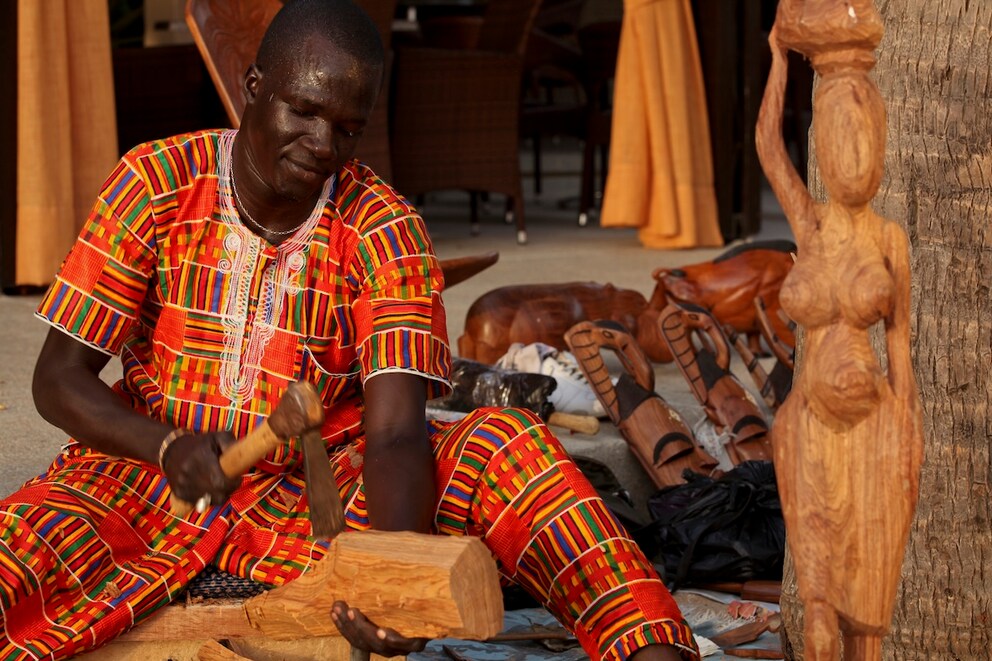
Important: Especially in rural areas, it is advisable to always ask for permission before photographing people. This also applies to photos of houses, fields, animals, or market stalls. People are happy to share their daily lives, but asking is not only polite but can also lead to even more authentic encounters.
What are the most beautiful beaches?
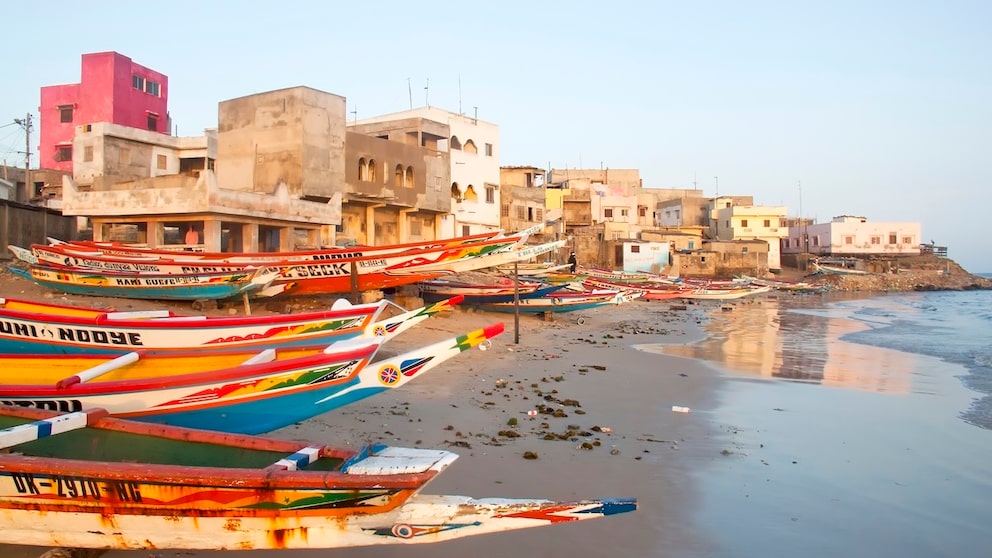
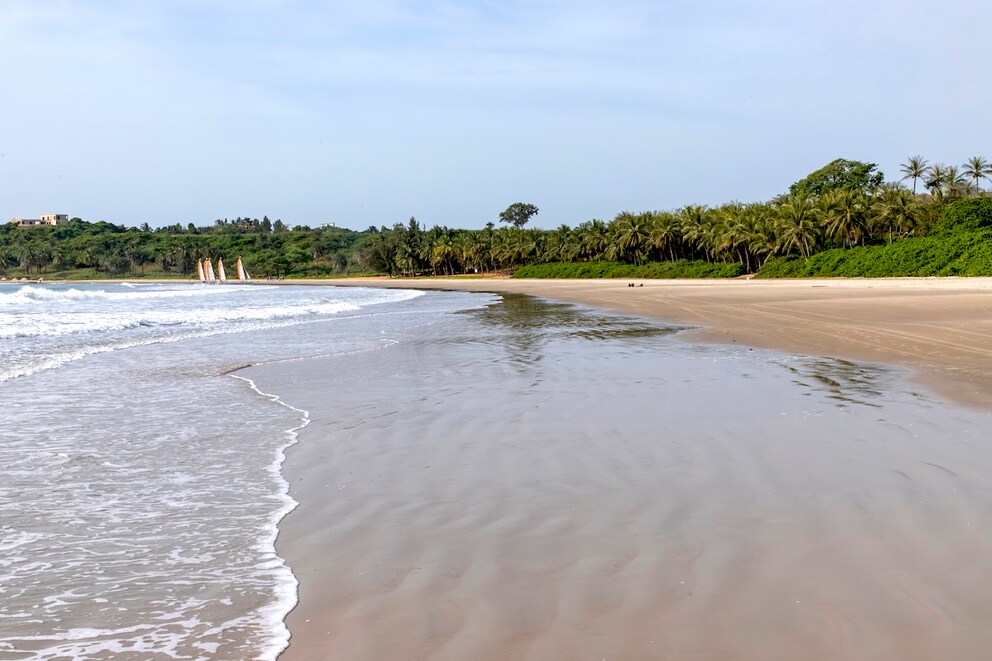
With more than 500 kilometers of coastline, Senegal offers countless beaches inviting you to swim and relax. The country’s name, derived from “sunu gal” (Wolof for “our boat”), reflects its close connection to the sea and fishing. While in the capital Dakar, Plage de Ngor or Plage de Yoff are good spots, about an hour and a half from Dakar, there are many beautiful beaches along the “Petite Côte” (translated: small coast), such as in Popenguine, Saly-Portudal, or Somone. Those seeking particularly dreamy, tropical beaches will find them in Casamance, the southernmost part of the country, below Gambia. Cap Skirring is considered a true paradise for beach lovers.
Highlights you shouldn’t miss
Dakar
The capital offers exciting attractions such as the Île de Gorée, a former slave island with a moving history, the largest statue on the African continent, and the westernmost point of Africa. A trip to Ngor Island or a surfing lesson at one of the beaches are experiences not to be missed. For music and dance lovers, there are numerous live events. Also worth seeing are the Divinity Mosque and the Phare des Mamelles, a lighthouse with history, great views, and vibrant nightlife.
Petite-Côte
Only about 1.5 hours from Dakar, the “small coast” attracts visitors with long sandy beaches and large all-inclusive resorts. Ideal for those who want to spend a few relaxing days by the sea. Excursions are worthwhile here to the Popenguine Nature Reserve, the lagoon in Somone, or the shell island Joal-Fadiouth.
Bandia Reserve
Near the Petite-Côte lies the Bandia Reserve, where giraffes, rhinos, zebras, and other African wildlife can be observed on safari in the fenced sanctuary.
Sine-Saloum Delta
The UNESCO-protected natural paradise south of Dakar delights with a colorful birdlife and mangrove forests that can be wonderfully explored by canoe. Ideal for nature lovers and those seeking tranquility. Those interested in culture should make a detour to MAHICAO, a small museum with vivid explanations of West African cultures and superb local cuisine.
Former Capital Saint-Louis
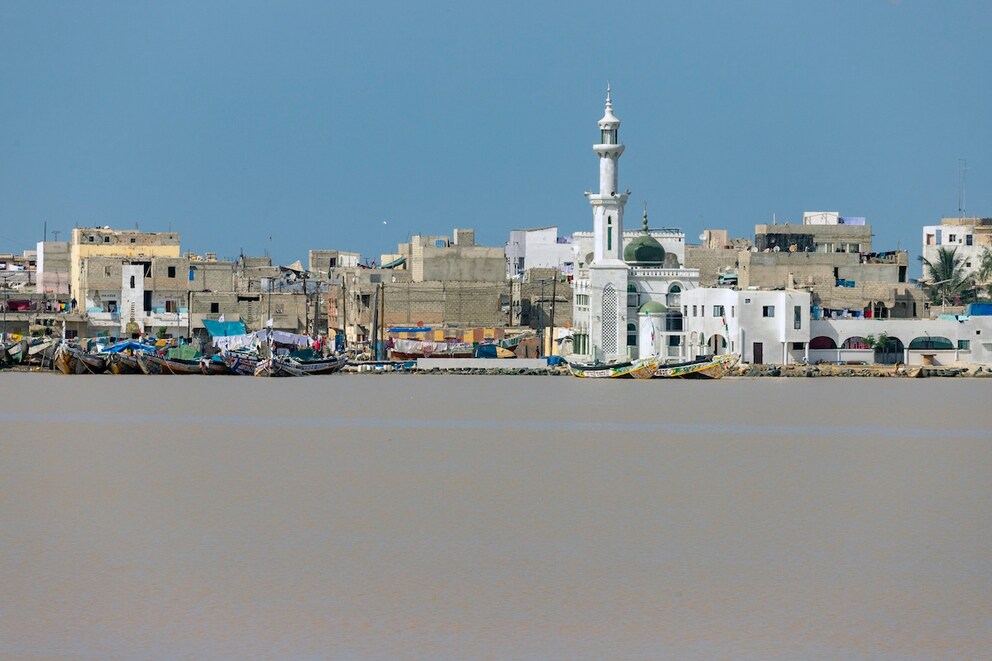
The old town of Saint-Louis is located on a long, narrow island connected to the mainland only by bridges. This unique location has earned the city the nickname “Venice of Africa.” The former capital of Senegal was also at times the center of French colonial administration in West Africa. Every May, Saint-Louis in the north of the country transforms into a stage for international jazz greats. The festival is considered one of the most important music events in West Africa. Hotel reservations should be made early during this time.
Djoudj National Park
Also in the north is the Djoudj National Park, a paradise for bird enthusiasts. In the European winter, huge flocks of migratory birds, including pelicans and flamingos, gather here. The park is open from November to April.
Nioko-Koba National Park
The park in southeastern Senegal is one of the largest protected areas in West Africa and a UNESCO World Heritage site. Covering over 9,000 square kilometers, visitors can embark on an exciting safari and observe numerous wild animals.
Dindefelo Waterfall and Pays Bedik
Traveling about two hours further south from Niokolo-Koba National Park, near the border with Guinea, you can discover a true natural highlight: the Dindefelo Waterfall, perfect for swimming and hiking in the surrounding highlands. Nearby, a visit to the villages of the Bedik, an ethnic group living in the hills who have preserved their own language, culture, and traditional way of life, is worthwhile.

Casamance
The south of Senegal impresses with tropical nature and stunning beaches. If you travel there, a stop in Gambia is definitely worthwhile, where you can observe wild chimpanzees, crocodiles, and hippos on the Gambia River.

My Spectacular Trip to Senegal’s Largest National Park

Best Tips for Visiting Kruger National Park
What local food should you definitely try?
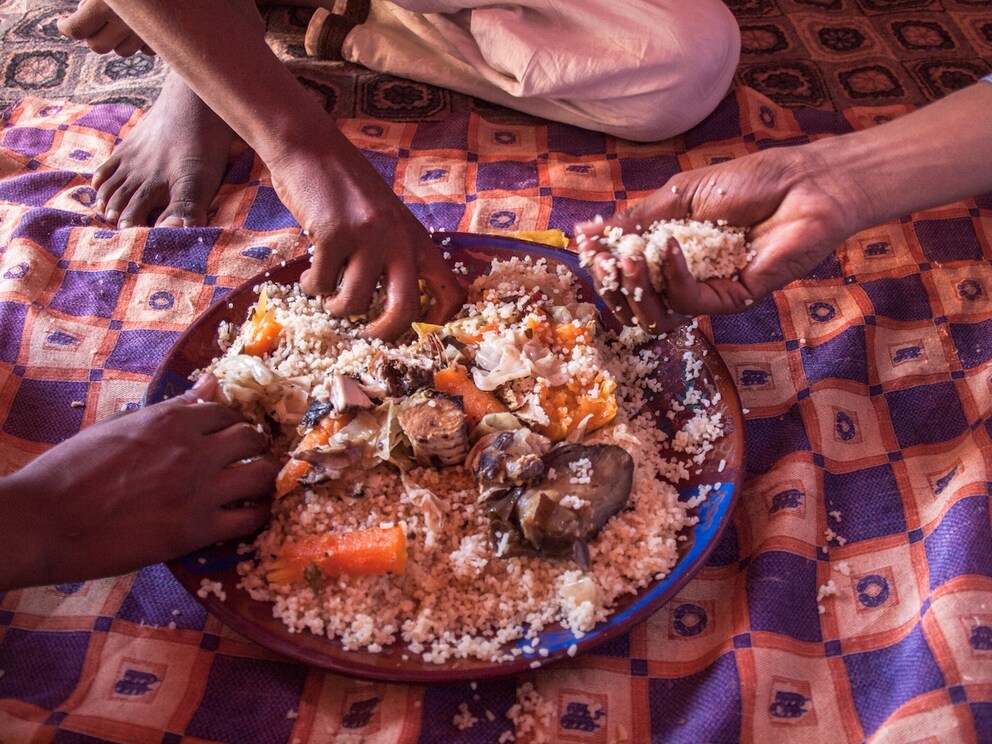
Be sure to try the Senegalese national dish Tieboudienne, made from fish, rice, and vegetables. Fun fact: Almost every West African country has its own version of this dish, and there is a never-ending (and lovingly conducted) competition over where it tastes best.
Other classics like Yassa Poulet (chicken in onion sauce) and Maffé (peanut sauce with meat or vegetables) are also delicious. As a drink, try Bissap (hibiscus) or Bouye, the juice from the baobab fruit. If the juices are too sweet, they can be diluted with a little water. If you have the opportunity to be offered Attaya, sweet green tea, or Café Touba, coffee spiced with Guinea pepper, by a local, you should definitely accept.
What else should you know before traveling to Senegal?
Driving
In Senegal, you can rent vehicles from common car rental companies at the airport or in Dakar. It is advisable to book from Germany. If only a phone number is provided, booking inquiries via WhatsApp are often common. For overland routes, a four-wheel-drive vehicle is recommended. When picking up the vehicle, be sure to check that it is in perfect working order and that all necessary papers are available to present at possible police checks.
Caution: On overland roads, driving is often very fast. In Dakar’s sometimes chaotic traffic, a cautious driving style is advisable–especially during rush hours in the morning and evening. Long traffic jams can also occur quickly, especially in the rain.
For longer trips: Bring enough bottled water–tap water is not suitable for drinking. The frequency of gas stations is very good throughout the country. However, it can happen that the desired fuel is not available at a gas station. Therefore, plan fuel stops in advance.
Money
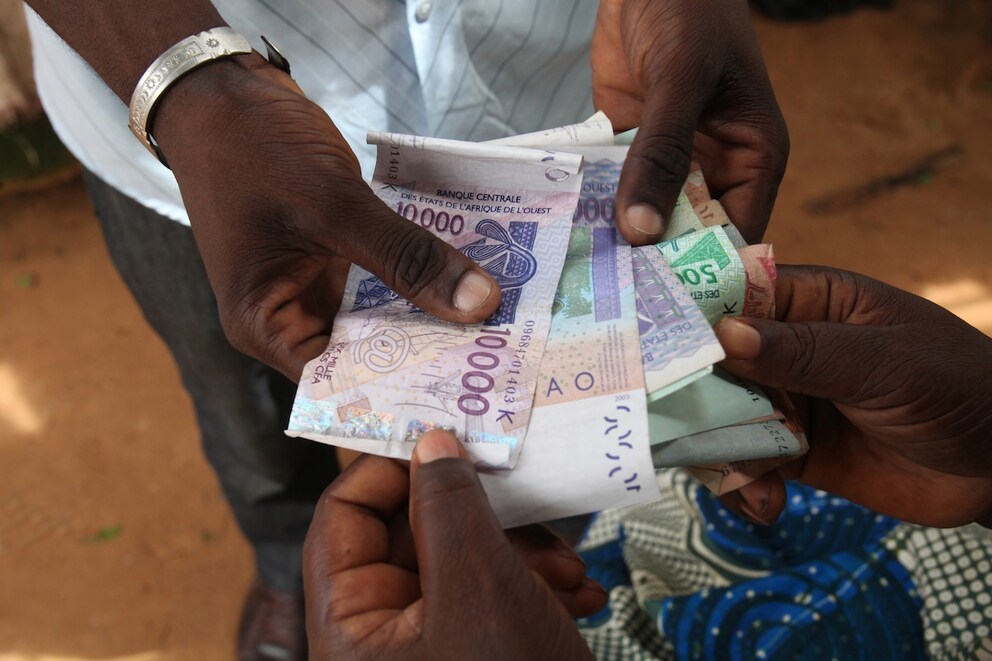
The currency in Senegal is the West African CFA franc, which is pegged to the euro at a fixed exchange rate (1 EUR ≈ 655 CFA). Almost all everyday transactions are conducted in cash. There are ATMs at the airport, but they do not always have cash available. However, foreign currency can be easily exchanged at the airport and in Dakar. Credit cards are accepted in some hotels, restaurants, and supermarkets. The further you move away from the big cities, the harder it is to find ATMs. Therefore, it is advisable to carry enough cash. Haggling is part of the shopping experience at markets.
And a pro tip: Don’t give away your small change (especially 500, 1000, and 2000 CFA bills) lightly. Change can quickly become scarce–for example, when taking a taxi. Here, passengers are expected to have the exact amount, not the driver. So it’s best to prepare in advance.
Public transportation
In Dakar: You can easily get from A to B with the typical yellow taxis. If you don’t want to haggle over the price, you can use ride-hailing apps like “Yango,” “Heetch,” or “Yasir.” The price is displayed when ordering, which makes the process much easier. Yango is the most widespread and offers the largest selection of vehicle types for every budget. A tip: If you want more comfort, air conditioning, and fewer emissions, choose the “Comfort” category in the Yango app.
In the country: For travel within the country, the fastest and most flexible option is to rent a car. Those with enough time, a sense of adventure, and some experience with public transportation in similar contexts can also travel by intercity buses–for example, with the company DemDick, whose tickets are available via app or at the counter.
There are also Senegalese “7-Places” or minicars, small shared taxis that depart from Dakar at Gare Baux Maraichers to many different destinations. For this type of travel, it is helpful to have basic French skills–English or other common foreign languages are rarely spoken. It should be noted that there have unfortunately been serious accidents in the past involving public transportation.
Health
Senegal is a malaria, yellow fever, and dengue fever area. The risk of contracting these diseases from a mosquito bite depends on the season and travel route. Vaccinations are also recommended as protection against other diseases. Before traveling to Senegal, be sure to consult a tropical medicine specialist.