

February 17, 2026, 2:49 pm | Read time: 6 minutes
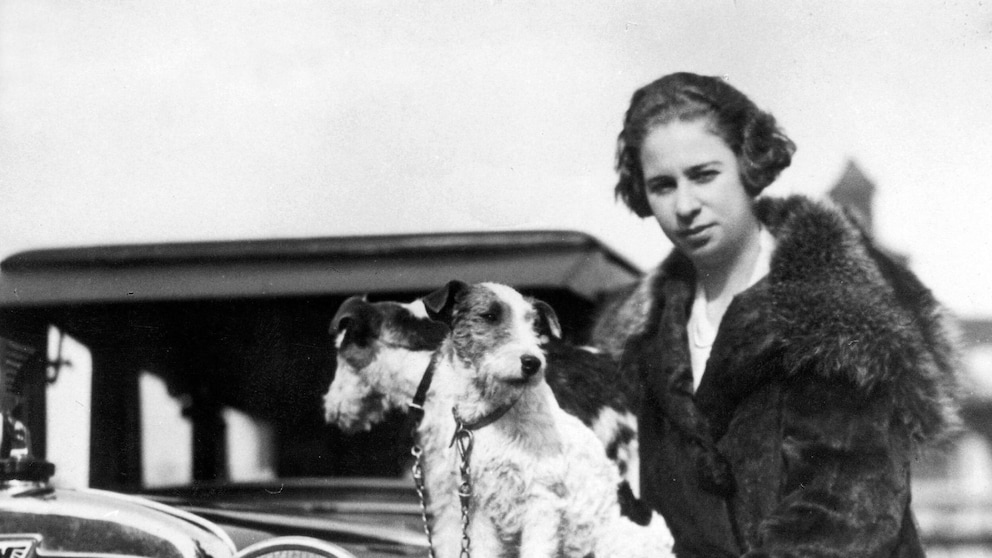
In the 1920s, Clärenore Stinnes, the daughter of a German industrialist, achieved an astonishing pioneering feat: She became the first person to drive around the world in a car, completing the journey in two years. She overcame numerous obstacles and dangers, even blasting her way through when necessary. Yet, perhaps the greatest adventure of her journey was finding love along the way.
The 20th century was significantly shaped by human, sometimes superhuman, pioneering achievements. Roald Amundsen fought his way to the South Pole in a deadly race against the Englishman Robert Scott in 1911. Charles Lindbergh crossed the Atlantic in his plane, the “Spirit of St. Louis,” in 1927. And in the same year, Clärenore Stinnes, the daughter of a German industrialist, embarked on an adventure that no one had dared before. Within two years, she became the first person to drive around the world in a car. She broke with all conventions, defied hair-raising dangers—and found the love of her life along the way.
It was the year 1901 when Clärenore Stinnes, whose real name was Clara Eleonore, was born in Mülheim an der Ruhr. Born into one of the wealthiest families of her time, she defied the then-common role model of a “typical” German woman from an early age. According to “ARD alpha,” she was interested in automobiles instead of dolls from a young age, and by the age of 15, she was already driving motorized vehicles around her father’s factory grounds. At 18, she obtained her driver’s license, an almost unheard-of event at the time. Women were expected to marry and stay at home, as her mother believed when her father died in 1925. But the brave young woman defied this and fled to Berlin.
With a Dog Through Siberia
There, she began racing cars, soon collecting titles like others collected stamps. By 1927, she had won 17 championships, making her the most successful female racer in Europe. Probably for this reason, sponsors flocked to her when she embarked on the greatest adventure of her life that same year. Clärenore Stinnes wanted to be the first person to drive around the world in a car. In an Adler car with three gears and 45 horsepower, she set off on the mad expedition from Frankfurt am Main on May 25, 1927. Her family was against the endeavor, so she raised the 100,000 Reichsmarks needed for the trip herself from companies like Bosch, Aral, and Continental.
From the start of the journey, she was accompanied by two mechanics to help with breakdowns, of which there would be many. Her dog “Lord” was also allowed to come along. Additionally, Swedish filmmaker Carl-Axel Söderström, who would soon play a special role in Clärenore Stinnes’ life, was part of the team. The plan to drive around the world was almost absurd, as many countries at the time had few or no roads. The route Clärenore had planned would have likely stopped anyone else before they even started. First, it went over the Balkans and Moscow through Siberia and the Gobi Desert to Beijing. From there, by ship over Japan and Hawaii to the USA, then on to South America. After another sea voyage back to the USA, she traveled by ocean liner from New York to Le Havre in France, and raced from there to her destination in Berlin.
This German City Is Host to the World’s First “Gas Station”

Here, you ride up the mountain in a rotating gondola.
Dynamite in the Trunk
It was an adventure that could fill three lifetimes. After just 500 kilometers, her clutch broke in the former Czechoslovakia, and in Syria, the fuel tank of her support vehicle failed. In Russia, the cars had to be pulled out of deep mud. During a drive over the frozen Lake Baikal, Clärenore Stinnes narrowly survived when she sped over a crack in the ice at top speed.
By this time, only the dog “Lord” and filmmaker Söderström were still on board. The two mechanics had already given up in Moscow, one for health reasons. Thus, a cautious closeness developed between Clärenore Stinnes and the taciturn Swede, which would become the love of their lives during the journey. Together, they faced incredible adventures, perhaps the greatest being the crossing of the Andes. In Peru, her car got stuck in quicksand. But the courageous woman could well be considered the inventor of a well-known saying: “Where there’s a will, there’s a way.” When nothing seemed to work in the mountains, Clärenore blasted her way through. She carried the necessary dynamite in the trunk. You never know.
Inspiration for Many Adventurers
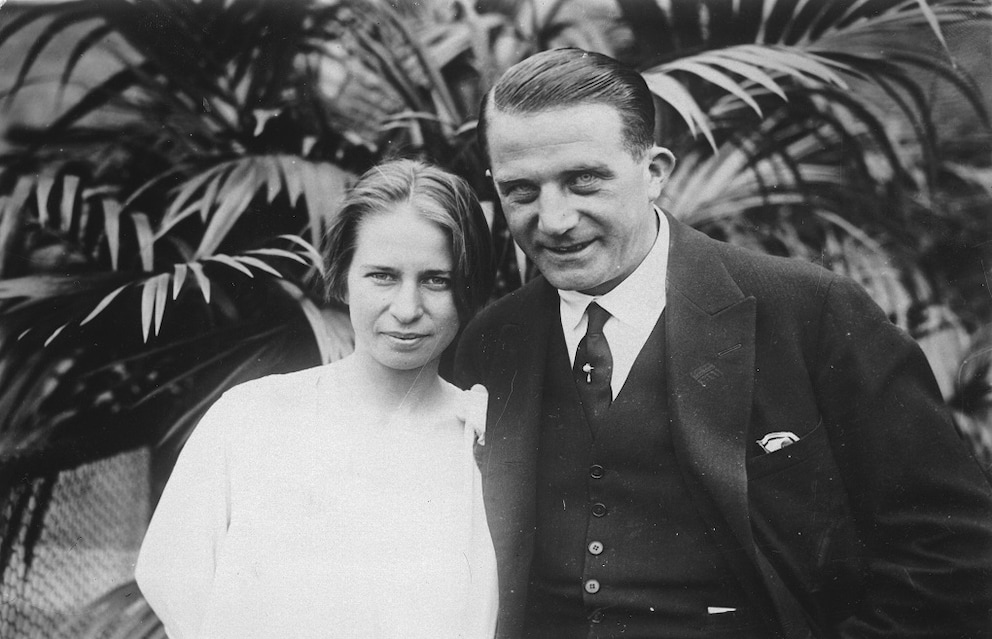
Eventually, they had to leave the car behind and make their way on foot to Lake Titicaca. There, they waited for months for a new transmission for the car, which had to be specially delivered from Germany. The final leg in the USA turned into a triumphal procession. Clärenore Stinnes and Söderström were already stars, and even President Herbert Hoover made a point of personally welcoming them at the White House. On June 24, 1929, the two finally drove into Berlin, cheered by a huge crowd. The Adler’s odometer showed more than 46,000 kilometers, and Söderström had 10,000 meters of film, which he edited into a gripping documentary by 1931. They married afterward and retired to a country estate in Sweden.
Clärenore Stinnes was not only a pioneer but also an inspiration for countless women after her. For example, the Berlin entrepreneur Heidi Hetzer, who traveled a total of 84,500 kilometers around the world in her car from 2014 to 2017. Impressively, Hetzer was 80 years old when she finally completed her own adventure. In 2015, the “WDR” dedicated a documentary to the woman who was the first person to drive around the world in a car, titled “Fräulein Stinnes gibt Gas.” TRAVELBOOK is happy to join the list of admirers of Clärenore Stinnes and wishes to set another small monument to her with this text. Perhaps a quote from the great actor Marlon Brando fits well: “Only those who walk their own path can never be overtaken.”