

September 2, 2025, 5:01 am | Read time: 6 minutes
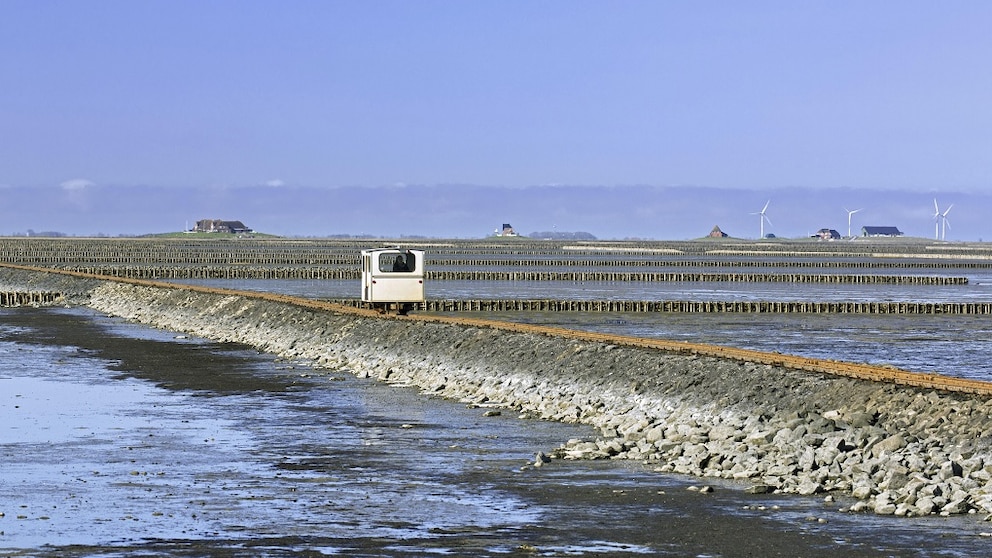
The Hallig Nordstrandischmoor, a small marsh island just a few kilometers off the German North Sea coast, is one of the most remote and isolated places in Germany. Only 21 people live here. To get to the mainland or back, they use a kind of private train. The “Lorenbahn” is essentially nothing more than a small, motorized wagon on tracks. TRAVELBOOK tells the story of what is probably Germany’s most charming non-public transportation system.
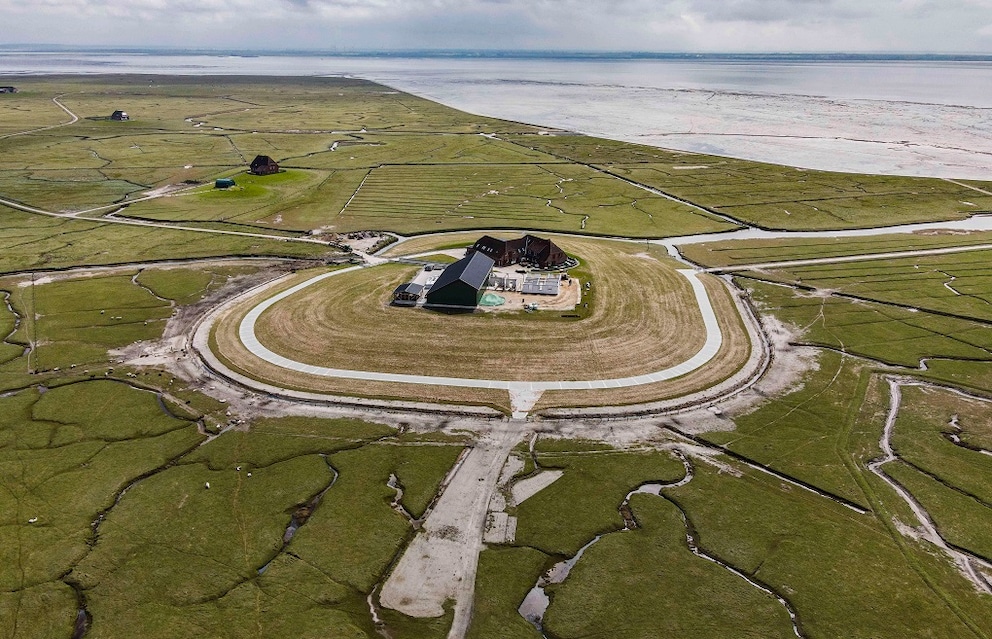
On the German North Sea coast lies the small community of Nordstrand. Just a few kilometers from this place, located in the “Biosphere Reserve Schleswig-Holstein Wadden Sea and Halligen,” is one of Germany’s loneliest and most unusual places. The Hallig Nordstrandischmoor, a small marsh island–created less than 400 years ago by a storm surge. Its residents have always defied the tides, aided by perhaps Germany’s most charming non-public transportation system. For nearly 100 years, people here have traveled between the island and the mainland with the Lorenbahn, a unique private train on tracks.
TRAVELBOOK reaches Ruth Hartwig-Kruse, mayor of Nordstrandischmoor and Nordstrand, on a sunny afternoon by phone. Before agreeing to an interview, she wants to make one thing clear. The Lorenbahn is not a public transportation system to bring day visitors to the island. She often has to engage in sometimes nerve-wracking discussions with them. So, once again: The Lorenbahn is intended exclusively for the use of Nordstrandischmoor residents. A rare exception is made, if at all, only for overnight guests staying on the Hallig for a few days. “But nowadays, everyone thinks they’re something special.”
Every Family Owns Three Loren
But then the Northerner noticeably relaxes, sharing a bit about the Hallig’s eventful history and its Lorenbahn. “The connection was built from 1933 to 1934 when the Halligen were to be fortified. Back then, it was seven kilometers long. The route still in operation today extends three and a half kilometers.” And on this, the residents of Nordstrandischmoor, all 21 people from three families, travel as needed between their Hallig and the mainland. “The route starts in Lüttmoorsiel. That’s where our cars are parked for further travel.” Additionally, the Lorenbahn serves for regular supply with everyday necessities. The ship connection, which also exists, cannot guarantee this due to the unpredictable tides. It only brings day visitors to Nordstrandischmoor when possible.
Also interesting: Rendsburg Suspension Ferry: Germany’s Most Bizarre Means of Transport
“Initially, people pulled the Lorenbahn by hand or steered it with a sail. In the 1970s, however, a clever person on our Hallig came up with the idea of installing a motor in the small wagons.” Since then, technological progress has not stopped at Germany’s lonely island. Nowadays, there are even some wagons powered by electricity. Every family on the Hallig owns three of these Loren. They are not always just for transporting people. “We have various Loren models. Sometimes hay bales or cows and sheep are transported.” There are only 10 licenses for the charming means of transport. Anyone wishing to apply for one must meet three conditions: The main residence must be Nordstrandischmoor, the applicant must be over 15 years old, and possess a moped driver’s license.
The Sunken North Sea Island of Arngast

7 Romantic Destinations in Northern Germany
“My Little Perfect World”

But even for the residents of Nordstrandischmoor, there are sometimes restrictions on using their Lorenbahn. The railway embankment belongs to the Schleswig-Holstein State Office for Coastal Protection, which also operates it. “The Hallig residents are only allowed to drive when the embankment is clear. And they must not hinder any work with their trips.” In 2000, a new, higher Loren embankment was built. As a result, the route can now be traveled relatively independently of the tides with the slow train. It is only unusable during storm surges, which common sense alone dictates.
The Lorenbahn takes 20 minutes to travel from the Hallig to the mainland. “The only alternative is a hike through the mudflats. And you know the saying: Better poorly driven than well walked.” For Ms. Hartwig-Kruse, a ride on the Lorenbahn always feels like freedom. “I drive home to my little perfect world. There, nothing awaits me but lots of nature and peace.” There is even a second Lorenbahn route that operates to the Halligen Oland and Langeness. However, Nordstrandischmoor is the youngest of the five inhabited marsh islands. According to the site “Halligen,” it was formed in 1634 during the so-called Burchardi Flood. During this event, the island split from a larger landmass.
School for Six Students
And although Nordstrandischmoor is quite small, with just 1.9 square kilometers, there is a school for the current six children. They can attend it up to the 9th grade. Only then must they choose a further education institution on the mainland if interested. Of course, the Lorenbahn takes them there–and back. As do the overnight guests who can book a stay in one of the four vacation apartments on the island through the official Hallig website. The suspicion that these must be booked out for years is dispelled by Hartwig-Kruse. “Just try it and see for yourself.” A quick look at the site reveals to the curious travel journalist: A stay on the Hallig is not only something very special but also extremely affordable.
Also interesting: Niederfinow Boat Lift: Brandenburg’s Technical Marvel
When asked by city dwellers what there is to see here, the mayor laughs. “Well, in the morning you have the free choice–do I go left or do I go right.” A lot of nature and solitude await the guests. And they come precisely for that reason. According to “Halligen,” from February to May, you can witness thousands of brent geese resting on their way to their winter quarters in Siberia. A guided walk through the mudflats, of course with good rubber boots, is also a highlight of a visit. And then, of course, the ride on the Lorenbahn, probably Germany’s most charming means of transport.