

April 7, 2026, 8:13 am | Read time: 3 minutes
Northern Germany is one of the most popular travel destinations in the country, not least because of its rugged coastal landscape, endless horizon, and distinctive lighthouses. A total of 21 of these maritime landmarks dot the North Sea. However, one of them stands in a place that tells a unique, almost forgotten story.
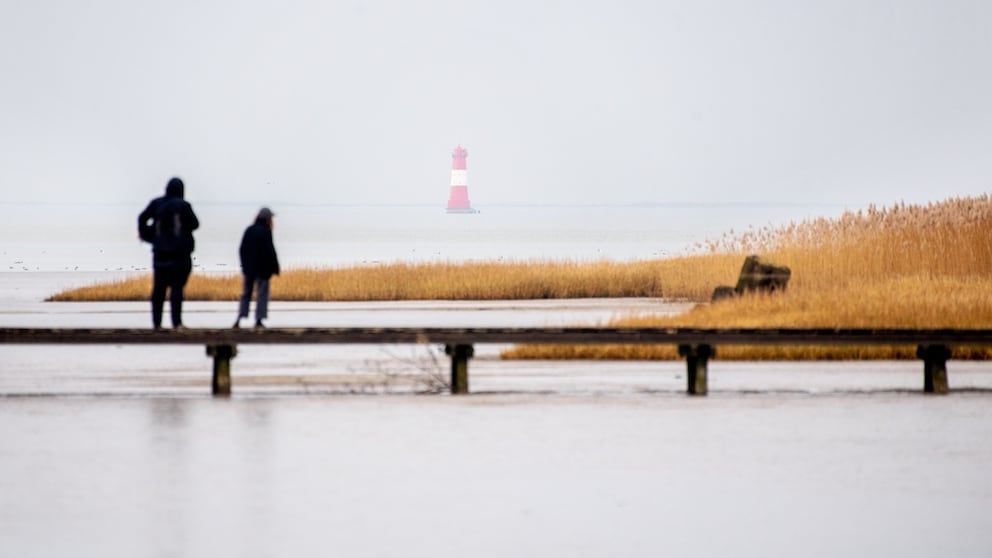
In the middle of Jade Bay, a sea inlet between Wilhelmshaven and Bremerhaven, a solitary lighthouse rises from the water. What today appears to be an ordinary sea marker is actually the last visible witness of a sunken island: Arngast.
The Sinking of an Island
The bay today was once settled land that was gradually flooded by several severe storm surges in the Middle Ages. According to HNA, around 45 islands emerged in the sea inlet.
The flooding also affected the parish of Arngast, a type of church community, with several settlements and farms. The residents then lived on the newly formed island of the same name, which was about six square kilometers and the largest in Jade Bay. Despite severe setbacks, such as the Antoniflood in 1511, which separated Arngast from the mainland at Dangast (NWZ reports), the island remained inhabited until 1686.
But the island had no chance of survival: Over decades, storm surges and tides continued to impact the island. Arngast shrank, eventually broke into pieces, and completely sank into the sea at the beginning of the 20th century.

For over 400 years, one could theoretically observe the constant changes in the bay. However, nothing of that is visible today. Instead, the lighthouse built in 1909/1910 in Jade Bay serves as a reminder of the sunken island.
Do You Know Hamburg’s District Located Right in the Wadden Sea?
The Lorenbahn–perhaps Germany’s most charming mode of transportation
The Lighthouse as the Last Witness
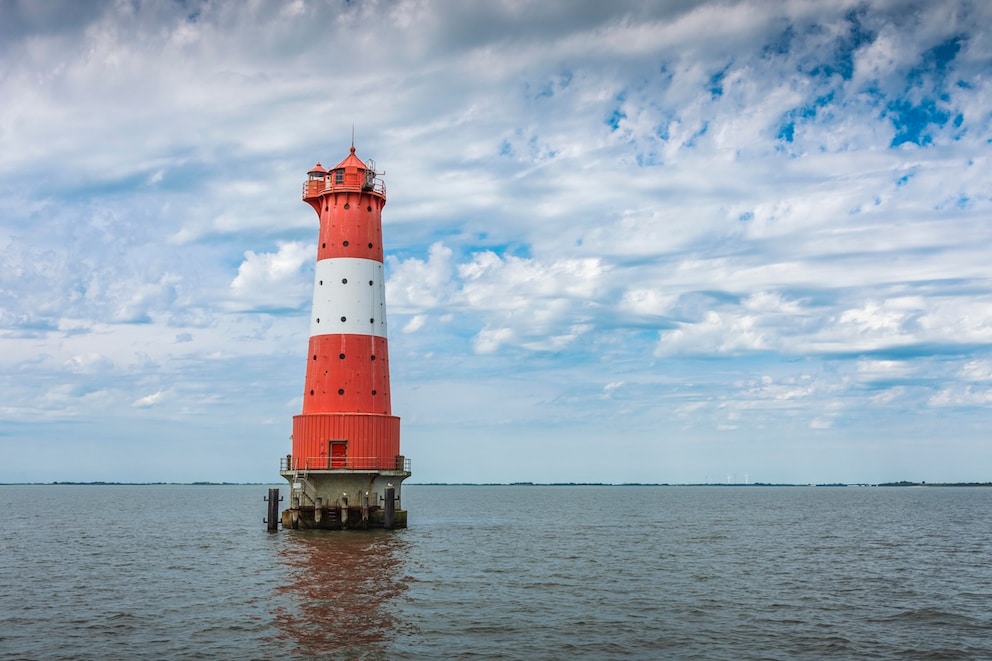
The Arngast Lighthouse rises about 30 meters above mean high water and still serves as a navigational aid for shipping in Jade Bay. Located about 4.5 kilometers from Wilhelmshaven, it guides ships into the bay’s harbors.
Until about 60 years ago, the tower was still manned: Three lighthouse keepers took turns every two weeks. Today, the beacon is remotely controlled from Wilhelmshaven.
Alongside the famous “Roter Sand” lighthouse, Arngast is one of the most well-known and traditional lighthouses on the German North Sea coast. Accordingly, it is also listed in the register of cultural and architectural monuments.
Experience the Tower Between Water and Mudflats
Particularly fascinating: The tower changes its appearance depending on the tides. At high tide, it is completely surrounded by the sea; at low tide, it stands in the middle of the mudflats. The lighthouse is clearly visible from the western shore of Jade Bay.
Those who really want to get close can participate in guided tours. The Wanderzentrum Ostfriesland offers excursions to the base of the tower. However, these are not for the inexperienced: The approximately 7.5-hour tour leads through dikes, the national park, and deep mudflats. The operators warn that the excursion is considered physically very demanding.
Thus, the Arngast Lighthouse remains not only a navigation point for ships but also a silent reminder of the power of nature and the disappearance of entire landscapes.