

December 15, 2025, 3:32 pm | Read time: 2 minutes
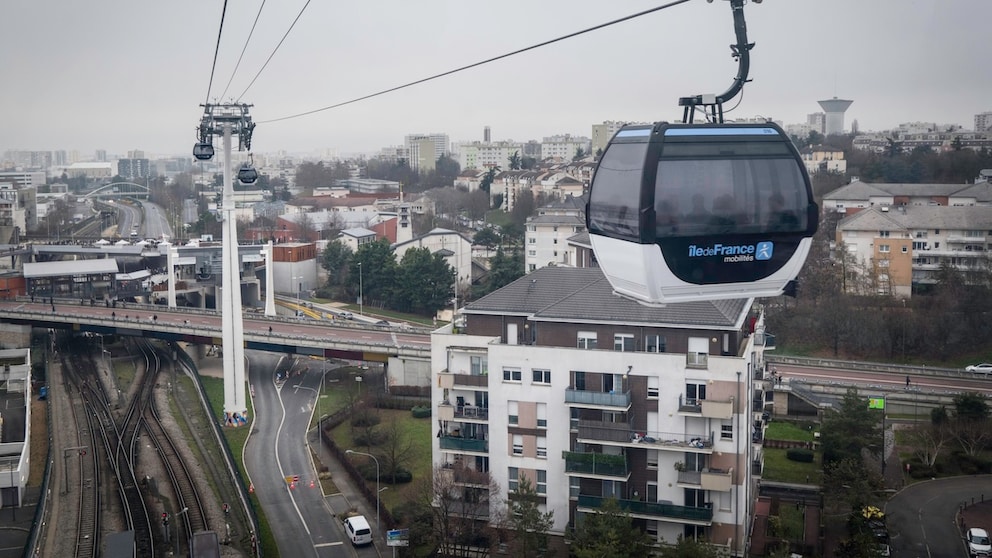
The region around Paris has a new, spectacular infrastructure project: On December 13, Europe’s longest urban cable car, the Câble C1, began operations, reports BILD. It aims to alleviate the daily traffic chaos in the Paris suburbs.
More Speed, Less Traffic
After two years of construction, the Câble C1 creates a direct connection between the cities of Créteil and Villeneuve-Saint-Georges—completely independent of road traffic. The 4.5-kilometer route spans five stations and was specifically designed for public transportation. Among other things, 30 massive steel masts were installed for this purpose.
According to the operator Île-de-France mobilités, the new connection offers a significant time advantage: “While the bus takes 40 minutes, C1 completes the same journey in 18 minutes, bypassing road traffic.” The cable car is designed for daily operation and aims to relieve commuters in the region.
Related: Switzerland now has the world’s steepest cable car

These 15 Alpine Ski Resorts Have New Chairlifts and Gondolas

France Has the World’s Largest Cable Car System
Also Interesting for Tourists
The cable car operates seven days a week. During peak times, the total of 105 cabins—each with ten seats—run every 30 seconds. This allows for the transport of up to 11,000 passengers daily. A one-way ticket costs two euros. The cabins float at heights of up to 55 meters at speeds of over 21 kilometers per hour above the ground. In strong winds, the speed is reduced. If wind speeds reach 90 kilometers per hour, operations are completely halted. In such cases, a replacement bus service is provided.
Although the cable car is primarily intended to improve commuter traffic, it also offers new opportunities for Paris visitors. Three of the five stations are near metro or bus lines, including Line 8, which stops just a few minutes’ walk from the Eiffel Tower. This significantly eases travel from suburban hotels to the city center.
Paris Cable Car is a European Leader
The total construction costs amounted to around 138 million euros. In a global comparison, while the new French project is a European leader, Mi Teleférico in the La Paz region (Bolivia) leads worldwide: There, the cable car network extends over a total length of 33 kilometers.