

June 7, 2026, 5:41 am | Read time: 12 minutes
For years, TRAVELBOOK author Robin Hartmann has tirelessly roamed the beautiful landscapes of the Harz. On his sometimes multi-week hikes, he often encounters beautiful and unusual inns that make a stop on a long journey truly special. Here, he reveals where you can watch lynxes after a meal, where you can dine at prices from 20 years ago, and which place has a nearly extinct animal on the menu.
8:30 a.m. on a Tuesday morning, the thermometer shows two degrees Celsius in mid-May. Outside the windows of my refuge, a snowstorm rages, and once again, I marvel at the whims of my favorite hiking region, the Harz. After a night in the car, chilled to the bone, I now warm myself with a nice cup of tea, somewhere in the mountainous nowhere, about 500 meters above the small town of Ilfeld. The gruffly friendly waitress serves me scrambled eggs from a cast-iron pan, and I still can’t quite believe that this place actually exists, not just a figment of my imagination. I am at the “Hufhaus,” one of the most unusual inns in the entire Harz. And I feel like a treasure hunter who has just leaped through a time portal into a long-lost era.
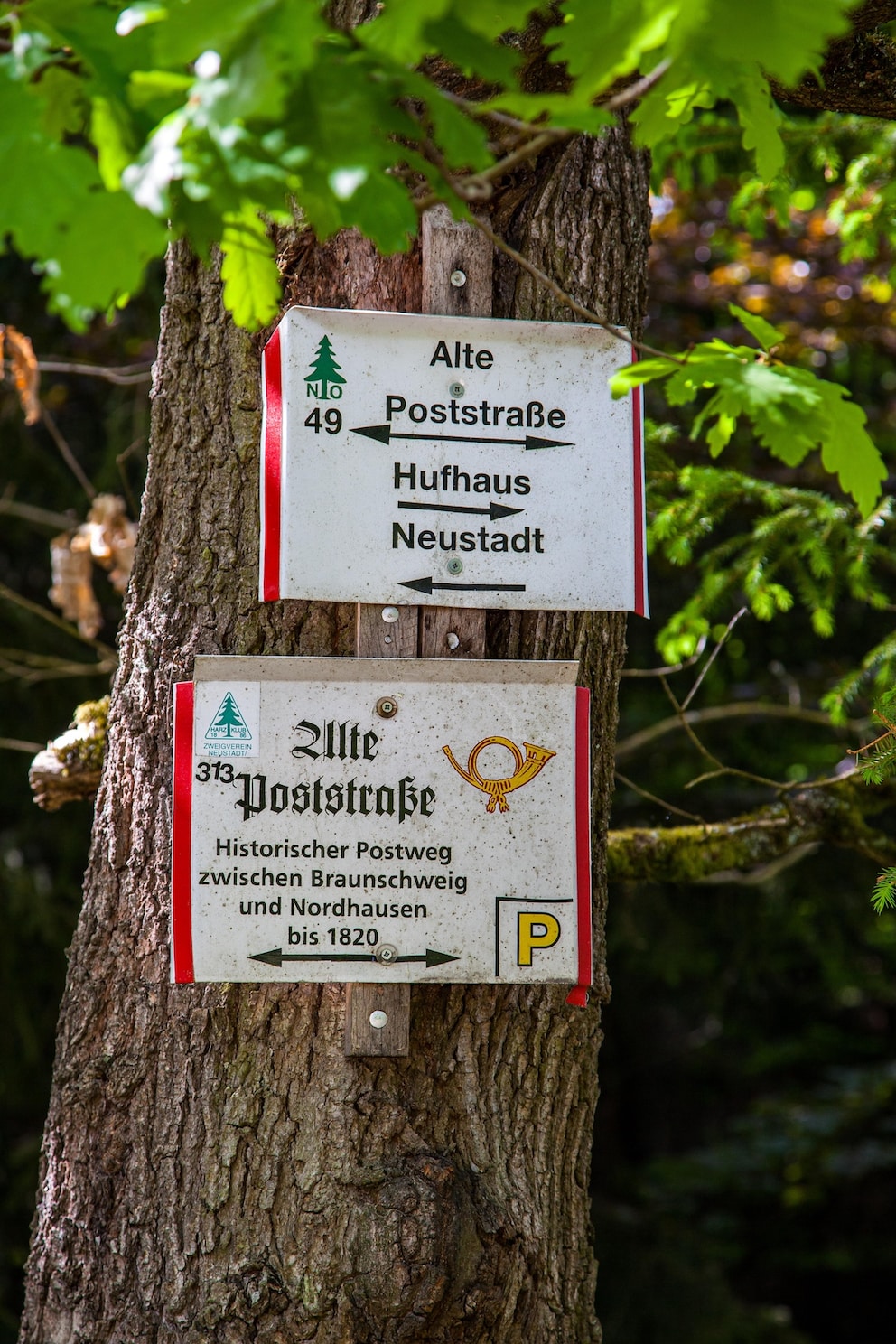
Just the day before, on a long hike, I had repeatedly seen signs pointing to a “Hufhaus.” At some point, I asked a local during a stop what it was all about. And I immediately realized: I had stumbled upon a goldmine. One of those inns that can make a beautiful tour unforgettable. The place itself has existed since 1698, initially as a count’s stud farm, then a forestry office, then a DDR (East German) holiday home. Owned by the Lotter family since 1991, time seems to have stood still here ever since. The prices, at which you dine excellently, are comparatively low, making you wonder how it even works.
DDR Charm and Pre-Reunification Prices
Due to the circumstances of my hike, I had the opportunity to have dinner, breakfast, and lunch at the “Hufhaus,” and I paid less than 40 euros in total, including drinks. The absolutely exquisite venison liver I enjoyed after a long hike cost just 11.30 euros. With three drinks and a Germknödel for dessert, I was still under 20 euros. A wood stove crackled cozily against the apocalypse outside, and while I had been alone in the morning, I now shared the room with a busload of cheerfully chattering retirees. My food still arrived promptly, while German schlager songs about eternal love had been playing from the depths of the room for hours.
The absolute highlight for me, however, was the interior of the unusual restaurant, which still reminded me of the DDR holiday home. No, rather, it was still entirely the old place. A quirky charm for me, but alongside the prices, it attracts guests in droves every day. And that’s despite the fact that the path to the “Hufhaus” is quite adventurous, as it leads over an unpaved forest road. Once you arrive, you might initially think you’ve discovered a lost place–though this thought was probably only due to the weather conditions during my visit. It was at this place that the idea was born to finally present you with a list of the most beautiful and unusual inns in the Harz.
Also interesting: The most beautiful and wildest valleys in the Harz
Old and New Gems
For years now, I’ve been roaming my now favorite hiking area worldwide. And of course, a long day outdoors is only truly crowned when you can then–or even in between, or both–stop at a truly rustic place. I am a connoisseur through and through, sometimes a gourmand, and I can’t pass by a good inn. Over time, this has already earned me a rich collection of inns to look forward to. Occasionally, I also discover new gems, and so I think I can certainly be considered a connoisseur. So here is my very personal hit list of the most beautiful and unusual inns in the Harz.
Our journey begins above the fairy-tale town of Ilsenburg. After a climb through the still healthy forest along the Ilse River and the archaic Ilse Waterfalls, our path on our very first Harz hike led my girlfriend and me to the “Waldgasthaus Plessenburg” in the middle of the Harz National Park. Existing since 1776 as an originally count’s hunting lodge, it has been an honest and affordable inn for weary hikers since 1973. The Krebs family now runs it in the third generation, and a very cozy parlor invites you to linger. The walls are paneled with wood, adorned with various hunting memorabilia like antlers and even a wild boar’s head. In summer, it’s also wonderful to sit in the beautiful beer garden under tall trees.
The Most Spectacular Location in the Harz
Wild boar goulash, aspic, homemade cake–but if you want to try the secret king of Harz cuisine, order the hearty pea soup, optionally with sausage. In the winter months from December to April, the famous wildlife feedings also take place here. Then, with luck, you can observe deer, roe deer, and other wildlife up close. The “Waldgasthaus Plessenburg” can be reached, for example, via a great circular hike that starts and ends in Ilsenburg. For me, it is, so to speak, the “mother of all inns” and as my first culinary experience in the Harz, it cannot be left off this list.
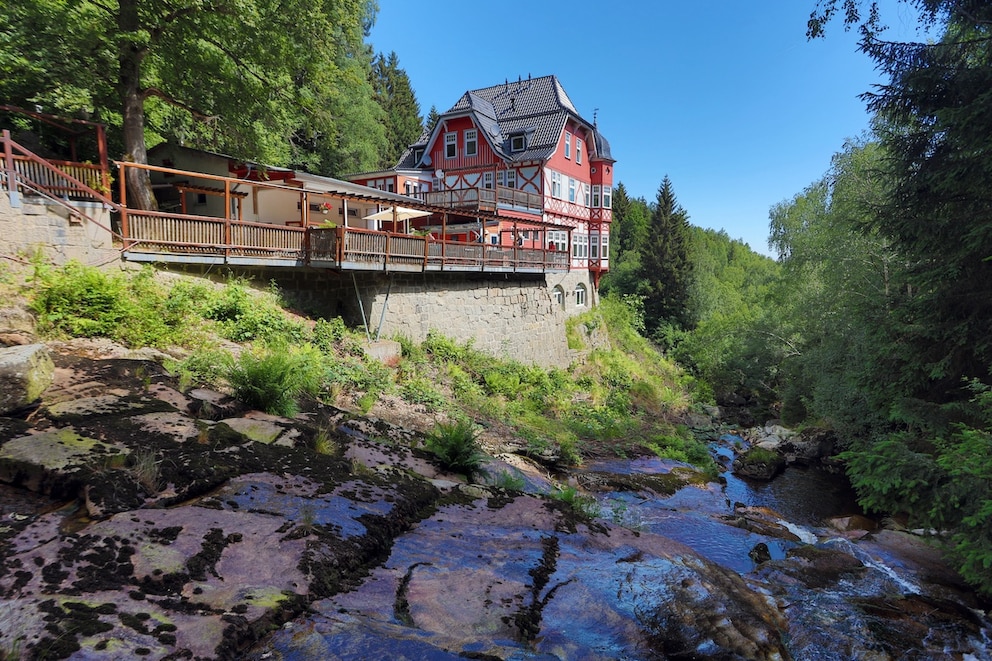
Perhaps the most spectacular location of all the inns on this list is the “Steinerne Renne,” where you can also stay overnight. You can reach it, for example, from the town of Darlingerode via a great hike that partly follows the Holtemme River. Directly above the location, the river plunges down a spectacular cascade. A panorama that can be enjoyed from the inn’s terrace or while standing on a bridge. This leads to the other side of the namesake Steinerne Renne, which is a kind of gorge. The cuisine is simple but hearty, and again I would recommend the pea soup with sausage. It’s always a safe bet if you want to be full but still want to continue hiking.
Also interesting: The most beautiful rivers and waterfalls in the Harz
Cliffs and Castle Ruins
Another “classic” where I always like to stop on my tours is the “Waldgasthaus Rabenklippe” in the Harz National Park above Bad Harzburg. The small and rustic parlor is particularly impressive due to its absolutely spectacular sun terrace. From this, you overlook the vast landscape of the Harz and have a great view of the mighty Brocken mountain. At host Andreas Gummich’s, his homemade wild game specialties taste particularly good. The “Rabenklippe” is also an absolute traditional house and has existed since 1874. After the meal, you have the opportunity for a very special encounter: In an adjacent enclosure, you can observe three lynxes with a bit of luck. You can also climb the namesake cliff.
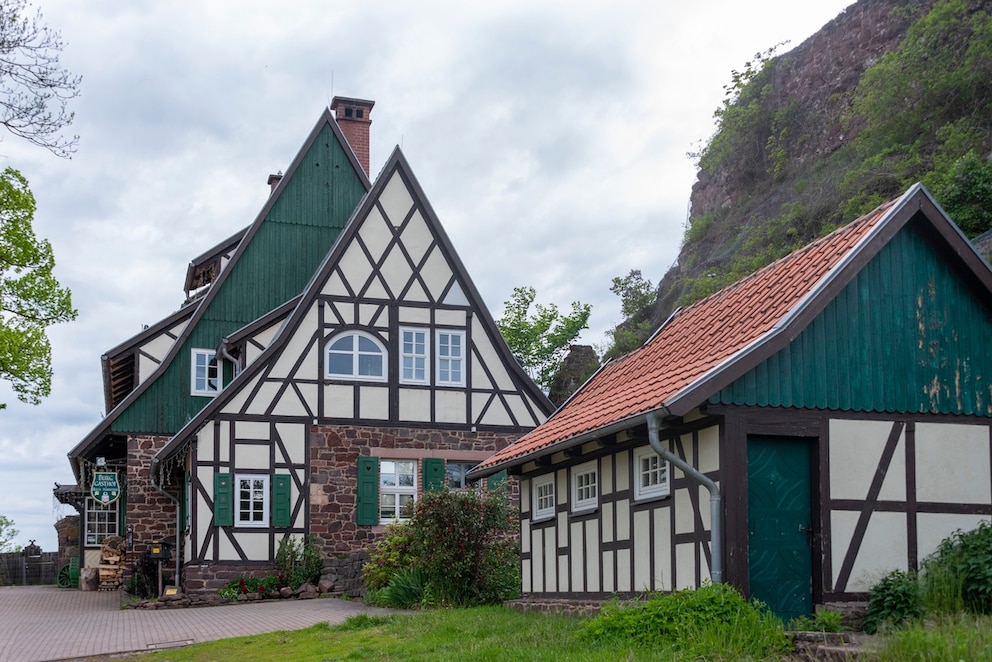
A new discovery is the “Burggasthof Hohnstein,” which truly rounds off a visit to the eponymous castle ruins. At an altitude of about 400 meters, it towers over the town of Neustadt. Built around the year 1200, it was destroyed by arson in 1627 during the Thirty Years’ War (1618 to 1648). Still, a visit to the well-preserved walls, through which a spacious tour leads, is worthwhile. If you feel hungry afterward, take a seat on the restaurant’s terrace and enjoy the view of the vast Harz landscape below the castle hill while waiting for your meal. The old half-timbered house radiates coziness from the outside, and inside, rustic furnishings and a real tiled stove await.
From the best experience, I can recommend the wild aspic. But all the other dishes on the menu are likely to be tasty as well. Just dining in this unique setting is worth the steep climb to the castle. If you want or need to, you can also drive up. The Burggasthof was once a winner on the Kabel1 show “Mein Lokal, Dein Lokal.” The ruins host numerous events throughout the year, such as a Halloween party. The restaurant sometimes features live music, barbecue evenings, or hearty knight’s meals. If you haven’t eaten too heavily, you can climb the old castle tower after your meal and enjoy a breathtaking view.
Discovery in the Fog
But back to the wild aspic. It was a foggy day in early November 2025 when I was out with my girlfriend for a hike. At some point, you could hardly see anything, and we spontaneously decided to stop instead. Rather, my girlfriend suddenly shouted enthusiastically at the tiny village of Rothesütte for me to stop the car immediately. And drive into the parking lot of the “Kaminstube” restaurant, an absolutely random discovery. This turned out to be a stroke of luck. Inside the cozily furnished place, a fireplace was indeed burning very comfortably, and the owner presented a wooden board with cake revelations.
Yes, we also enjoyed the cake, which comes in many homemade varieties and in truly absurd portions. But first, I ordered a wild aspic with fried potatoes. And it was so good that I managed to snag a few pieces from the owner for home consumption. The “Kaminstube” is a real feel-good place, one that any lifestyle magazine could fill its pages with or influencers could adorn their accounts with. Lovingly furnished, made by real locals, authentic. The owner also repeatedly relies on surprising creations like rose latte macchiato. Be sure to reserve in advance, as it’s only open from Saturday to Monday, and the place is no longer a secret tip.
Also interesting: Alternatives to hiking in the Harz National Park
The Best from the Goats
Very close to Rothesütte is the even smaller village of Sophienhof, where you’ll find the legendary “Ziegenalm.” In a small but very fine farm shop, you can purchase numerous specialties made from the milk of the namesake animals. My insider tip would be the goat camembert with an ash crust, but it’s as rare as a Blue Mauritius. The fresh cheeses are also delicious, and not only children will enjoy the wonderfully creamy goat milk ice cream on a warm day. My favorite is clearly chocolate, but there’s something for every taste. Fresh farm eggs and other homemade products round out the offerings.
For a small or large appetite, the “Almstube” focuses on local products and homemade, fresh cuisine. In the very cozy parlor, black-and-white photographs from the history of the place and the Liebig family, the operators, hang, and a clay oven with a fur-crowned bench invites you to lean back and warm up. At many times, the animals in the open-air operation can also be observed. You can also book accommodation at the “Ziegenalm,” and there are regular tours of the extensive farm. Insider tip: Sophienhof is a stop on the Harz narrow-gauge railway. If you want, you can travel here in style like a nobleman to his country estate by steam train. Clearly one of my favorite places in the entire Harz.

How Rain Gifted Me One of the Most Beautiful Journeys in Recent Years

The Most Beautiful and Wild Valleys in the Harz
Dining with Foxes and Raccoons
Another new discovery I made on my latest Harz hike was in the beautiful mountain town of Hohegeiß. From here, you can descend into the picturesque Wolfsbach Valley. A kind of primeval forest, where humans have not intervened for centuries and where particularly old and tall spruces grow. The namesake Wolfsbach flows and rushes along the path, and then there’s the very beautiful and fantastically located “Wolfsbachmühle.” The location is worth a visit for its location alone and is therefore extremely popular. The good, fresh cuisine does the rest. With the friendly German-Dutch operators, you can also stay and then have a nightcap at their bar in the evening.
It can happen that foxes and raccoons gather in the garden for their own wildlife feeding. I was told that lynxes are regularly sighted in the Wolfsbach Valley, but unfortunately, I couldn’t track the animals further. Instead, I enjoyed a well-portioned wild goulash at a fair price before continuing my tour. While preparing, the cook/operator sang along loudly and cheerfully to rock songs from the kitchen, making it taste even better. The menus are a bit quirky, with the dishes first advertised in Dutch. In good weather, you can enjoy life on the large sun terrace above the stream.
Also interesting: Why Treseburg in the Harz is my personal power place
Eating a Nearly Extinct Animal
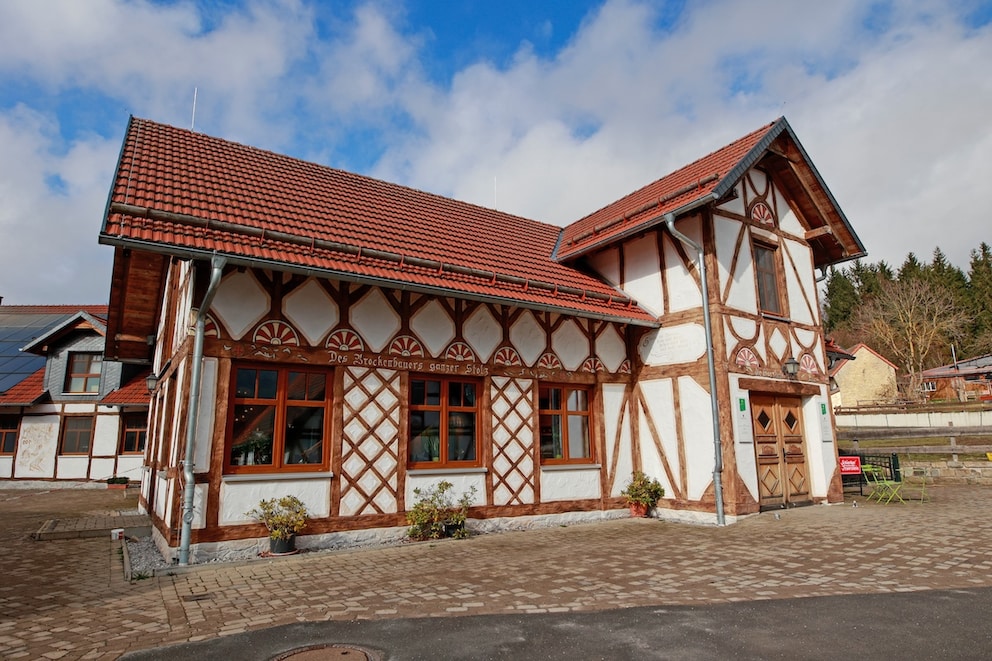
The last stop on our culinary journey through the Harz inns leads to the small town of Tanne. Here, you have the chance to taste a true rarity. Namely, an animal that was actually already extinct. We’re talking about a particularly beautiful cattle breed, the Harzer Rotes Höhenvieh. This was on the brink of extinction in the 1980s. But then a sperm sample from a bull was found in a lab in Gießen, allowing the first offspring to be bred. Today, about 1,000 mother cows of this type roam the hilly Harz pastures. So many that their meat can be tasted in the “Brockenbauer” restaurant with an attached farm shop.
Despite the very cozy furnishings in the lower area, it initially feels almost like a snack bar, but the kitchen is absolutely excellent. The establishment rightly bears the title “Steakhouse,” as the chefs know what they’re doing. My rump steak from the Harzer Rotes Höhenvieh came perfectly medium-rare, accompanied by a true Mount Everest of potato wedges. Shortly after opening, I was still alone, but the place quickly filled up with larger groups. In the farm shop, you can also shop afterward, of course, including products from the rare cow. The location is overall a bit more expensive, but when do you ever have a nearly extinct cattle on the menu?