

August 24, 2025, 1:30 pm | Read time: 5 minutes
The city of Vineta is mentioned in history books, but its existence has not been proven to this day. Several places dispute where it might have been located. TRAVELBOOK tells the legend of the sunken metropolis on the Baltic Sea coast.
The small community of Koserow on the coast of the island of Usedom is a place where one repeatedly encounters a name: Vineta. There is a Vineta Street, a Vineta Pharmacy, the Vineta Holiday Park is nearby, and off the coast is the Vineta Reef. The name suggests something grand—for many people, it’s nothing more than a fairy tale. Others firmly believe that Vineta actually existed.
When Vineta is mentioned, some also reverently refer to it as the “Atlantis of the North.” Just like the legendary city mentioned in ancient Greece, which, according to the story, sank into the sea, Vineta is said to be such a place. According to Deutschlandfunk, the chronicler Adam of Bremen wrote about the mythical city as early as 1075: “It is truly the largest of all cities that Europe harbors. The city is filled with goods from all the peoples of the North; nothing desirable or rare is missing.”
Punished for Godlessness
According to this, Vineta was one of the most significant European trading cities. Its residents’ wealth was almost mythical, with Slavs, Greeks, Barbarians, and Saxons living “peacefully, honorably in lifestyle and hospitality” together. However, just a century later, Vineta appears for the last time in chronicles that can still be read today. After that, the city disappears into the mists of history.
And perhaps that’s exactly what happened to it. It disappeared, or rather, it was swallowed by the sea’s waves. According to legend, Vineta’s wealthy residents indulged in arrogance and extravagance, which led to their fate—being punished, and the city was engulfed by water. Variants of this legend are found throughout human history, first appearing in ancient Babylon.

Surprising! How the Canary Islands Got Their Name

Neptune Memorial Reef–The Underwater Cemetery in Florida
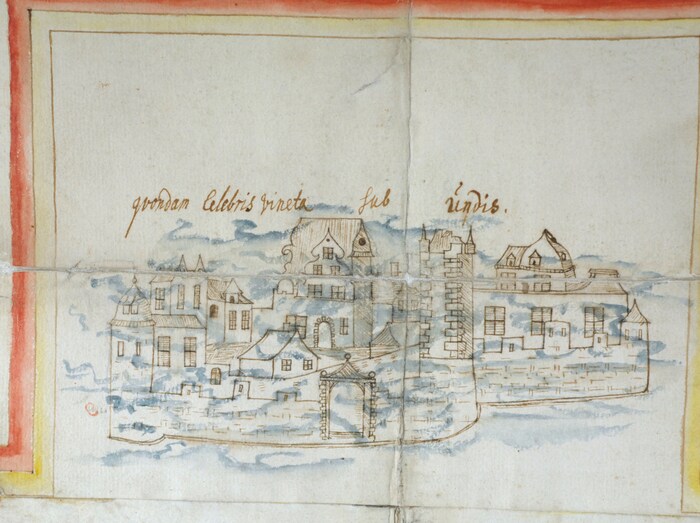
Vineta Is Marked on Old Maps
According to the State Archive of Mecklenburg-Vorpommern, Vineta met a different fate. The city was attacked and destroyed by a fleet of Danish warships. The search for the legendary place began as early as the 16th century. Excavations in the 1930s around today’s Wollin uncovered more than 50,000 artifacts. This suggested that a significant trading post might have been located there. Scientists and archaeologists still debate today where Vineta—if it ever existed—was precisely located.
Even in past centuries, Vineta, or rather the idea of it, exerted a powerful fascination on people. For example, the city is marked on Swedish maps created after the Thirty Years’ War. The area of today’s Mecklenburg-Vorpommern had fallen to the Swedes as part of the “Peace of Westphalia.” The maps can be viewed on the State Archive’s website.
Several Places Dispute Over Vineta
In Koserow, one of the possible locations where Vineta might have been, both secular and religious institutions are vying for evidence: According to “Deutschlandfunk,” a cross hangs in the local fieldstone church, which fishermen allegedly salvaged from the sea and which supposedly once hung in a church in Vineta. In fact, it has been proven to be Swedish work from the 18th century. Meanwhile, in nearby Zinnowitz, the Vineta Festival has been held since 1997. Here, a different chapter from the city’s history and its inhabitants is reenacted each year. However, other locations such as Damerow, Wollin, and Barth also claim that Vineta was once situated on their terrain. Barth has even carried the nickname “Vineta City” since 1999.
Anyone wanting to learn more about the Atlantis of the Baltic Sea will surely find some answers at all these places. The residents of Koserow are convinced that the stone formations on the seabed of the Vineta Reef are the former foundations of the Nordic Atlantis (which has also been historically disproven). For those who want to learn more about the city, the book “Vineta – Illusions” is recommended. The author Martina Krüger was the spokesperson for the Vineta Festival for more than 20 years. In response to a TRAVELBOOK inquiry, she said: “I was fascinated by where Vineta appears everywhere; the idea of the sunken city is mainly found in literature, including works by Heinrich Heine, Gerhard Hauptmann, and Christian Morgenstern. With the help of two scientists, I spent half a year evaluating historical sources and gathering everything there is about Vineta.”
Krüger believes the legend has persisted because “everyone can interpret something different into the city underwater.” However, a true core cannot be denied, as there were early places on the island of Usedom where many peoples lived together and traded: “These were real multicultural cities—just as the legend depicts.” When asked what she thinks of Vineta herself, she smiles and says: “It’s a beautiful dream.”