

March 12, 2026, 3:57 pm | Read time: 5 minutes
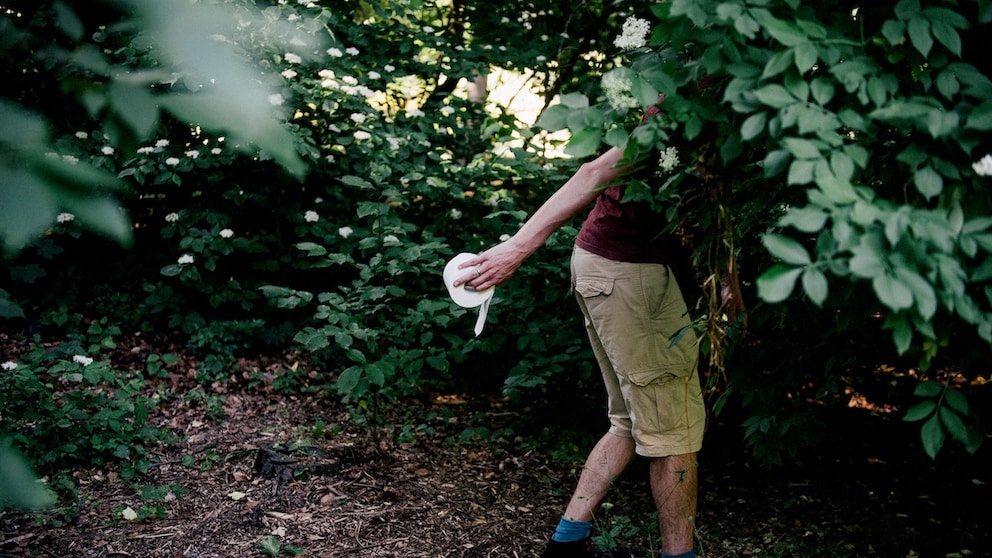
When you’re out in nature, the nearest toilet is often farther away than you’d like. So what do you do when nature calls? And is it even legal to do your “business” in the woods? TRAVELBOOK answers the most important questions.
Autumn marks the start of the main hiking season in Germany. But what if you suddenly feel the urge? And the nearest hut or rest stop is far away? At least you can often relieve your bladder behind the next tree or rock–although even that is technically illegal and punishable by law. Simply doing your business in the woods or other open nature can also be costly.
In Germany, the same rules apply for relieving oneself in the woods as for public urination in urban areas, explains the German Bar Association (DAV) upon request. Generally, it’s considered a misdemeanor, which in certain cases–namely, if it causes a “public nuisance” and you are accordingly convicted–can result in higher fines. However, as the DAV notes: “In the open nature, of course, where there’s no plaintiff, there’s no judge.”
Also interesting: If you smell Maggi while hiking, you should turn back immediately!
What if there’s no toilet in sight?
Sometimes there’s no choice, and you just have to go. Doing your business in the woods can be more challenging. But with a little knowledge and preparation, it can be done without harming nature.
If you’re planning longer hikes, you should consider the need to relieve yourself. Toilet paper is a must in your backpack. Tissues are not ideal because they are particularly tear-resistant and decompose slowly in nature. “Toilet paper can be buried along with the waste if necessary,” says Ulrich Berkmann from the German Alpine Club. Ideally, you should take the toilet paper in a small plastic bag. This also applies to the excrement.
Plastic bag for doing your business in the woods
It’s best to leave no trace of your business, Berkmann clarifies. “The ‘bag for the poop,’ as they say, should always be in your backpack,” says the Alpine Club expert. Disposable travel toilets are a higher-quality (but also more expensive) alternative to the bag.
There are also reusable, portable dry toilets available that you can unfold and sit on. From a comfort perspective, they’re welcome, as squatting for a long time can make your leg muscles burn. On the go, there should always be opportunities to empty and clean the collection tank. Otherwise, it will fill up, and the smell will increase.
Also interesting: Wollseifen – the abandoned village in the Eifel
A folding spade in the backpack
If you’re going to be in the wilderness for an extended period and away from any toilets, a small folding spade or a handy shovel should be in your backpack along with toilet paper. As mentioned, if you can’t take your waste with you, you should at least bury it. Not just to spare others the sight of an unappetizing pile.
The main concern is that feces can contain pathogens that can harm nature. Therefore, you should especially avoid proximity to bodies of water, as fungi, viruses, bacteria, and other pathogens can spread particularly far from there, warns Berkmann. “This also applies to animal feces, which is why it’s strongly advised against drinking water from mountain streams unfiltered if there’s a pasture above.”

Why Do Hotels Often Lack Toilet Brushes?

11 Things You Shouldn’t Touch on a Plane
Tips for the hole for relieving yourself
For the self-dug hole for relieving yourself: A minimum distance of 50 meters from streams, rivers, or lakes is safe. Also, choose spots above the waterline if possible–otherwise, the feces could end up in the water during floods, write Ulrike Katrin Peters and Karsten-Thilo Raab in the book “How to Shit in the Woods.” The handy book offers a wealth of tips on defecating and urinating outside the protected environment of a home toilet, along with historical and curious insights–a real reading recommendation for those who want to delve deeper into the topic.
Regarding the dug or scraped hole, the book states: It suffices if it’s about 15 to 20 centimeters deep, roughly the length of a (man’s) hand. In these soil layers, you’ll find the bacteria that decompose excrement the fastest. “The speed (…) can be accelerated by mixing the waste with parts of the excavated soil.” A stick lying around can be used for this, which should also be buried. The filled hole is covered with stones and branches.
Two more tips from the Alpine Club: Dig much deeper in the snow, or it will resurface with the next sunshine. And: If it’s not possible to dig a hole, cover the “remnants” with large stones.
Doing your business in the woods–how to clean your bottom?
There’s still a practical question that some might have faced unexpectedly during a Sunday walk: How do you clean your bottom if you don’t have toilet paper or tissues?
Leaves from trees and shrubs can serve as an alternative. It’s best if they’ve already fallen. You should only tear them off in an emergency for environmental reasons, Peters and Raab appeal in their book. Smooth bark that has fallen from the tree can also be used as a wiping aid, according to the authors.
If you don’t want to use natural materials, the authors suggest a “hand wash station.” For this, pour a little water from a bottle onto your hand and use it as a washcloth.
In a squat position, carefully wipe your bottom with it. “The buttocks should hang low enough that no water runs down the leg,” the authors describe. Then rinse your hand thoroughly with more water from the bottle and wash it thoroughly with soap at the next opportunity. “Until then, the used hand should not touch anything else.” Or you might try to make it to the next toilet somehow.
With material from dpa