

August 6, 2025, 11:01 am | Read time: 7 minutes
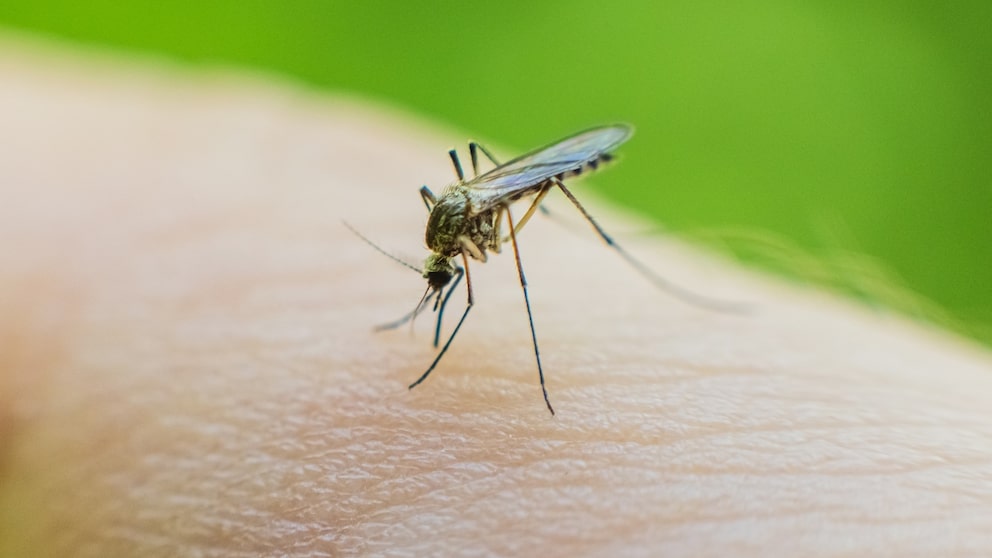
Whether it’s malaria, yellow fever, dengue, chikungunya, or West Nile fever–all these life-threatening diseases are transmitted by mosquitoes. Therefore, optimal mosquito protection is essential, especially when traveling. TRAVELBOOK offers tips on how to best protect yourself from mosquitoes while traveling.
Sometimes you don’t have to travel far to get a life-threatening mosquito bite. Not long ago, the dengue virus, transmitted by the Aedes mosquito, was almost exclusively found in tropical and subtropical countries and regions. Now, the virus is also spreading in Europe. The West Nile virus is also present in nearby vacation regions.
The West Nile virus is becoming more established in many parts of Italy. More and more people are getting infected, with over 80 confirmed cases so far. According to the Deutsches Ärzteblatt, there have also been eleven deaths related to the virus. Italian health authorities report an increasing number of risk areas in the country, including popular vacation regions such as Lazio with the capital Rome, parts of Lombardy with Milan, the area around Naples, parts of Apulia, and parts of Veneto with Venice.
Overview
West Nile Virus Spreads More in Southern Europe During Summer Months
The West Nile virus is transmitted by the daytime-active Culex mosquito, commonly known as the house mosquito, and spreads more in parts of Southeastern Europe during the summer months. In 2018, more than 180 people died from the virus in countries such as Greece, Italy, Romania, and Serbia. West Nile fever is also found in many other parts of the world, including Africa, Southeast Asia, and Central America.
For most people, an infection with the West Nile virus is harmless. However, a smaller portion may experience flu-like symptoms such as fever; in rare cases, an infection can lead to life-threatening illnesses like encephalitis. TRAVELBOOK reported.
Also of interest: How Dangerous is West Nile Fever

Which Vaccinations and Preventive Measures Are Important Before Vacation

Malaria Cases in Namibia Are Increasing–What Travelers Need to Know
Diseases from Mosquito Bites in the Tropics
Travelers to distant parts of the world, such as the tropics, risk contracting malaria, dengue fever, chikungunya fever, or a Zika virus infection if they lack adequate mosquito protection. There is a high risk of malaria, especially in Central Africa, Southeast Asia, and northern South America. Malaria is transmitted by the dusk and night-active Anopheles mosquito. If untreated, the particularly dangerous malaria tropica is often fatal for non-immune Europeans, as the German Foreign Office notes in its travel and safety advice for Malaysia. Further information on malaria is provided in the office’s recommendations for prevention and emergency self-treatment of malaria.
Dengue, like the chikungunya and Zika viruses, is transmitted by the daytime-active Aedes mosquito. Dengue is widespread in Southeast Asia, parts of Asia, South and Central America, Africa, and Australia. In recent years, Europe has also seen an increase in dengue fever cases. A dengue infection often manifests as a febrile illness with severe headaches and joint pain and can be fatal in some cases.
Since 2023, a vaccine against dengue has been approved in the German market. The Standing Committee on Vaccination currently recommends the vaccine only for individuals who have previously been infected and are traveling to a dengue area.
So, how can you most effectively protect yourself from mosquitoes while traveling? The health service of the German Foreign Office recommends the following measures to prevent and avoid mosquito bites.
Tips for Protection Against Mosquito Bites
Note: The editorial team does not guarantee the accuracy and completeness of the following information. For all health-related questions regarding the use of insect repellents and insecticides, always consult a doctor.
1. Insect Repellents for Skin Application
The most effective insect repellents for skin application are based on diethyltoluamide (DEET) and icaridin, according to the German Foreign Office. These are the “most scientifically tested substances that provide adequate protection against mosquitoes and other carriers (ticks, mites, etc.).” According to the German Foreign Office, particularly effective insect repellents include Anti Brumm® Forte, Autan® plus, and Nobite®.

Insect repellents with DEET concentrations below 20 percent are not recommended by the German Foreign Office, and concentrations above 50 percent do not offer additional protection. The lower the concentration, the more frequently the repellent must be applied. Prolonged and high-concentration use may cause skin irritation, changes in liver values, and nervous system disorders, the office warns.
The newer repellent icaridin (also known as picaridin), found in products such as Autan Active®, Nobite Skin Sensitive®, Bayrepel®, and Doctan®, has a repellent effect comparable to DEET and is more compatible with plastics, such as those in wristwatches or costume jewelry.
2. Insecticides
Permethrin and other synthetic pyrethroids have a rapid “knock-down” effect, meaning mosquitoes are paralyzed upon contact. According to the German Foreign Office, pyrethroids are among the insecticides with the lowest toxicity for humans and are easily biodegradable in nature. Pyrethroids are used in room sprays and mosquito coils, as well as for impregnating clothing and mosquito nets.
The German Foreign Office recommends using mosquito sprays in hotel rooms, among other places. Spraying should ideally be done shortly before dusk, including under the bed and behind cabinets and curtains. After spraying, the room should be vacated for a while.
3. Biocide Vaporizers / Mosquito Coils
Electric biocide vaporizers release an insecticide that gradually disperses in the room. They should only be used in cases of severe insect infestation, advises the German Foreign Office. The effect takes about an hour to manifest. Sensitive individuals may experience irritation of the eyes, skin, and respiratory tract. The device should only be used when no one is in the room. According to the German Foreign Office, Paral Mückenmobil® (transfluthrin) and Nexalotte® (allethrin, piperonyl butoxide) have been well tested.
Vaporizers with essential oils are less effective. Incense products (e.g., pressed, spiral-burning insecticides known as mosquito coils) have the same risks as the aforementioned vaporizers but are less effective. Mosquito coils should only be used outdoors.
4. Mosquito Nets
Mosquito nets provide additional protection against mosquitoes while sleeping, provided they have no holes and are closed on all sides. The tighter the mesh of the mosquito net, the more effective it is. It is sometimes advisable to have your own intact net in your luggage–or alternatively, a mosquito net tent that can be set up on the hotel bed with a few simple steps. This way, you can protect yourself from mosquitoes while traveling.
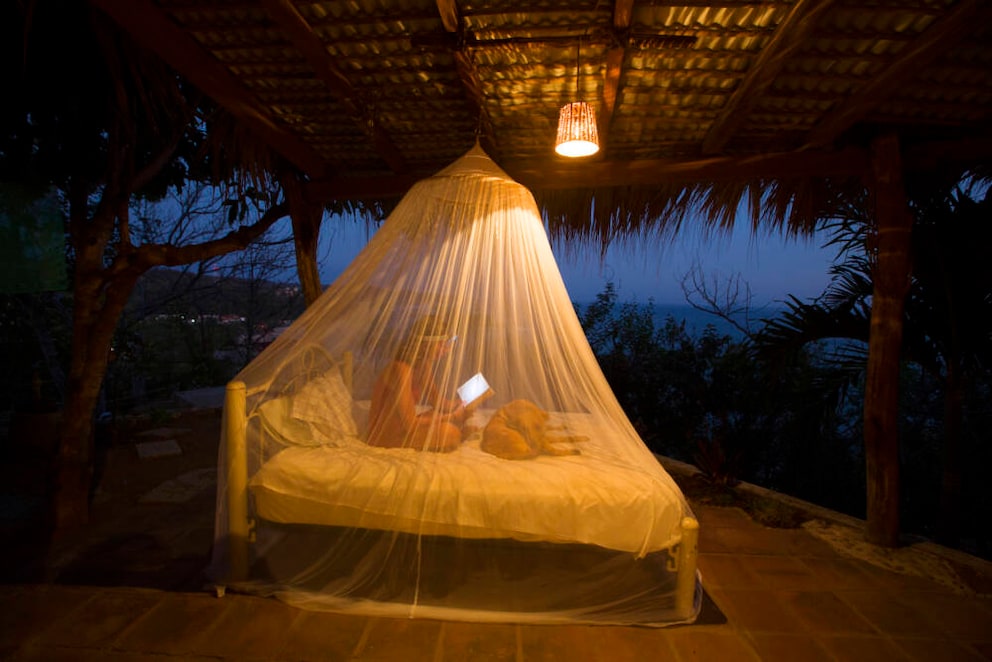
According to the German Foreign Office, the effectiveness of an insect net is significantly increased if it is impregnated with an insecticidal contact agent. The insecticide prevents mosquitoes from biting through the mesh into touching body parts or finding gaps or holes in the mosquito net. Once a mosquito comes into contact with the net, it is killed by the substance.
Those who prefer not to handle chemicals themselves can purchase pre-impregnated bed nets from outdoor suppliers to protect themselves from mosquitoes while traveling.
Rooms with air conditioning are less dangerous, according to the German Foreign Office, as mosquitoes prefer higher temperatures, but they do not replace the mosquito net.
5. Appropriate Clothing
To protect against malaria mosquitoes, light-colored, long-sleeved clothing and long pants should be worn at the latest after sunset. In areas with daytime-transmitted infectious diseases (dengue, chikungunya, Zika), appropriate clothing should also be worn during the day, advises the German Foreign Office. Sturdy, light-colored socks that ideally cover the ankles are also advisable.
For even more effective protection, clothing can also be impregnated with insect repellents. The previously mentioned pyrethroids (e.g., Nobite Clothing®, Peripel 55® Ko-Tabs®) kill insects. As the impregnation process is very odorous, the clothing should be aired out afterward, advises the German Foreign Office. Pre-impregnated clothing is available from various outdoor suppliers.