

August 21, 2025, 8:45 am | Read time: 3 minutes
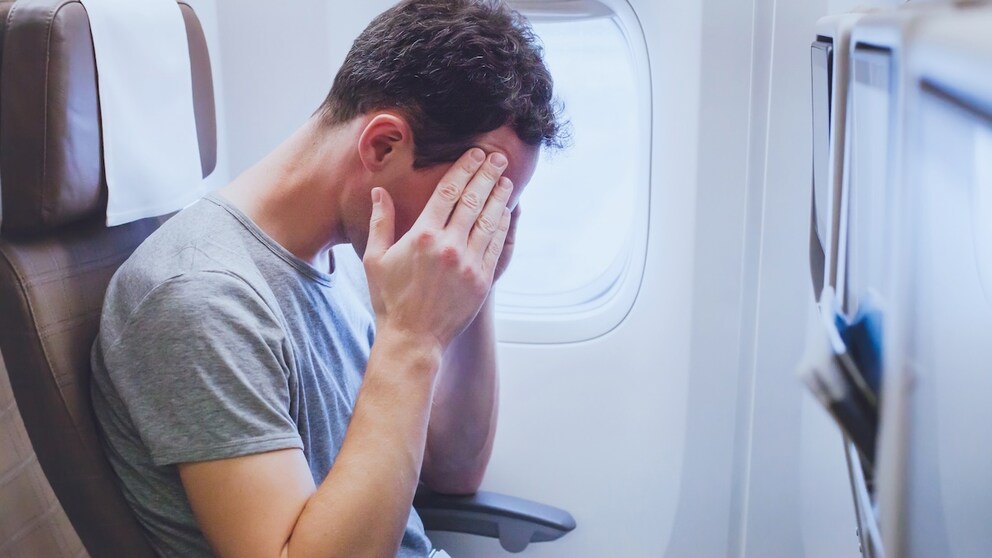
The flight is booked, but you have a runny nose–or your seatmate is sneezing nonstop. In such cases, many travelers ask the same question: How can I protect myself from infection without endangering others? And do I need to inform the cabin crew about my illness? General practitioner Dr. Christoph Kollmeier, the most well-known German doctor in the UK, knows the key rules for passengers who are sick on a plane–with some surprising tips.
Overview
What to Do if Your Seatmate Is Sick?
If the passenger next to you is coughing, sneezing, or visibly has a cold, caution is advised, as Dr. Kollmeier explains in a conversation with BILD. “If you notice that your seatmate is sick (e.g., coughing, sneezing, or obviously has a cold), you can politely ask the cabin crew for a seat change (though this may not be possible on full flights).”
According to the expert, the chosen seat itself can also influence the risk of infection. “Studies show that the risk of infection is lowest at the window seat, as passengers there have less contact with others and need to get up less frequently.”
A simple change of seat row can also make a big difference. Sitting directly next to, in front of, or behind a sick person increases the risk of infection by up to 80 percent, according to Kollmeier. Even a one-row distance significantly reduces the risk–to less than three percent. “The greatest danger comes from sick crew members, as they move around a lot,” the doctor says.
Dr. Kollmeier also recommends technical and simple measures to reduce the risk of infection: “Set the air vent above your seat to medium strength to blow away any viruses more quickly.” Additionally, it can help to turn away from the sick seatmate as much as possible.

Mallorca Tourists Complain About ‘Magaluf Flu’—What’s Behind It

Increasing Norovirus Cases on Cruise Ships–Here’s How to Protect Yourself!
I Am Sick on the Plane–Do I Have to Tell the Crew?
The answer is nuanced. “Yes and no. Not for mild symptoms. In general, the captain can exclude people from the flight if they pose a danger to others. Notification is mandatory if you need medical assistance during the flight.”
Air travelers with more severe symptoms–such as fever, acute respiratory infections, or the flu–should postpone their flight if possible.
These Measures Help Sick Passengers
Sick passengers should wear a medical mask throughout the flight. This not only protects others from potential infection but also shields their own airways from the dry cabin air.”
Equally important is adequate hydration: “Drink enough water to keep the mucous membranes moist. The dry air in the plane can otherwise worsen the symptoms,” explains Dr. Kollmeier.
It’s best to avoid coffee, black tea, and alcohol–they dehydrate the body further. For pressure equalization during takeoff and landing, the doctor recommends: “Use decongestant nasal sprays or drops to ease pressure equalization and prevent ear pain.” Tried-and-true methods like chewing gum, yawning, or swallowing can also help, especially during takeoff and landing.
About the Person
Dr. Christoph Kollmeier is a general practitioner and practices at “Langport Surgery” in southern England. He became known as the first German to be vaccinated against the coronavirus.