


November 25, 2025, 7:06 pm | Read time: 6 minutes
Corsica, the largest Mediterranean island of France, is a particularly versatile vacation destination. In addition to high mountains, beautiful nature parks, and dreamy beaches, Corsica also offers some interesting cities to explore. TRAVELBOOK highlights four cities you shouldn’t miss.
Overview
Bastia – Where the Heart of Corsica Beats
For many tourists arriving in Corsica by ferry, Bastia is merely a point of entry. However, this city, located at the foot of a mountain range in northeastern Corsica with about 50,000 residents, is rich in attractions. Traces of settlement dating back to 1500 B.C. can be found. The Romans also settled here. Particularly striking are the architectural testimonies of the Genoese, who expanded the fortress city.
Sights in Bastia
For locals and tourists alike, the magnificent palm-lined Place Saint-Nicolas with its promenade, monuments, restaurants, and cafes is the undisputed center of social life in Bastia. On Sundays, a flea market is held here, and carousels are set up for children. And if a soccer ball happens to fly toward the massive statue of France’s Emperor Napoleon Bonaparte in a Caesar pose that dominates the square, no one is bothered.
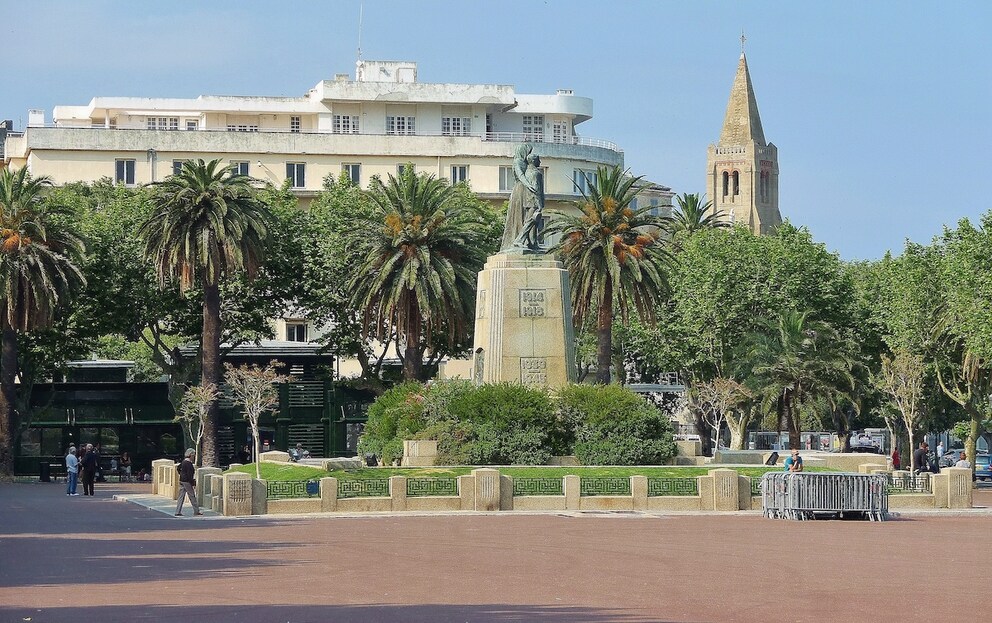
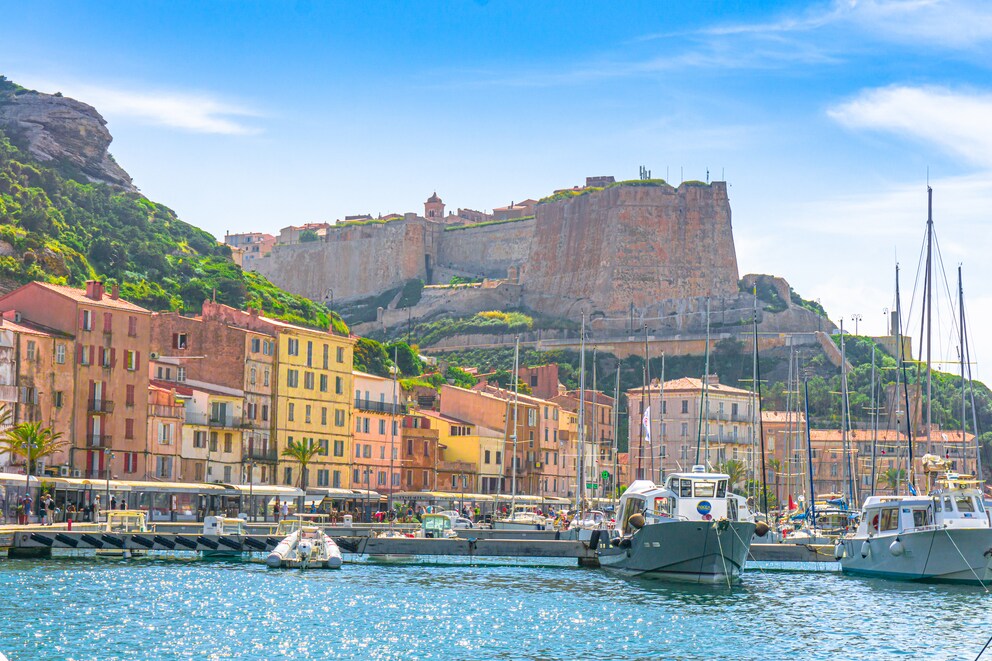
South of the square, which serves as Bastia’s representative entrance, paths and streets lead to the Old Port with its fishing boats, yachts, medieval quays, and charming lighthouses. On the promontory above, you can stroll through Terra-Nova, the old town with its narrow streets and the baroque church of Saint-Jean Baptiste, built in the 17th century. The Place du Marché, frequented daily (except Mondays) by vendors of vegetables, fish, and cheese, is also located here.
Above the Old Port, the citadel built by the Genoese in the Middle Ages can be seen. It is as much an attractive sight as is the Palais des Gouverneurs, which houses the museum of city history.
Boulevard Paoli, named after the Corsican resistance fighter Pascal Paoli, is the main shopping street. There and throughout the surrounding center with side streets and small pedestrian zones, you’ll find chic boutiques and shops like those on the Côte d’Azur, as well as antiquarian bookstores and specialty stores for gourmets. Here, Bastia is hardly different from other coastal cities in southern France like Cannes, Toulon, or Marseille.
Bonifacio – the Spectacular Port City
Bonifacio actually has just under 3,000 residents. But in the summer, visitors to the most spectacular port city at the southern tip of Corsica multiply this number many times over. Founded in 828 on the initiative of the Tuscan Count Bonifacio, the city could hardly be more attractive. The Genoese quickly noticed this. They conquered the Corsican port as early as 1187 and shaped Bonifacio with their distinctive architectural style until 1768, which today belongs to the Corse-du-Sud department in France.
Sights in Bonifacio
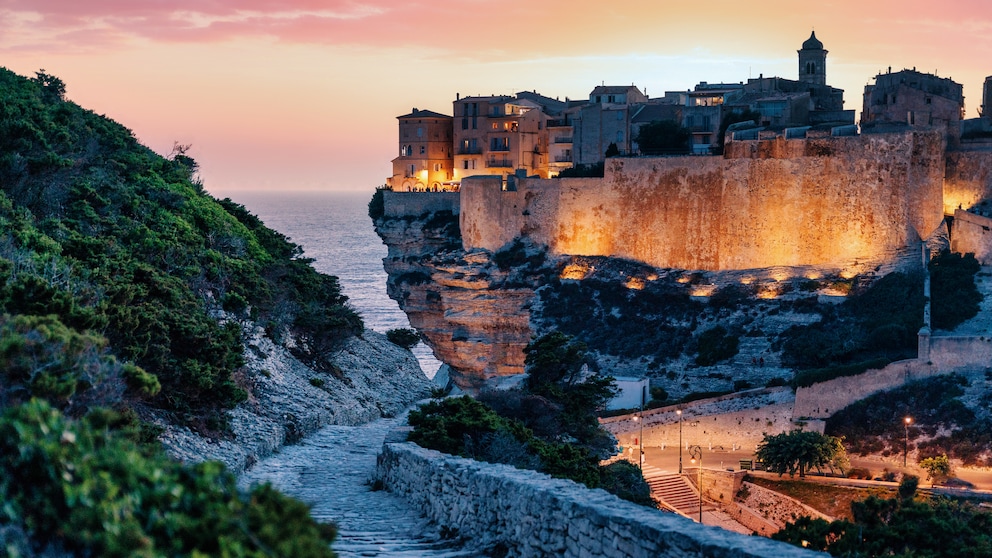
The picturesque houses of Bonifacio’s nearly 1,200-year-old old town were built atop the cliffs. From the natural harbor, you can reach it on foot via a roughly 200-meter-long cobblestone path. Visitors are rewarded with a magnificent view of the cliffs, the old town on the limestone plateau, and the neighboring island of Sardinia.
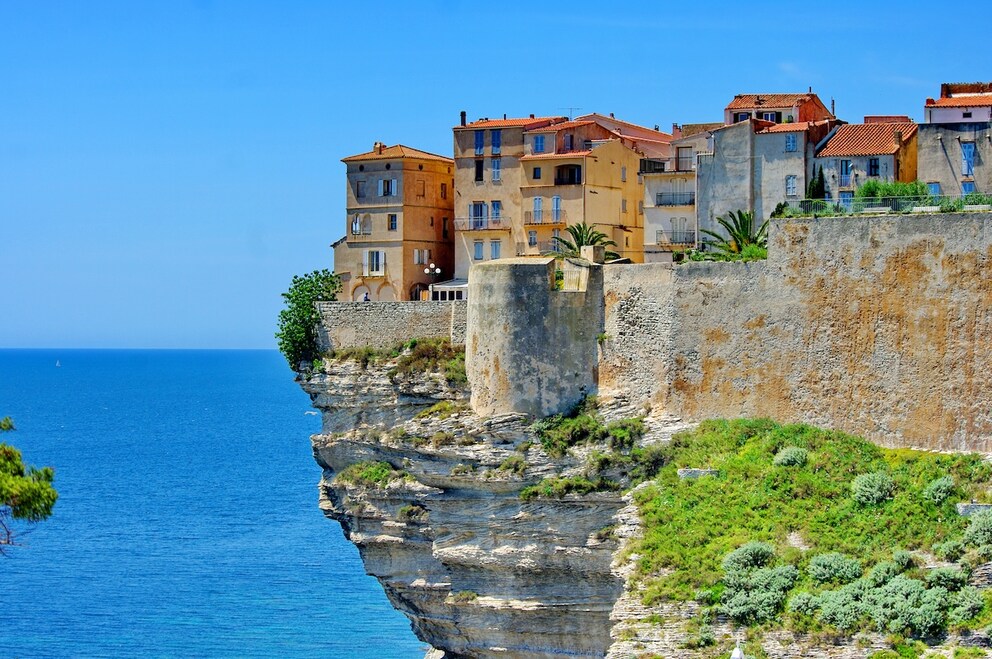
Continuing over a drawbridge originally part of a citadel and through a tunnel, you enter the old town perched above the harbor. There, you can stroll through the narrow streets with townhouses up to five stories high. These are more splendid and beautiful than the relatively sparse fortresses of the mountain town of Corte, about 100 kilometers away.
Numerous excursion captains await customers on Bonifacio’s harbor promenade. They take their small passenger ships to the many grottoes washed into the chalk cliffs. Only visible from the boat is, for example, the Stairway of the King of Aragon. In the 15th century, during a siege of the city, 187 steps were carved into the rock as an escape route.
As Beautiful as Saint-Tropez–Just Cheaper and Less Crowded
This Unique City Is Known as the “Venice of the Alps”
Corte – Former Capital in the Mountains
The most significant city in Corsica’s mountain region is Corte. The old town, perched on a plateau about 450 meters high with its narrow streets, is one of the top attractions for tourists on the archipelago.
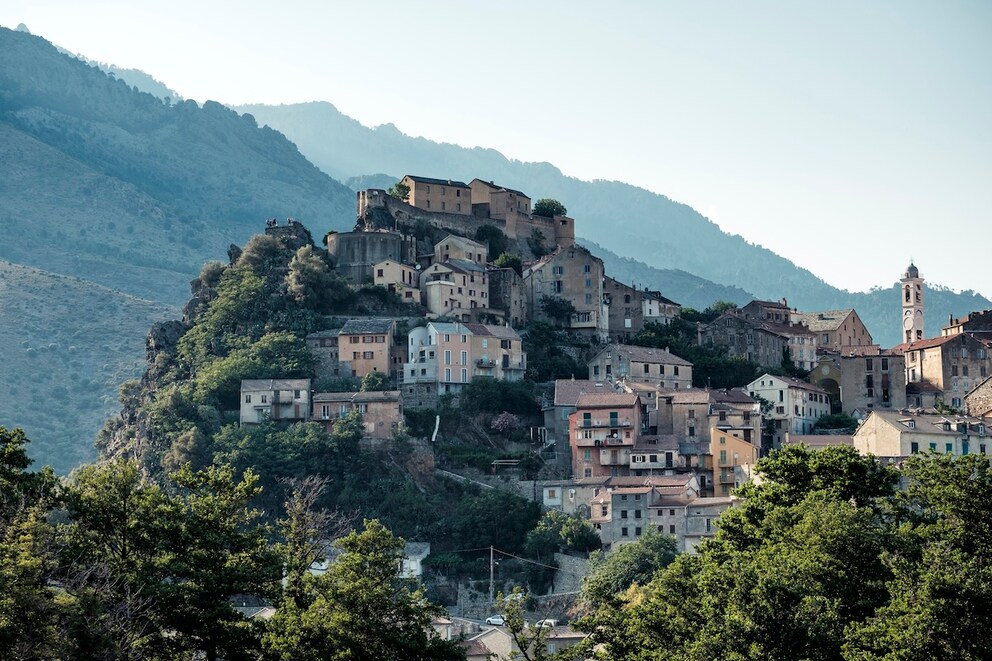
Long before Corte was taken by Genoa in the 13th century, the North African Moors were the first to build houses there. They constructed an impressive military fortress on the summit in the upper town. It wasn’t until the 1980s that tourists could visit the citadel. Until 1983, the French Foreign Legion was stationed here.
For centuries, the Genoese and French fought for dominance over the Mediterranean island off the coast of Italy. But the Corsicans also constantly fought for the independence of their homeland. With a democratic constitution, Corte was the capital for 14 years under Pascal Paoli, a friend of Jean-Jacques Rousseau.
Sights in Corte
The history of Corsica is omnipresent in the small town. In the Corsican Ethnographic Museum in the citadel and Corsica’s only university in the old town, visitors can learn in detail about Corte’s significance.
Cours Paoli is Corte’s largest shopping street with shops, restaurants, and hotels. Other central squares with charming street cafes, restaurants, and guesthouses are Place du Duc de Paduque, Place Paoli, and the high-lying Place Gaffori.
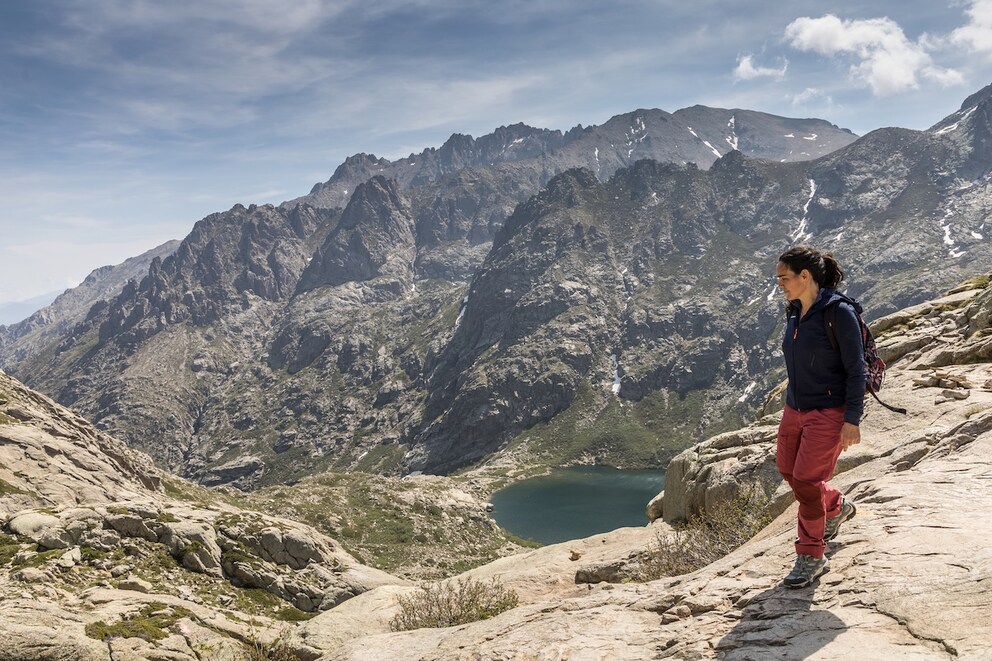
From Corte, beautiful hikes through the valley of the Restonica River to Lac de Melo or Lac de Capitello are also possible. In the summer, you can enjoy a refreshing swim in the cool river at Mediterranean temperatures. At over 1,000 meters high, another hiking tour leads to Lac del’Oriente. Several routes also lead through the valley of the second river, leading to Corte, the Tavignano.
Ajaccio – the Current Capital
On the picturesque southwest coast of Corsica is Ajaccio, the capital of the French Mediterranean island with about 75,000 residents. This makes the city larger than Bastia, the island’s most economically important city. Due to its stunningly beautiful beaches and attractive hiking routes, Ajaccio and its surroundings in southwestern Corsica are among the most popular destinations for vacationers in Corsica. Like much of Corsica, the city was built by the Genoese in the 15th century.
Sights in Ajaccio
The city itself offers a variety of attractions. These include the medieval citadel, the old town hall, the birthplace of France’s Emperor Napoleon Bonaparte (1769–1821), now expanded into a museum, and the Cathedral of Notre-Dame-de l’Assomption.
The old town of Ajaccio, with the baroque character of many buildings, is also worth seeing. Central squares for strolling with many street cafes and restaurants are Place Foch, Place de Gaulle, and the harbor promenade.
Text contribution: Jasch Zacharias