


April 24, 2026, 11:06 am | Read time: 6 minutes
TRAVELBOOK editor Angelika Pickardt had the opportunity to visit the Azores for the first time during this year’s annual conference of the German Travel Association (DRV), specifically the main island of São Miguel. Her first impressions and what surprised her the most.
When I told friends and acquaintances that I would be flying to the Azores for a four-day business trip, the first reaction was usually a “Wow!” or “Great!” After a brief pause, the common question followed: “Hmm, but where exactly is that again? Isn’t that where the weather high comes from?” Correct, and here I come to points 1 and 2 on my list of things that surprised me during my first visit to the Azores.
The Azores Aren’t So Far Away
On the map, the Azores are tiny dots in the middle of the Atlantic, and it almost seems like it would take days to get there. I was surprised to find that the archipelago, which belongs to Portugal, is not that far from the Portuguese mainland. The flight from Lisbon takes about two hours, and the time difference is manageable at two hours.

A Surprise During Landing
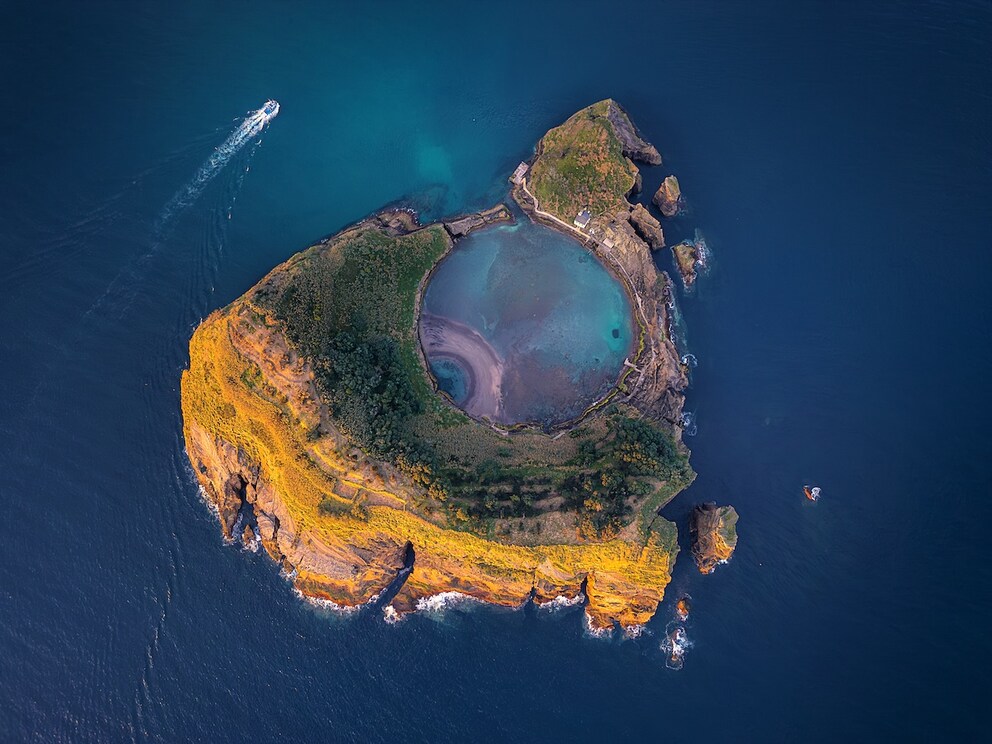
By chance, I was seated on the right side of the plane to see the coast of São Miguel from above during landing. This alone was impressive due to the spectacular volcanic landscape with crater lakes and rugged green hills. But when we flew directly over another natural wonder off the coast, which I had written about for TRAVELBOOK years ago, I almost cheered with joy. I’m talking about the islet Ilhéu de Vila Franca do Campo. It’s essentially a mini volcanic vent rising from the sea, with a nearly perfect round lake in its crater where you can swim in the summer. I never thought I would see this breathtaking spot “for real,” and from above, no less.
The Azores Don’t Always Have Good Weather
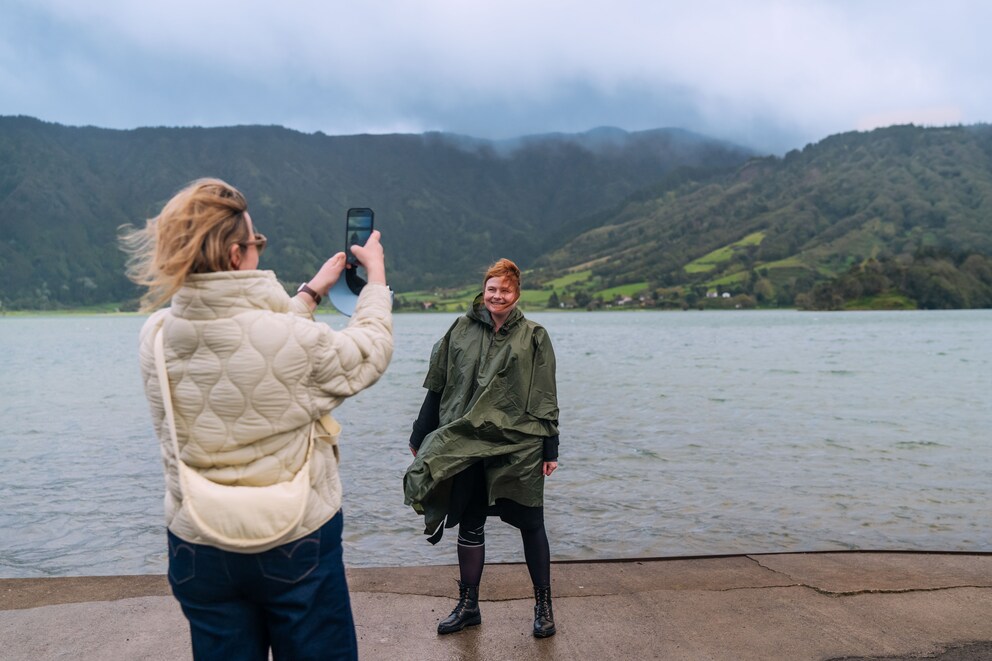
Everyone has probably heard of the Azores High. While it often brings stable weather with warmth and sunshine to the European mainland in summer, the weather on the Azores islands themselves is more variable. During my visit in mid-April, the weather included sunshine, drizzle, heavy rain showers, and strong winds all in one day. Nevertheless, the temperatures remained pleasantly mild, around 63 degrees Fahrenheit during the day.
Despite the mild climate, I was surprised that—except for a few pink azaleas along the roadside—hardly any plants were blooming during my visit. The main blooming season is actually from late June to September, peaking in July and August, as our guide reported. Then, especially hydrangeas transform the islands into a sea of blue-violet blossoms—perfect for landscape photos.
Living in a Giant Volcanic Crater
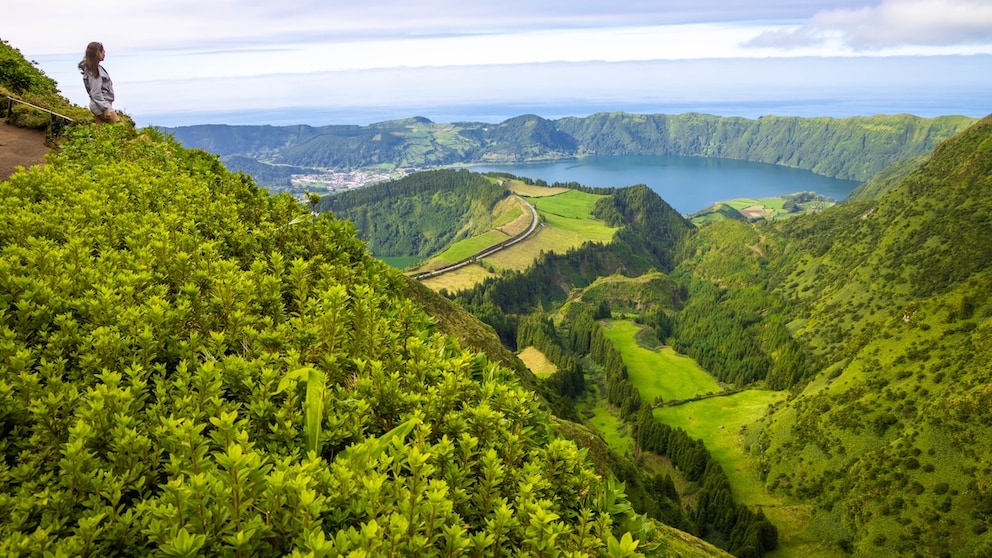
The mini volcanic crater with a lake inside, as described above, can also be found on the Azores in gigantic dimensions. I found the giant volcano Sete Cidades, which houses the twin lagoons Lagoa Verde and Lagoa Azul (see large photo above), particularly impressive. These are only separated by a bridge and are considered one of Portugal’s seven natural wonders. From the viewpoint Mirador do Rei, you can see one lagoon shimmering green and the other blue. What’s special is that inside the giant volcano is the town of Sete Cidades. The approximately 700 residents live virtually inside this gigantic crater. Standing by the water, surrounded by the steep crater walls, is simply indescribable.
The Only Place in Europe Where Pineapples Grow
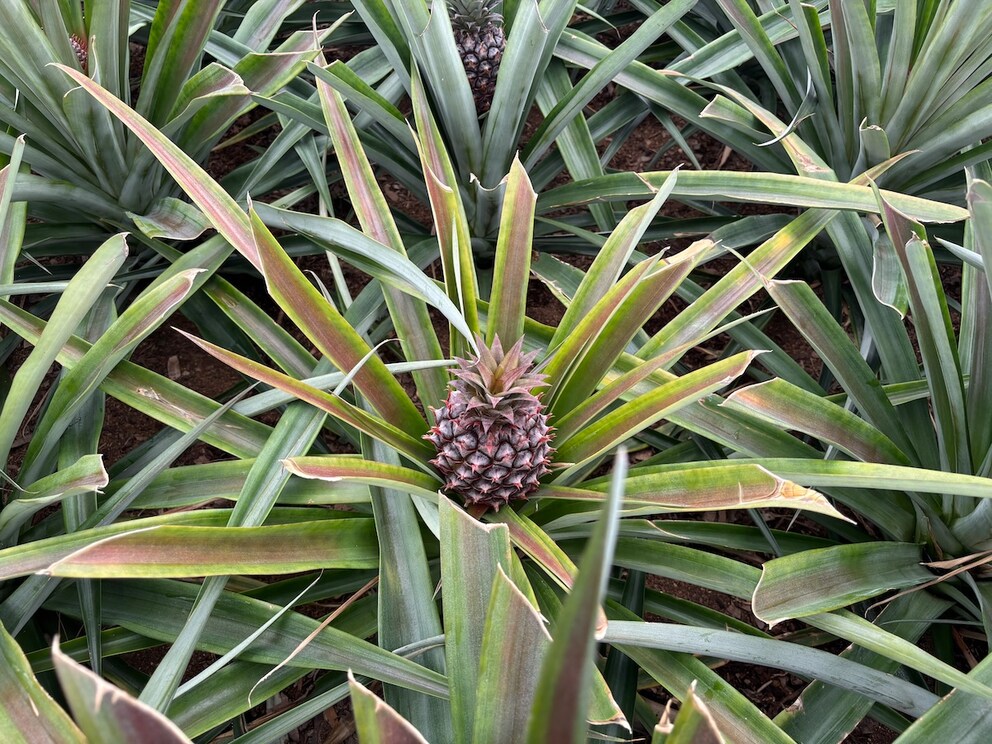
Due to their volcanic origin and location far from the mainland, the Azores are often referred to as the European Hawaii. But there’s another association that few know: The Azores are today the only significant place in Europe where pineapples are grown. This happens on special plantations in greenhouses, where the plants are cultivated in a multi-stage, elaborate process.
The Azores pineapple is certified with a protected designation of origin (DOP/g.U.) and is smaller, sweeter, and more aromatic than imported varieties. Various products are also made from it, such as liqueur, wine, soap, and more.

The Volcano in the Sea Where You Can Swim

7 Stunning Atlantic Islands Few People Know About
Cows Everywhere You Look
I was also surprised by the number of cows grazing everywhere on the lush green meadows. On the main island of São Miguel, there are probably about as many cattle as people, if not more. What’s special: Due to the mild climate, they are outside all year round, and you can see it in them.
Traditional Food Is Cooked Underground
Speaking of cows: Their meat is an essential part of the traditional dish, Cozido das Furnas. This is still cooked today using volcanic geothermal heat. The ingredients are placed in a cast-iron pot, which is then buried in geothermal holes where it cooks for about six hours. You can see and taste it in the Furnas volcanic system, located on the east side of the island. You can tell the volcano is active as soon as you enter the spa town of the same name. The town, nestled in the crater, is especially known for its natural healing springs—and they not only bubble up boiling hot at times, but there’s also a noticeable sulfur smell throughout the area.
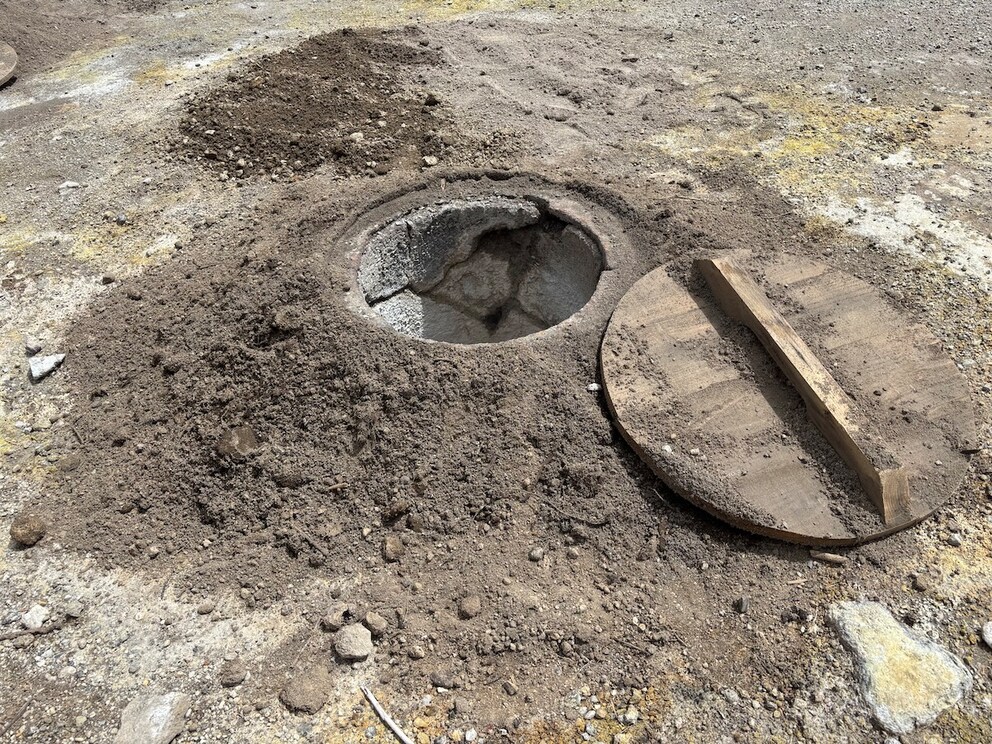
I personally found the finished stew, Cozido das Furnas, a bit of an acquired taste. In addition to beef, various other meats, sausages, and vegetables are added, and everything has—understandably—a very smoky note. Other travel participants found the stew simply delicious. So you should definitely try it yourself if you visit this spectacular group of islands.
I can definitely recommend a visit to the Azores and will certainly return to explore the other islands. And to swim once in my life in the natural pool of my favorite mini volcano in the middle of the sea.
The trip to the Azores took place in April 2026 on the occasion of the annual conference of the German Travel Association (DRV) and in cooperation with VisitAzores and VisitPortugal. Our standards of transparency and journalistic independence can be found at www.axelspringer.de/unabhaengigkeit