

September 24, 2025, 5:28 am | Read time: 7 minutes
Portugal enthusiasts will find that the Alentejo region offers an authentic Portuguese experience, beautiful beaches, impressive cliffs, and great camping spots. This is why the region was nominated as the best for camping in this year’s TRAVELBOOK Award. TRAVELBOOK author Anna Wengel (Chiodo) provides tips for a vacation in Alentejo.
Is the Algarve, despite its beauty, starting to feel a bit too crowded for you? Understandable. If you still want to travel to Portugal, south of Lisbon, consider giving Alentejo a chance. The region borders the Algarve to the north and has similar beaches and cliffs, but is less touristy. It’s also excellent for camping.
Overview
Camping in Portugal’s Alentejo Region
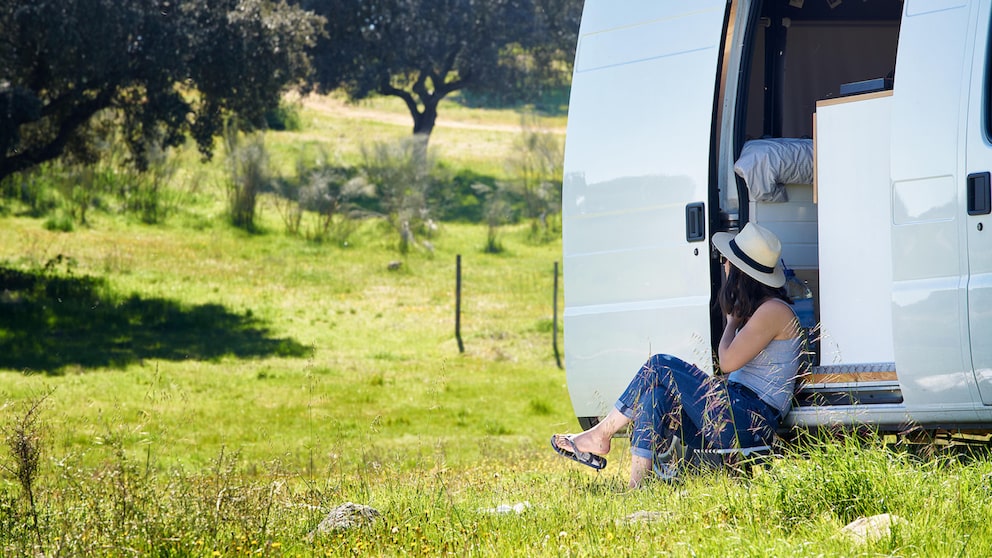
Since the COVID-19 pandemic and the growing popularity of the van life trend, more and more campers are flocking to Portugal, including Alentejo. While wild camping is prohibited in many places and increasingly frowned upon by locals due to the misbehavior of some campers, there are numerous official camping and parking spots that allow for a nature-friendly overnight stay under the stars.
In the tranquility of Alentejo, you can camp among trees on the forest floor, on vast, increasingly natural areas, or in paved facilities with pools and more. Besides traditional campsites, there are also spots for glamping or even nudist camping. Some private homes also offer parking spaces for campers. Camping enthusiasts of all kinds will find what they’re looking for in Portugal’s Alentejo.
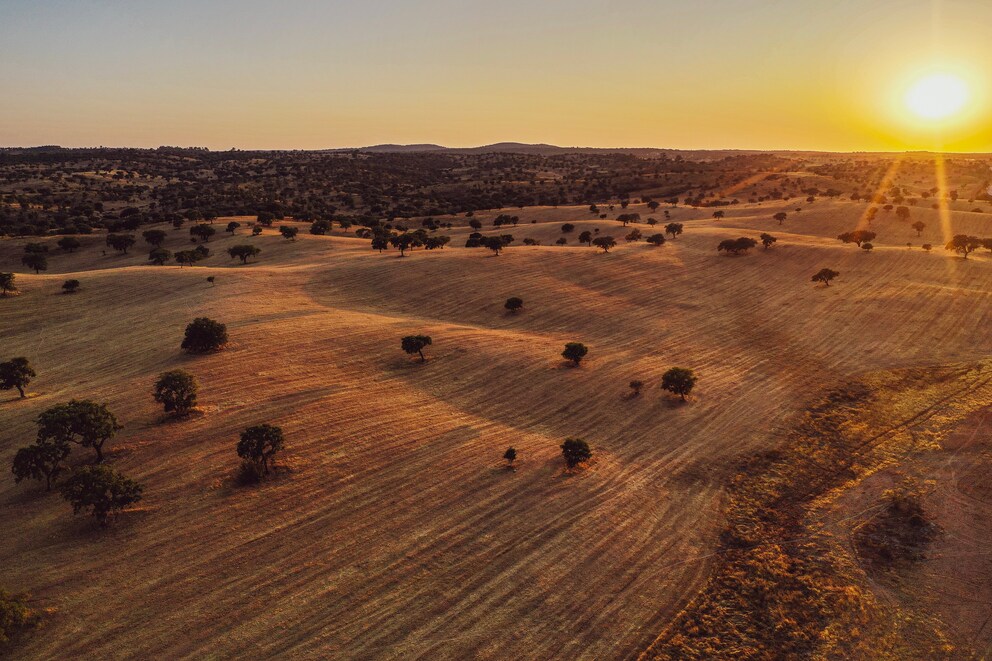
Most of Alentejo’s campsites are located near the Atlantic coast, with fewer in the hilly inland areas. This allows you to explore the charming fishing villages along the stunning coast without long drives and easily combine camping with a surfing vacation.
Also interesting: Camping in the Car – How to Make the Road Trip a Success
8 Things to Do in Portugal’s Alentejo Region
Besides sleeping in nature, there are many other things to experience in Portugal’s Alentejo. TRAVELBOOK author Anna Wengel (Chiodo) shares eight tips for things not to miss during a camping vacation in Alentejo.
All tips and inspiration from this article are also available in the following (German) podcast episode of In 5 Minuten um die Welt – narrated by TRAVELBOOK author Anna Wengel (Chiodo):
Odemira
For me, Odemira is a highlight in Alentejo. The small town is located slightly inland from the coast and is very charming. Coming from the south, you drive through many curves and then over a pretty bridge. Just beyond it is the café Chocolates de Beatriz, with lots of delicious handmade chocolates. That alone makes a visit to Odemira worthwhile.
Festival Músicas do Mundo in Sines
If you’re traveling to Alentejo in the summer, try to time your vacation to coincide with the World Music Festival in Sines (Festival Músicas do Mundo or FMM for short). It takes place in July and attracts many artists, with events happening all over the city. Sines gets quite lively, but it’s well worth it.
Choose a Dream Beach
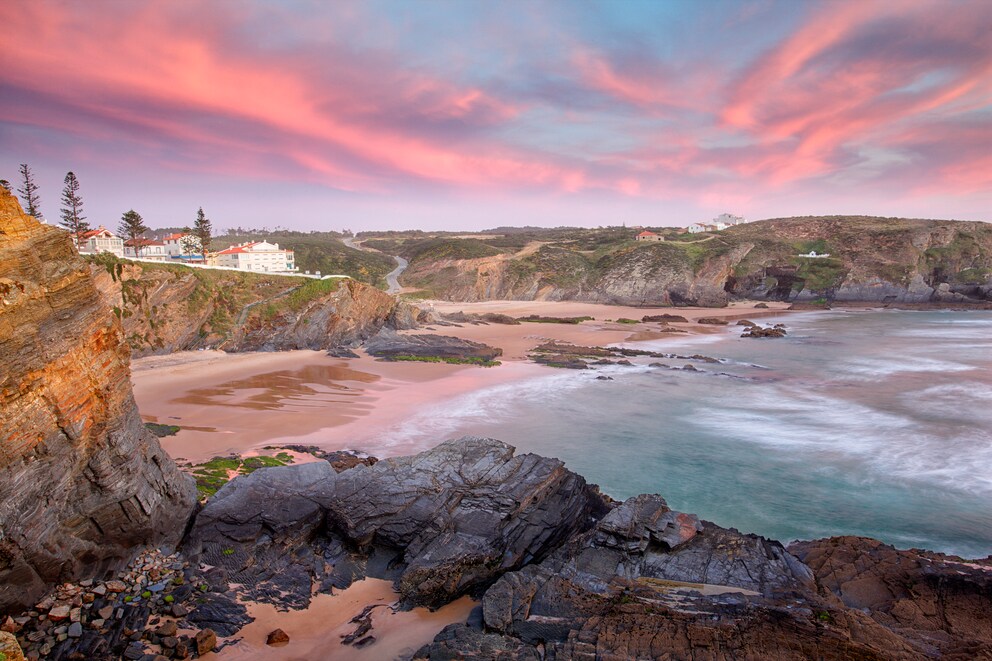
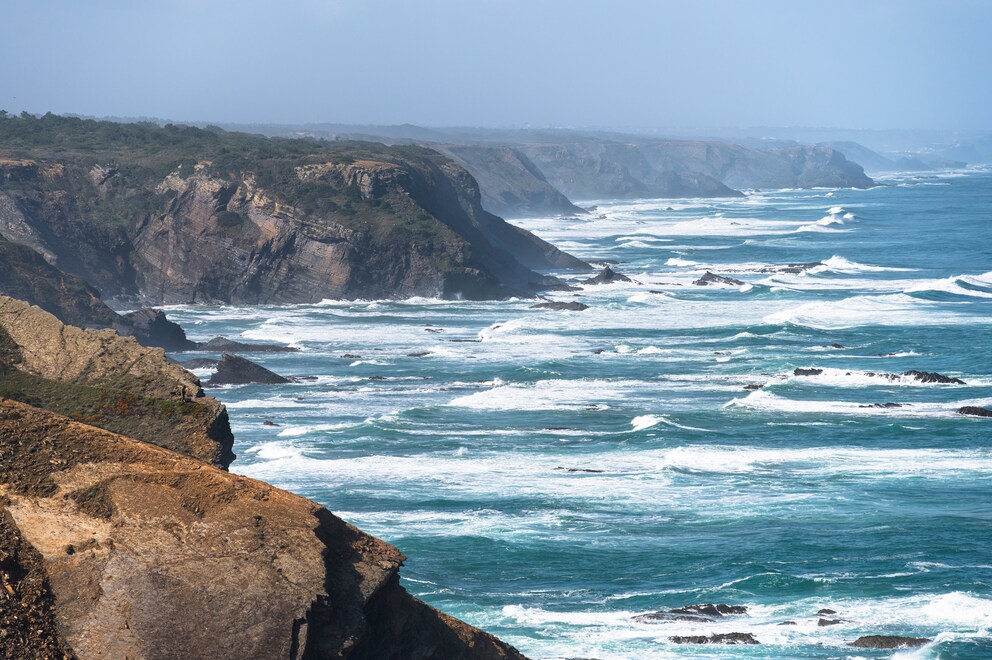
Like the Algarve, Alentejo has many stunning beaches. With a bit of luck (and at the right time of year), you might find yourself almost or completely alone. I’ve never seen an unattractive beach in Alentejo. So here’s my tip: Visit as many beaches as possible. Can towering cliffs, high blue-green waves, and soft sand ever get boring? Exactly.
The Hinterland
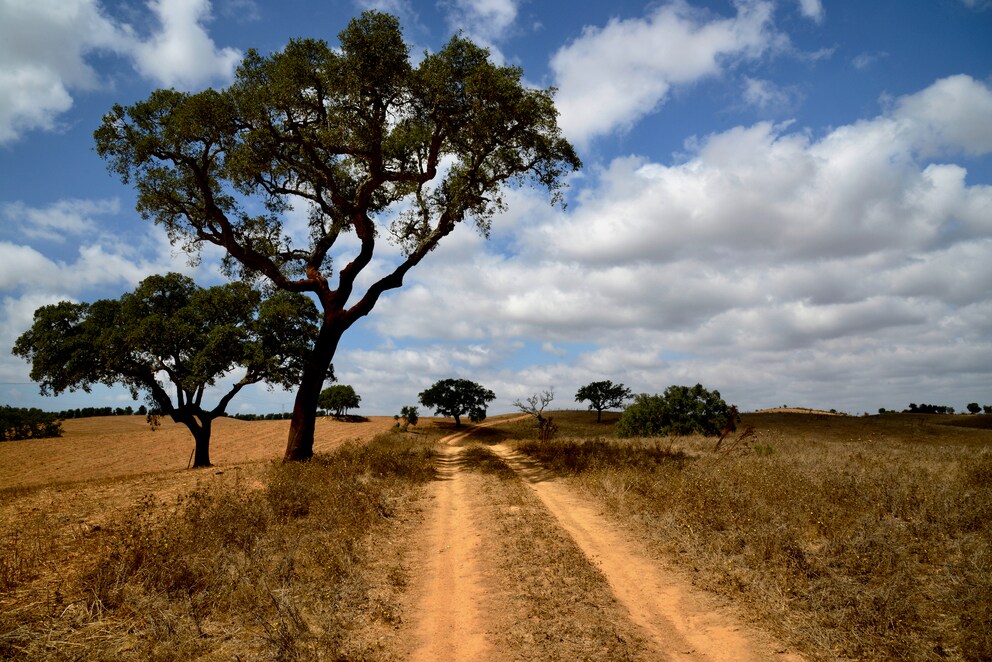
Besides the beaches, the interior of Alentejo is beautiful and sometimes very exciting. When driving from Lisbon to the south and staying off the highway, you’ll pass through seemingly endless, desert-like landscapes. For example, if you drive inland past São Teotónio, the roads often lead over bumpy, narrow paths through mountains that drop steeply on the sides. A trip away from the coast and into the interior is worthwhile—especially for those seeking true tranquility. Often, there’s no cell reception on the inland roads.
Sunrises and Sunsets on Mountains and Cliffs
The sun rises over the mountains and sets over the sea in Alentejo. If you enjoy getting up early to watch the sunrise—and I highly recommend it—you should stay somewhere elevated or climb one of the mountains. They’re not too high, and the Monchique Mountains are a good option.
For sunsets, I highly recommend the cliffs. They’re found in many parts of Portugal and stretch along part of the Alentejo coast. From them, you can see the beautiful, unique Portuguese dream sunsets from almost anywhere.
Rent or Bring a Car
This tip might be a bit redundant for campers, but: In Alentejo, it’s advisable to have a car. At least if you want to see something, and especially if you want to explore beyond the main coastal road. There are buses, and hitchhiking is still common, but having a car is the easiest way. It takes you to the various dream beaches, charming towns, and the worthwhile hinterland with its bumpy gravel roads.
A Hidden Gem? The Country Hotel Reguengo
For those who want a nature-friendly break from camping: A perhaps not-so-secret hidden gem is the Country Hotel Reguengo. I used to go there with my parents as a child, and we still keep in touch. The original three owners have created a beautiful place in a small valley in the middle of nowhere in the Monchique Mountains. With lots of tranquility, very nice, high-quality accommodations, a natural pool, yoga, horses, and much more. Reguengo is great for families with children, but also for everyone else.
Also interesting: 9 Tips for Traveling in a Camper with a Toddler
Food
I personally love Portuguese cuisine and can also recommend for a camping vacation in Alentejo: Try the various local restaurants. I usually gravitate towards the simple, yet very nice and delicious fish restaurants along the coast. They can be found in larger towns as well as in very small ones. I mention Vila Nova de Milfontes and Azenha do Mar, but these are just two of many good examples. Just look around near the water wherever you are. But even if you’re not a fan of fish, you’ll find something to enjoy, such as grilled chicken (frango grelhado), pork, delicious fresh bread, olives, and of course Vinho Verde and various very tasty, sometimes strong cheeses.
6 Things You Can Experience Along the Great Ocean Road
11 of the Most Beautiful Beaches in Portugal’s Algarve
How to Best Reach Portugal’s Alentejo Region
Many campers naturally travel with their own vehicle. If you don’t want to do that, you can fly to Faro or Lisbon and continue from there with a rental car or camper. Depending on your destination, you should expect more or less good gravel roads, which can be exciting if they’re small, steep, or both. If you don’t want or can’t drive, there’s also the option of taking the bus. From Lisbon, you can get to Alentejo quite well, and I’ve recently seen more and more buses on the main roads, so there’s definitely been some improvement. Taxis are also available.
Methodology for the TRAVELBOOK Award
We say it every year: All regions, countries, and others nominated for the TRAVELBOOK Award are already winners. Even if they didn’t achieve overall victory. This also applies to Alentejo in Portugal. Because: Every country has already made it to the shortlist in advance, meaning it was selected from a large number of candidates in a category.
The TRAVELBOOK editorial team asked the community on Facebook and Instagram for help and consulted experts from the travel industry to create the shortlist. TRAVELBOOK readers then cast nearly 150,000 votes and chose their trending travel destinations for 2026.